
A Treatise Concerning the Principles of Human Knowledge – hinnat ja saatavuus
Kirjafiili on kirjojen hintavertailu. Löydä halvin hinta 27 kirjakaupasta. Hintavertailu koskee ISBN-tunnusta 9781502550958 (nidottu).
Muut painokset ja formaatit




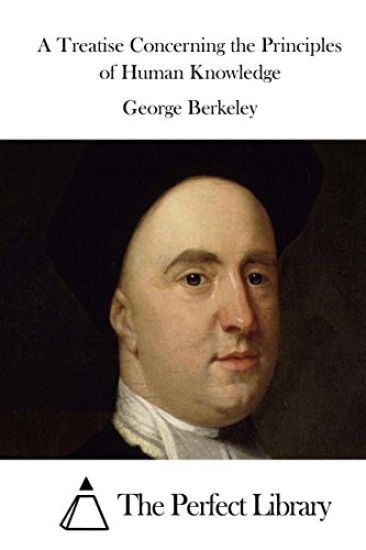

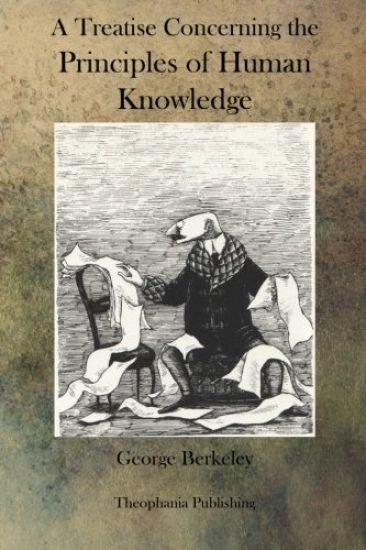






Kirjan kuvaus
A Treatise Concerning the Principles of Human Knowledge (commonly called Treatise when referring to Berkeley's works) is a 1710 philosophy classic by Anglo-Irish Empiricist philosopher George Berkeley. This book largely seeks to refute the… Näytä koko kuvaus Piilota kuvaus
A Treatise Concerning the Principles of Human Knowledge (commonly called Treatise when referring to Berkeley's works) is a 1710 philosophy classic by Anglo-Irish Empiricist philosopher George Berkeley. This book largely seeks to refute the claims made by his contemporary John Locke about the nature of human perception. Whilst, like all the Empiricist philosophers, both Locke and Berkeley agreed that we are having experiences, regardless of whether material objects exist, Berkeley sought to prove that the outside world (the world which causes the ideas one has within one's mind) is also composed solely of ideas. Berkeley did this by suggesting that "Ideas can only resemble Ideas" - the mental ideas that we possess can only resemble other ideas (not material objects) and thus the external world consists not of physical form, but rather of ideas. This world is (or, at least, was) given logic and regularity by some other force, which Berkeley concludes is God. Berkeley declared that his intention was to make an inquiry into the First Principles of Human Knowledge in order to discover the principles that have led to doubt, uncertainty, absurdity, and contradiction in philosophy. In order to prepare the reader, he discussed two topics that lead to errors. First, he claimed that the mind cannot conceive abstract ideas. We can't have an idea of some abstract thing that is common to many particular ideas and therefore has, at the same time, many different predicates and no predicates. Second, Berkeley declared that words, such as names, do not signify abstract ideas. With regard to ideas, he asserted that we can only think of particular things that have been perceived. Names, he wrote, signify general ideas, not abstract ideas. General ideas represent any one of several particular ideas. Berkeley criticized Locke for saying that words signify general, but abstract, ideas. At the end of his Introduction, he advised the reader to let his words engender clear, particular ideas instead of trying to associate them with non-existent abstractions.
Kirjan tiedot
Vertaa kirjan ”A Treatise Concerning the Principles of Human Knowledge” hintoja
Vertaa tuotteen hintaa ja arvioitua kokonaishintaa toimitettuna. Kaikki hinnat koskevat ISBN-tunnusta 9781502550958.
Hintoja ei päivitetty automaattisesti. Voit hakea ajantasaiset hinnat painamalla Hae hinnat.

Booky

Suomalainen

Kansallinen Kirjakauppa

Prisma

Finlandia Kirja

Fantasiapelit

Vinhan kirjakauppa

CDON

Kustantamo S&S

Kennys.ie

Kristillinenkirjakauppa.fi

Sacrum

Adlibris

BookOutlet.fi

Kirja.fi

Rosebud
Tälle kirjalle ei ole tällä hetkellä vahvistettua hintaa. Tarkista tilanne myöhemmin uudelleen.
Hintoja ei ole vielä päivitetty.
Hälytys tallennettu!
Ilmoitamme, kun hinta laskee.
Saat sähköpostin, kun hinta laskee asettamaasi rajaan tai sen alle.
A Treatise Concerning the Principles of Human Knowledge – hintahistoria
Seuraamme kirjan A Treatise Concerning the Principles of Human Knowledge hintakehitystä kirjakaupoissa. Taulukosta näet viime kuukausien alimmat hinnat.
Alin hinta kauppoittain
Kunkin kaupan alin hinta viimeisten 90 päivän aikana.
Hintahistoriaa ei ole vielä kerätty tälle kirjalle.
Hinnat ilman toimituskuluja.