
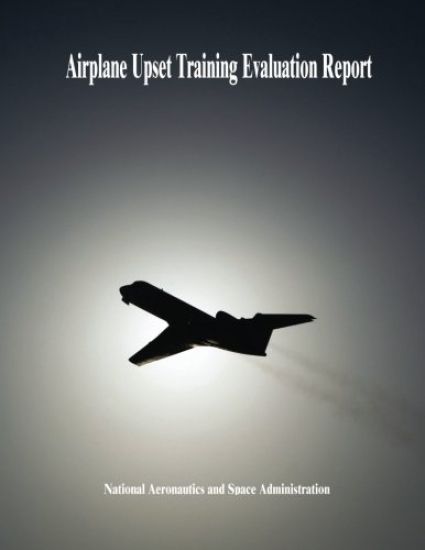
Airplane Upset Training Evaluation Report – hinnat ja saatavuus
Kirjafiili on kirjojen hintavertailu. Löydä halvin hinta 27 kirjakaupasta. Hintavertailu koskee ISBN-tunnusta 9781505569087 (nidottu).
Kirjan kuvaus
In the last decades, loss of control in flight was the largest category of commercial jet fatal accidents worldwide. Precipitating factors in these accidents have included equipment failures and system anomalies, weather phenomena,… Näytä koko kuvaus Piilota kuvaus
In the last decades, loss of control in flight was the largest category of commercial jet fatal accidents worldwide. Precipitating factors in these accidents have included equipment failures and system anomalies, weather phenomena, inappropriate use of flight controls or systems, inappropriate control responses by crew, or some combination of these factors. In many of these accidents flight crews could have recovered from the initial upset attitude by promptly applying appropriate control inputs. However, recovery from upset attitudes is challenging, even for highly experienced airline pilots, for the following reasons: 1) pilots rarely have opportunities to practice the appropriate procedures and 2) demanding time constraints and, in some cases, altitude constraints. Also, recovery from some upset accidents requires not only correctly manipulating the controls hut also recognizing the underlying problem causing the upset. The initial upset is generally sudden and unexpected; the crew must not only quickly and correctly assess the situation but also implement recovery procedures appropriate to the situation. Usually the crew does not have enough time for the relatively slow cognitive processes of reasoning and problem solving; rather, the appropriate actions must be highly learned skilled responses that can be executed more quickly. The NTSB has on several occasions recommended that pilots be trained to recover proficiently from abnormal regimes of flight and unusual attitudes. Both the FAA and the ATA encourage airlines to conduct upset attitude recovery training, and many U. S. carriers now include some limited training of this sort, although the content and extent of the training varies widely. Typically, the training consists of a combination of classroom presentations and simulator training. In 1997-98 a consortium of airplane manufacturers, airlines, pilot associations, flight training organizations, and government agencies developed an airplane upset recovery training aid that included recommended procedures for excessive nose-high and nose-low attitudes. To date, no formal study of the effectiveness of existing airplane upset recovery training programs has been made. Many questions remain unanswered, for example: How extensively must pilots practice recovery maneuvers to obtain proficiency? How often must pilots train to maintain proficiency? To what extent does generic training enable pilots to recover from a wide range of potential upset attitude scenarios? To what extent can training address the factor of surprise that occurs in actual line upsets? To what extent will training in ground-based simulators transfer appropriately to actual flight, given that ground-based simulators cannot match the forces and accelerations encountered in actual upsets and given that the fidelity of the aerodynamic models of the simulators is not well established or implemented outside of normal operating parameters? Supported by a contract from the training element of NASA's Aviation Safety Training Program, Veridian Engineering recently completed a study that bears on some of these questions. 1. The primary objective of this study was to generate data to support decision-making on the part of the FAA and the airlines. NASA's specific objectives in sponsoring the study were: To compare the relative effectiveness of no training, aerobatic training (in light aircraft), ground simulation, combined aerobatic and ground simulation training, and in-flight simulation training on airplane upset recovery; 2. To determine how well currently trained, new-hire airline pilots are able to respond to a representative set of prototypical airplane upset scenarios; 3. To identify any specific weakness in pilots' recovery techniques and to identify areas in which current training should be improved; and 4. To determine whether some types of airplane upset scenarios are more difficult to recover from than others.
Kirjan tiedot
Vertaa kirjan ”Airplane Upset Training Evaluation Report” hintoja
Vertaa tuotteen hintaa ja arvioitua kokonaishintaa toimitettuna. Kaikki hinnat koskevat ISBN-tunnusta 9781505569087.
Hintoja ei päivitetty automaattisesti. Voit hakea ajantasaiset hinnat painamalla Hae hinnat.

Booky

Suomalainen

Kansallinen Kirjakauppa

Prisma

Finlandia Kirja

Fantasiapelit

Vinhan kirjakauppa

CDON

Kustantamo S&S

Kennys.ie

Kristillinenkirjakauppa.fi

Sacrum

Adlibris

BookOutlet.fi

Kirja.fi

Rosebud
Tälle kirjalle ei ole tällä hetkellä vahvistettua hintaa. Tarkista tilanne myöhemmin uudelleen.
Hintoja ei ole vielä päivitetty.
Hälytys tallennettu!
Ilmoitamme, kun hinta laskee.
Saat sähköpostin, kun hinta laskee asettamaasi rajaan tai sen alle.
Airplane Upset Training Evaluation Report – hintahistoria
Seuraamme kirjan Airplane Upset Training Evaluation Report hintakehitystä kirjakaupoissa. Taulukosta näet viime kuukausien alimmat hinnat.
Alin hinta kauppoittain
Kunkin kaupan alin hinta viimeisten 90 päivän aikana.
Hintahistoriaa ei ole vielä kerätty tälle kirjalle.
Hinnat ilman toimituskuluja.