
Improving GIS-based Wildlife-Habitat Analysis – hinnat ja saatavuus
Kirjafiili on kirjojen hintavertailu. Löydä halvin hinta 27 kirjakaupasta. Hintavertailu koskee ISBN-tunnusta 9783319096070 (nidottu).
Kirjan kuvaus
Geographic Information Systems (GIS) provide a powerful tool for the investigation of species-habitat relationships and the development of wildlife management and conservation programs. However, the relative ease of data manipulation and… Näytä koko kuvaus Piilota kuvaus
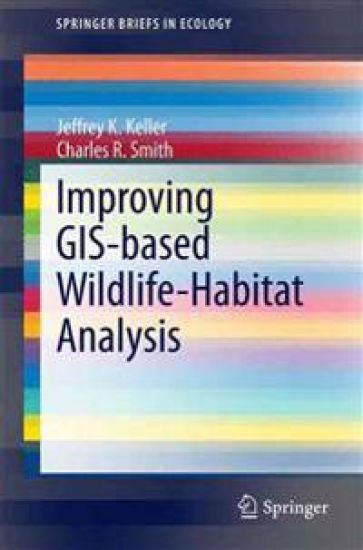
Geographic Information Systems (GIS) provide a powerful tool for the investigation of species-habitat relationships and the development of wildlife management and conservation programs. However, the relative ease of data manipulation and analysis using GIS, associated landscape metrics packages, and sophisticated statistical tests may sometimes cause investigators to overlook important species-habitat functional relationships. Additionally, underlying assumptions of the study design or technology may have unrecognized consequences. This volume examines how initial researcher choices of image resolution, scale(s) of analysis, response and explanatory variables, and location and area of samples can influence analysis results, interpretation, predictive capability, and study-derived management prescriptions. Overall, most studies in this realm employ relatively low resolution imagery that allows neither identification nor accurate classification of habitat components. Additionally, the landscape metrics typically employed do not adequately quantify component spatial arrangement associated with species occupation. To address this latter issue, the authors introduce two novel landscape metrics that measure the functional size and location in the landscape of taxon-specific ‘solid’ and ‘edge’ habitat types. Keller and Smith conclude that investigators conducting GIS-based analyses of species-habitat relationships should more carefully 1) match the resolution of remotely sensed imagery to the scale of habitat functional relationships of the focal taxon, 2) identify attributes (explanatory variables) of habitat architecture, size, configuration, quality, and context that reflect the way the focal taxon uses the subset of the landscape it occupies, and 3) match the location and scale of habitat samples, whether GIS- or ground-based, to corresponding species’ detection locations and scales of habitat use.
Kirjan tiedot
Vertaa kirjan ”Improving GIS-based Wildlife-Habitat Analysis” hintoja
Vertaa tuotteen hintaa ja arvioitua kokonaishintaa toimitettuna. Kaikki hinnat koskevat ISBN-tunnusta 9783319096070.
Hintoja ei päivitetty automaattisesti. Voit hakea ajantasaiset hinnat painamalla Hae hinnat.

Booky

Suomalainen

Kansallinen Kirjakauppa

Prisma

Finlandia Kirja

Fantasiapelit

Vinhan kirjakauppa

CDON

Kustantamo S&S

Kennys.ie

Kristillinenkirjakauppa.fi

Sacrum

Adlibris

BookOutlet.fi

Kirja.fi

Rosebud
Tälle kirjalle ei ole tällä hetkellä vahvistettua hintaa. Tarkista tilanne myöhemmin uudelleen.
Hintoja ei ole vielä päivitetty.
Hälytys tallennettu!
Ilmoitamme, kun hinta laskee.
Saat sähköpostin, kun hinta laskee asettamaasi rajaan tai sen alle.
Improving GIS-based Wildlife-Habitat Analysis – hintahistoria
Seuraamme kirjan Improving GIS-based Wildlife-Habitat Analysis hintakehitystä kirjakaupoissa. Taulukosta näet viime kuukausien alimmat hinnat.
Alin hinta kauppoittain
Kunkin kaupan alin hinta viimeisten 90 päivän aikana.
Hintahistoriaa ei ole vielä kerätty tälle kirjalle.
Hinnat ilman toimituskuluja.