
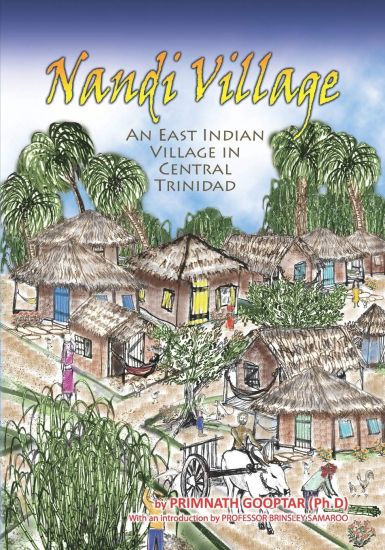
Nandi Village: An East Indian Village in Trinidad – hinnat ja saatavuus
Kirjafiili on kirjojen hintavertailu. Löydä halvin hinta 27 kirjakaupasta. Hintavertailu koskee ISBN-tunnusta 9781695363700 (nidottu).
Kirjan kuvaus
Nandi Village is an imaginary small, rustic, quiet village located somewhere in Central Trinidad where people live frugally, and cows, goats and donkeys graze in the open savannahs. Many of the houses are thatched roof, mud-walled, earthen… Näytä koko kuvaus Piilota kuvaus
Nandi Village is an imaginary small, rustic, quiet village located somewhere in Central Trinidad where people live frugally, and cows, goats and donkeys graze in the open savannahs. Many of the houses are thatched roof, mud-walled, earthen floor dwellings. One main road runs through the village in a North-South direction connecting it to other nearby villages. Nandi Village stretches for about two miles and is surrounded by other similar Indian villages. The main means of transport to and from the village is by bull carts. In the heart of the Village is a meeting of five roads which gives the area the name Five Roads Junction. This center of the village is home to three shops, a few houses and an open space for recreational activities. Several other minor side roads lead off from the main thoroughfare. The Malloo River runs in an easterly direction through the village and is the place where the women gather to wash their clothes. There are two wells in the village where its citizens get their potable water. A government hand-pump is affixed to one of the wells to assist villagers in retrieving water from the well. Most of the people in the village came to the island as Indian indentured immigrants. They moved here with their offspring from the barracks on the sugar estates where they once worked and lived. After their tenure at the barracks, some acquired their lands in exchange for the promise of their passage back to India, but most bought theirs. Others, on the urgings of the estate owners, squatted on what they called "government free lands." Eventually, a community of Indians developed on the outskirts of the estate, a matter that was beneficial to the estate owners as they continued to have access to a local labour force from which they augmented the labourers who remained estate bound. The community came to be called Nandi Village because of the first pundit-Nandi Pundit-who settled there with the villagers. Like most such communities, the Nandi community is made up mainly of Hindus (85%), Muslims (12%) and a few Christians. Among them are several surviving indentured immigrants who, as those before them, tried to re-create from memory the life they lived in India. In doing so, they practised their culture and religion and passed it on to their descendants. There is a village panchayat consisting of five elderly men which dispensed 'Indian justice' to the villagers, without the interference of the legal authorities. Often, village disputes tried at the local courts were usually sent back to the panchayat for their final determination, which gave the panchayat the force of law in the community. A Hindi interpreter relayed such decisions to the magistrate, who usually rubber-stamped the panchayat's verdict. Most of the stories in this book are set in this village right after the end of indentureship and span the fifty years from the time the last indentured worker was finally free in 1920 right down to 1970. The stories attempt to capture life in those times and will surely evoke nostalgia in older readers and might educate younger ones about their past. Nandi Village mixes folklore, history and creativity with village life and forces us to reflect on our past while reigniting memories of growing up with the kerosene lamps, village banter and rural life styles. Some of the major characters who will evoke such outcomes are Ranjit Kumar, the pundit, Rajesh Persad, his father Ram Persad, Ram Persad's wife Kowsil; Rajesh's girlfriend, Shanti, the three shop keepers Baboolal, Bahadoor and Chin, the cinema, the folks in the village kutiya and the panchayat among others.
Kirjan tiedot
Vertaa kirjan ”Nandi Village: An East Indian Village in Trinidad” hintoja
Vertaa tuotteen hintaa ja arvioitua kokonaishintaa toimitettuna. Kaikki hinnat koskevat ISBN-tunnusta 9781695363700.
Hintoja ei päivitetty automaattisesti. Voit hakea ajantasaiset hinnat painamalla Hae hinnat.

Booky

Suomalainen

Kansallinen Kirjakauppa

Prisma

Finlandia Kirja

Fantasiapelit

Vinhan kirjakauppa

CDON

Kustantamo S&S

Kennys.ie

Kristillinenkirjakauppa.fi

Sacrum

Adlibris

BookOutlet.fi

Kirja.fi

Rosebud
Tälle kirjalle ei ole tällä hetkellä vahvistettua hintaa. Tarkista tilanne myöhemmin uudelleen.
Hintoja ei ole vielä päivitetty.
Hälytys tallennettu!
Ilmoitamme, kun hinta laskee.
Saat sähköpostin, kun hinta laskee asettamaasi rajaan tai sen alle.
Nandi Village: An East Indian Village in Trinidad – hintahistoria
Seuraamme kirjan Nandi Village: An East Indian Village in Trinidad hintakehitystä kirjakaupoissa. Taulukosta näet viime kuukausien alimmat hinnat.
Alin hinta kauppoittain
Kunkin kaupan alin hinta viimeisten 90 päivän aikana.
Hintahistoriaa ei ole vielä kerätty tälle kirjalle.
Hinnat ilman toimituskuluja.