
Nuclear Monopoly – hinnat ja saatavuus
Kirjafiili on kirjojen hintavertailu. Löydä halvin hinta 27 kirjakaupasta. Hintavertailu koskee ISBN-tunnusta 9780765800220 (sidottu).
Kirjan kuvaus
Throughout the decades of the Cold War, people all around the world lived in fear of thermonuclear war. To assuage that fear theorists of deterrence explained over and over again that both sides had to be able to retaliate with "mutual… Näytä koko kuvaus Piilota kuvaus
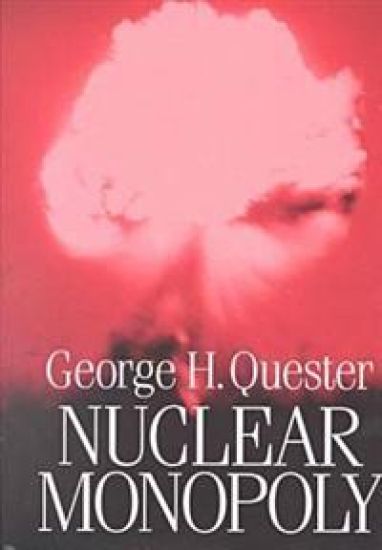
Throughout the decades of the Cold War, people all around the world lived in fear of thermonuclear war. To assuage that fear theorists of deterrence explained over and over again that both sides had to be able to retaliate with "mutual assured destruction," to keep nuclear weapons from being used. Yet this "basic fact" of nuclear deterrence begs the question: What deterred the United States from a preemptive strike before 1949 when Joseph Stalin's Soviet Union had not yet acquired nuclear weapons of its own? In Nuclear Monopoly George Quester sets forth the case for preventive war using rudimentary atomic weapons to avoid the possibility of a future war in which both sides would have used hydrogen bombs. Quester demonstrates that the notion of mutual assured destruction was rooted in the questionable assumption that assured destruction must be mutual and that the United States "of course" would never consider preventive war. He explores the logic of these assumptions against the historical circumstances of the years 1945-1949 and the thinking of influential personalities and decision-makers that determined U. S. nuclear policy. In 1945 the United States was able to inflict nuclear destruction and had no fear of retaliation. Arguably the United States could have used that advantage to extract major political concessions from the Soviet Union, including surrender, disarmament, and democratization. At the same time it might have prevented the proliferation and development of nuclear weapons. Against this view Quester analyzes a range of prevailing views from practical and procedural considerations. These range from the shortage of bombs and other resources, ineffectiveness of bombing, Soviet resistance, and the vulnerability of Western Europe, to larger questions of American morality: absence of a casus belli, civilian casualties, and concern about untrammeled arrogance of power. With dissolution of the Soviet Union and the proliferation of nuclear weapons among small powers and rogue states, the failure to head off Soviet nuclear capacity takes on greater historical weight. The options of the next century will never be what they were from 1945-1949, but this study of the military and strategic decision-making provides important insights for future conflicts. Nuclear Monopoly will be of interest to military historians, policymakers, and political scientists.
Kirjan tiedot
Vertaa kirjan ”Nuclear Monopoly” hintoja
Vertaa tuotteen hintaa ja arvioitua kokonaishintaa toimitettuna. Kaikki hinnat koskevat ISBN-tunnusta 9780765800220.
Hintoja ei päivitetty automaattisesti. Voit hakea ajantasaiset hinnat painamalla Hae hinnat.

Booky

Suomalainen

Kansallinen Kirjakauppa

Prisma

Finlandia Kirja

Fantasiapelit

Vinhan kirjakauppa

CDON

Kustantamo S&S

Kennys.ie

Kristillinenkirjakauppa.fi

Sacrum

Adlibris

BookOutlet.fi

Kirja.fi

Rosebud
Tälle kirjalle ei ole tällä hetkellä vahvistettua hintaa. Tarkista tilanne myöhemmin uudelleen.
Hintoja ei ole vielä päivitetty.
Hälytys tallennettu!
Ilmoitamme, kun hinta laskee.
Saat sähköpostin, kun hinta laskee asettamaasi rajaan tai sen alle.
Nuclear Monopoly – hintahistoria
Seuraamme kirjan Nuclear Monopoly hintakehitystä kirjakaupoissa. Taulukosta näet viime kuukausien alimmat hinnat.
Alin hinta kauppoittain
Kunkin kaupan alin hinta viimeisten 90 päivän aikana.
Hintahistoriaa ei ole vielä kerätty tälle kirjalle.
Hinnat ilman toimituskuluja.