
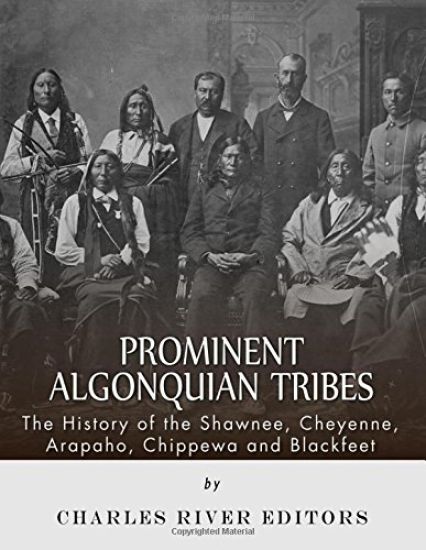
Prominent Algonquian Tribes: The History of the Shawnee, Cheyenne, Arapaho, Chippewa, and Blackfeet – hinnat ja saatavuus
Kirjafiili on kirjojen hintavertailu. Löydä halvin hinta 27 kirjakaupasta. Hintavertailu koskee ISBN-tunnusta 9781984014238 (nidottu).
Kirjan kuvaus
*Includes pictures *Includes accounts of the tribes written by contemporaries *Includes bibliographies for further reading *Includes a table of contents Throughout the 19th century, American settlers pushing across the Western frontier… Näytä koko kuvaus Piilota kuvaus
*Includes pictures *Includes accounts of the tribes written by contemporaries *Includes bibliographies for further reading *Includes a table of contents Throughout the 19th century, American settlers pushing across the Western frontier came into contact with diverse American tribes, producing a series of conflicts ranging from the Great Plains to the Southwest, from the Trail of Tears to the Pacific Northwest. Indian leaders like Geronimo became feared and dreaded men in America, and Sitting Bull's victory over George Custer's 7th Cavalry at Little Bighorn was one of the nation's most traumatic military endeavors. Given this history, it's no surprise that the Shawnee continue to be closely associated with their most famous leader, Tecumseh, the most famous Native American of the early 19th century. While leading the Shawnee, he attempted to peacefully establish a Native American nation east of the Mississippi River in the wake of the American Revolution. One of the most famous Native American tribes on the Great Plains is the Cheyenne, and their fame may be surpassed only by their influence on American history. Having split off from other groups around the 16th-17th centuries, the Cheyenne shifted from a sedentary agricultural society to the kind of nomadic g.roup many envision when thinking of groups on the Plains. But it was land disputes and conflicts with white settlers and the Cheyenne that set in motion the chain of events that led to the most famous battle among Native Americans and the American government: the Battle of the Little Bighorn. Like other notable Plains tribes, the Arapaho split off from other groups around the 16th-17th centuries and shifted from a sedentary agricultural society to the kind of nomadic group many envision when thinking of groups on the Plains. That nomadic lifestyle brought them into contact with the Sioux and Cheyenne, both of whom became allies as white settlers pushed west and led to conflicts. The United States sought to defuse tensions with natives during the westward push by drafting treaties regarding major pieces of land, often without understanding the complex structure of the various tribes, and subgroups within those tribes. Most notably, the Arapaho were victims of the Sand Creek Massacre in 1864, an action considered so heinous that the leader of the attack, Colonel John Chivington, was actually relieved of command after it. Outside of the Midwest, the Chippewa are not as well-known as other Native American tribes like the Sioux or Cherokee, but they have long been one of the biggest groups in all of North America. Not surprisingly, their presence around the Great Lakes region made them especially important to early European explorers who sailed the St. Lawrence and came into contact with the natives as they continued searching for the Northwest Passage. The French in particular conducted substantial fur trading with the Chippewa, and it is thanks to the European explorers that the various groups have all been identified as Chippewa today. The territory of the Blackfeet, at its greatest extent, encompassed a vast area from the eastern Rocky Mountains of Alberta and Montana and extending several hundred miles out onto the Great Plains, around the upper reaches of the Saskatchewan River and its tributaries in Alberta and the upper reaches of the Missouri River and its tributaries in Montana. The area of the land most sacred to the Blackfeet is the Sweet Grass Hills, which are located just south of the Canadian border in the central part of Montana. These are a group of buttes forested with balsam firs rising several thousand feet above the surrounding plains and which can be seen for a considerable distance. This was also Napi's favorite resting place in the mythology of the Blackfeet. Young Blackfeet went up into the Hills on their vision quests and, as their predecessors had done for several thousands of years, left inscriptions and petroglyphs.
Kirjan tiedot
Vertaa kirjan ”Prominent Algonquian Tribes: The History of the Shawnee, Cheyenne, Arapaho, Chippewa, and Blackfeet” hintoja
Vertaa tuotteen hintaa ja arvioitua kokonaishintaa toimitettuna. Kaikki hinnat koskevat ISBN-tunnusta 9781984014238.
Hintoja ei päivitetty automaattisesti. Voit hakea ajantasaiset hinnat painamalla Hae hinnat.

Booky

Suomalainen

Kansallinen Kirjakauppa

Prisma

Finlandia Kirja

Fantasiapelit

Vinhan kirjakauppa

CDON

Kustantamo S&S

Kennys.ie

Kristillinenkirjakauppa.fi

Sacrum

Adlibris

BookOutlet.fi

Kirja.fi

Rosebud
Tälle kirjalle ei ole tällä hetkellä vahvistettua hintaa. Tarkista tilanne myöhemmin uudelleen.
Hintoja ei ole vielä päivitetty.
Hälytys tallennettu!
Ilmoitamme, kun hinta laskee.
Saat sähköpostin, kun hinta laskee asettamaasi rajaan tai sen alle.
Prominent Algonquian Tribes: The History of the Shawnee, Cheyenne, Arapaho, Chippewa, and Blackfeet – hintahistoria
Seuraamme kirjan Prominent Algonquian Tribes: The History of the Shawnee, Cheyenne, Arapaho, Chippewa, and Blackfeet hintakehitystä kirjakaupoissa. Taulukosta näet viime kuukausien alimmat hinnat.
Alin hinta kauppoittain
Kunkin kaupan alin hinta viimeisten 90 päivän aikana.
Hintahistoriaa ei ole vielä kerätty tälle kirjalle.
Hinnat ilman toimituskuluja.