
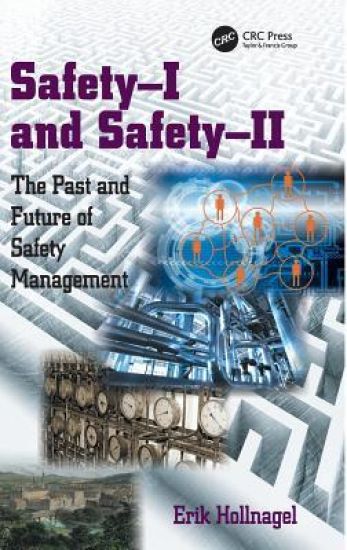
Safety-I and Safety-II – hinnat ja saatavuus
The Past and Future of Safety Management
Kirjafiili on kirjojen hintavertailu. Löydä halvin hinta 26 kirjakaupasta. Hintavertailu koskee ISBN-tunnusta 9781472423054 (sidottu).
Kirjan kuvaus
Safety has traditionally been defined as a condition where the number of adverse outcomes was as low as possible (Safety-I). From a Safety-I perspective, the purpose of safety management is to make sure that the number of accidents and… Näytä koko kuvaus Piilota kuvaus
Safety has traditionally been defined as a condition where the number of adverse outcomes was as low as possible (Safety-I). From a Safety-I perspective, the purpose of safety management is to make sure that the number of accidents and incidents is kept as low as possible, or as low as is reasonably practicable. This means that safety management must start from the manifestations of the absence of safety and that - paradoxically - safety is measured by counting the number of cases where it fails rather than by the number of cases where it succeeds. This unavoidably leads to a reactive approach based on responding to what goes wrong or what is identified as a risk - as something that could go wrong. Focusing on what goes right, rather than on what goes wrong, changes the definition of safety from ’avoiding that something goes wrong’ to ’ensuring that everything goes right’. More precisely, Safety-II is the ability to succeed under varying conditions, so that the number of intended and acceptable outcomes is as high as possible. From a Safety-II perspective, the purpose of safety management is to ensure that as much as possible goes right, in the sense that everyday work achieves its objectives. This means that safety is managed by what it achieves (successes, things that go right), and that likewise it is measured by counting the number of cases where things go right. In order to do this, safety management cannot only be reactive, it must also be proactive. But it must be proactive with regard to how actions succeed, to everyday acceptable performance, rather than with regard to how they can fail, as traditional risk analysis does. This book analyses and explains the principles behind both approaches and uses this to consider the past and future of safety management practices. The analysis makes use of common examples and cases from domains such as aviation, nuclear power production, process management and health care. The final chapters explain the theoret
Kirjan tiedot
Vertaa kirjan ”Safety-I and Safety-II” hintoja
Vertaa tuotteen hintaa ja arvioitua kokonaishintaa toimitettuna. Kaikki hinnat koskevat ISBN-tunnusta 9781472423054.

Booky

Suomalainen

Kansallinen Kirjakauppa

Prisma

Finlandia Kirja

Fantasiapelit

Vinhan kirjakauppa

CDON

Kennys.ie

Kristillinenkirjakauppa.fi

Sacrum

Adlibris

BookOutlet.fi

Kirja.fi

Rosebud
Tälle kirjalle ei ole tällä hetkellä vahvistettua hintaa. Tarkista tilanne myöhemmin uudelleen.
Hintoja ei ole vielä päivitetty.
Hälytys tallennettu!
Ilmoitamme, kun hinta laskee.
Saat sähköpostin, kun hinta laskee asettamaasi rajaan tai sen alle.
Safety-I and Safety-II – hintahistoria
Seuraamme kirjan Safety-I and Safety-II hintakehitystä kirjakaupoissa. Taulukosta näet viime kuukausien alimmat hinnat.
Alin hinta kauppoittain
Kunkin kaupan alin hinta viimeisten 90 päivän aikana.
Hintahistoriaa ei ole vielä kerätty tälle kirjalle.
Hinnat ilman toimituskuluja.