
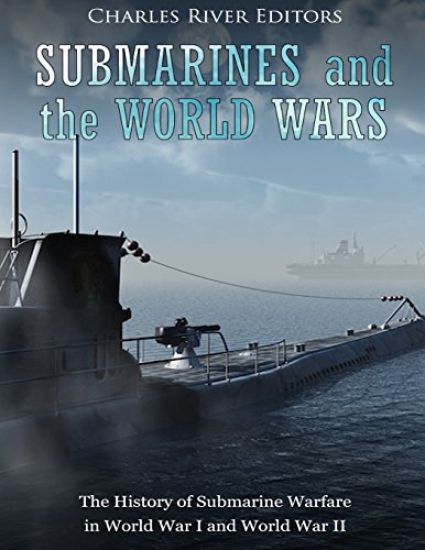
Submarines and the World Wars: The History of Submarine Warfare in World War I and World War II – hinnat ja saatavuus
Kirjafiili on kirjojen hintavertailu. Löydä halvin hinta 27 kirjakaupasta. Hintavertailu koskee ISBN-tunnusta 9781986043571 (nidottu).
Muut painokset ja formaatit
Kirjan kuvaus
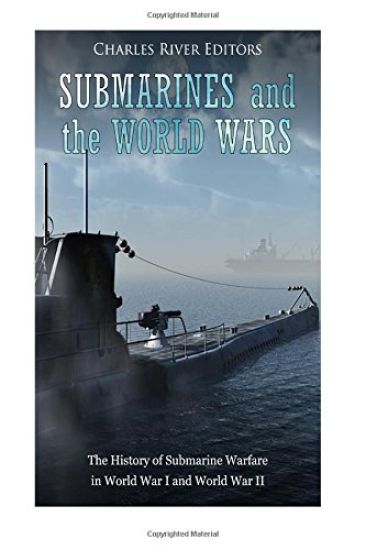
*Includes pictures *Includes accounts of fighting *Includes online resources and a bibliography for further reading Submarine warfare began tentatively during the American Civil War (though the Netherlands and England made small prototypes… Näytä koko kuvaus Piilota kuvaus
*Includes pictures *Includes accounts of fighting *Includes online resources and a bibliography for further reading Submarine warfare began tentatively during the American Civil War (though the Netherlands and England made small prototypes centuries earlier, and the American sergeant Ezra Lee piloted the one-man "Turtle" vainly against HMS Eagle near New York in 1776). Robert Whitehead's invention of the torpedo introduced the weapon later used most frequently by submarines. Steady improvements to Whitehead's design led to the military torpedoes deployed against shipping during both World Wars. During World War I, German U-boats operated solo except on one occasion. Initially, the British and nations supplying England with food and materiel scattered vessels singly across the ocean, making them vulnerable to the lone submarines. However, widespread late war re-adoption of the convoy system tipped the odds in the surface ships' favor, as one U-boat skipper described: "The oceans at once became bare and empty; for long periods at a time the U-boats, operating individually, would see nothing at all; and then suddenly up would loom a huge concourse of ships, thirty or fifty or more of them, surrounded by a strong escort of warships of all types." (Blair, 1996, 55). World War I proved the value of submarines, ensuring their widespread employment in the next conflict, but by using U-boats against the shipping that kept Britain supplied, it might have ultimately cost Germany and Austria-Hungary the war by providing a reason for President Woodrow Wilson to bring the United States into the struggle. One critical innovation in World War II's Atlantic U-boat operations consisted of wolf-pack tactics, in which Admiral Karl D nitz put great faith: "The greater the number of U-boats that could be brought simultaneously into the attack, the more favourable would become the opportunities offered to each individual attacker. ...] it was obvious that, on strategic and general tactical grounds, attacks on convoys must be carried out by a number of U-boats acting in unison." (D nitz, 1990, 4). However, even the wolf-pack proved insufficient to defeat the Atlantic convoys and stop Allied commerce - the precise opposite of the Pacific theater, where America's excellent submarine forces annihilated much of Japan's merchant marine and inflicted severe damage on the Imperial Japanese Navy. Submarines exercised a decisive impact on the outcome of the Pacific Theater in World War II. The U. S. submarine fleet, largely though not exclusively under the overall command of Vice Admiral Charles Lockwood, strangled the supply lines and shipping traffic of the Empire of Japan. Their commerce raiding crippled both Japan's ability to keep its frontline units supplied and to manufacture the weapons, vessels, and vehicles needed to successfully carry on the struggle. Though constituting only 1.6% of the total U. S. Navy's tonnage in the Pacific, the submarine fleet inflicted massive losses on the Imperial Japanese Navy and Japan's crucial merchant marine. Submarines sank 55% of the merchant shipping lost, or approximately 1,300 vessels; overall, the Allies sank 77% of Japan's shipping. The submarines also sank 214 Japanese warships, including 82 of 1,000 tons or more - 4 carriers, 4 escort carriers, one battleship, 4 heavy cruisers, 9 light cruisers, 38 destroyers, and 23 submarines - or approximately 30% of the entire Imperial Japanese Navy. The sleek, predatory craft made in the shipyards of Virginia, Wisconsin, or Washington state devastated the naval and freighter assets of the Empire of the Rising Sun out of all proportion to their numbers, at a cost of 42 submarines on "Eternal Patrol." Submarines and the World Wars: The History of Submarine Warfare in World War I and World War II analyzes the underwater fighting during both great conflicts.
Kirjan tiedot
Vertaa kirjan ”Submarines and the World Wars: The History of Submarine Warfare in World War I and World War II” hintoja
Vertaa tuotteen hintaa ja arvioitua kokonaishintaa toimitettuna. Kaikki hinnat koskevat ISBN-tunnusta 9781986043571.
Hintoja ei päivitetty automaattisesti. Voit hakea ajantasaiset hinnat painamalla Hae hinnat.

Booky

Suomalainen

Kansallinen Kirjakauppa

Prisma

Finlandia Kirja

Fantasiapelit

Vinhan kirjakauppa

CDON

Kustantamo S&S

Kennys.ie

Kristillinenkirjakauppa.fi

Sacrum

Adlibris

BookOutlet.fi

Kirja.fi

Rosebud
Tälle kirjalle ei ole tällä hetkellä vahvistettua hintaa. Tarkista tilanne myöhemmin uudelleen.
Hintoja ei ole vielä päivitetty.
Hälytys tallennettu!
Ilmoitamme, kun hinta laskee.
Saat sähköpostin, kun hinta laskee asettamaasi rajaan tai sen alle.
Submarines and the World Wars: The History of Submarine Warfare in World War I and World War II – hintahistoria
Seuraamme kirjan Submarines and the World Wars: The History of Submarine Warfare in World War I and World War II hintakehitystä kirjakaupoissa. Taulukosta näet viime kuukausien alimmat hinnat.
Alin hinta kauppoittain
Kunkin kaupan alin hinta viimeisten 90 päivän aikana.
Hintahistoriaa ei ole vielä kerätty tälle kirjalle.
Hinnat ilman toimituskuluja.