
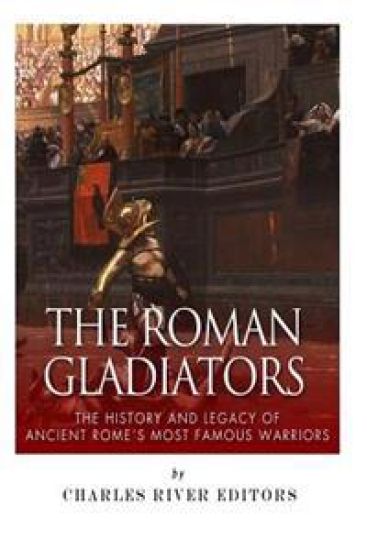
The Roman Gladiators: The History and Legacy of Ancient Rome's Most Famous Warriors – hinnat ja saatavuus
Kirjafiili on kirjojen hintavertailu. Löydä halvin hinta 27 kirjakaupasta. Hintavertailu koskee ISBN-tunnusta 9781494211417 (nidottu).
Kirjan kuvaus
*Includes pictures of art depicting important people, places, and events. *Describes the different classes of Roman gladiators and the armor and weaponry they used. *Describes gladiatorial combat and the myths and misconceptions about the… Näytä koko kuvaus Piilota kuvaus
*Includes pictures of art depicting important people, places, and events. *Describes the different classes of Roman gladiators and the armor and weaponry they used. *Describes gladiatorial combat and the myths and misconceptions about the fight. *Includes footnotes and a bibliography for further reading. "He vows to endure to be burned, to be bound, to be beaten, and to be killed by the sword." - The gladiator's oath, according to Petronius in the Satyricon. Gladiators are somewhat synonymous with ancient Rome, and even thousands of years after they performed on the sands, when people are asked about Roman culture, many think about and refer to the bloody spectacles of men fighting to the death in the arena. Gladiatorial combat is often regarded as barbaric, and most find it very difficult to comprehend how people could have enjoyed watching something so violent, but nevertheless, the spectacle still intrigues and fascinates people today, whether in movies like Gladiator or television shows about Spartacus. Gladiatorial combat traces its origins back to the early Republican period from the 5th-3rd century B. C., but it's still unclear where these combats first appeared. Credit has been given to both the Etruscans in northern Italy and the Campanians in southern Italy, though the first recorded gladiatorial combat occurred in the 3rd century B. C. at the funeral of D. Junius Brutus Pera. His sons organized a combat between three different pairs of gladiators who fought at their father's grave, but exactly what these first gladiatorial combats were supposed to represent remains unclear. Some believe that the spilling of human blood was a way of offering a sacrifice to the dead, while others suggest that the contests themselves were a funeral offering in honor of the dead. Gladiatorial combat began in the Republican period and was associated with death and burial, but due to its popularity it became an organized form of entertainment in the Imperial Age, and even as the gladiators were considered low class, they were also admired, leading to some Roman men and women volunteering to become gladiators. Whatever the original role of gladiatorial combats, they thrilled Roman audiences for many centuries. Each match usually pitted one type of gladiator against a different type of gladiator, with each having their own kind of armor, weaponry and fighting style. For example, the retiarius was a gladiator that used a net, dagger and trident as his offensive weapons, while only wearing a protective guard over his left arm for protection. The retiarius would typically fight against the secutor, a gladiator armed with a sword, large shield, helmet and protective covering on his right arm and left leg. Therefore, a retiarius sacrificed armor for quickness in battle, while the secutor did the opposite. Although people often think of gladiators fighting to the death, the outcome of gladiatorial combats was not always fatal for one of the participants. If a gladiator fought well, the sponsor of the show could spare him, particularly if the crowd desired it. The fact that the outcome of matches was never the same and the crowd could help determine the result of the match certainly added to the Roman public's pleasure, making it a lot less surprising that such an abhorrent spectacle still fascinated the modern world. The Roman Gladiators: The History and Legacy of Ancient Rome's Most Famous Warriors examines the history of the gladiators and the games they participated in, explaining what life and death was like for the men who fought in Rome's most famous form of entertainment. Along with pictures depicting important people, places, and events, you will learn about gladiators like you never have before.
Kirjan tiedot
Vertaa kirjan ”The Roman Gladiators: The History and Legacy of Ancient Rome's Most Famous Warriors” hintoja
Vertaa tuotteen hintaa ja arvioitua kokonaishintaa toimitettuna. Kaikki hinnat koskevat ISBN-tunnusta 9781494211417.
Hintoja ei päivitetty automaattisesti. Voit hakea ajantasaiset hinnat painamalla Hae hinnat.

Booky

Suomalainen

Kansallinen Kirjakauppa

Prisma

Finlandia Kirja

Fantasiapelit

Vinhan kirjakauppa

CDON

Kustantamo S&S

Kennys.ie

Kristillinenkirjakauppa.fi

Sacrum

Adlibris

BookOutlet.fi

Kirja.fi

Rosebud
Tälle kirjalle ei ole tällä hetkellä vahvistettua hintaa. Tarkista tilanne myöhemmin uudelleen.
Hintoja ei ole vielä päivitetty.
Hälytys tallennettu!
Ilmoitamme, kun hinta laskee.
Saat sähköpostin, kun hinta laskee asettamaasi rajaan tai sen alle.
The Roman Gladiators: The History and Legacy of Ancient Rome's Most Famous Warriors – hintahistoria
Seuraamme kirjan The Roman Gladiators: The History and Legacy of Ancient Rome's Most Famous Warriors hintakehitystä kirjakaupoissa. Taulukosta näet viime kuukausien alimmat hinnat.
Alin hinta kauppoittain
Kunkin kaupan alin hinta viimeisten 90 päivän aikana.
Hintahistoriaa ei ole vielä kerätty tälle kirjalle.
Hinnat ilman toimituskuluja.