
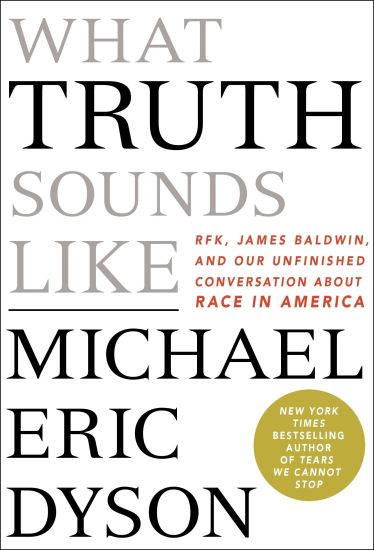
What Truth Sounds Like: Robert F. Kennedy, James Baldwin, and Our Unfinished Conversation about Race in America – hinnat ja saatavuus
Robert F. Kennedy, James Baldwin, and Our Unfinished Conversation About Race in America
Kirjafiili on kirjojen hintavertailu. Löydä halvin hinta 27 kirjakaupasta. Hintavertailu koskee ISBN-tunnusta 9781250199416 (sidottu).
Kirjan kuvaus
Named a 2018 Notable Work of Nonfiction by The Washington Post NOW A NEW YORK TIMES BESTSELLER - Winner, The 2018 Southern Book PrizeNAMED A BEST/MOST ANTICIPATED BOOK OF 2018 BY: Chicago Tribune - Time - Publisher's Weekly A stunning… Näytä koko kuvaus Piilota kuvaus
Named a 2018 Notable Work of Nonfiction by The Washington Post NOW A NEW YORK TIMES BESTSELLER - Winner, The 2018 Southern Book PrizeNAMED A BEST/MOST ANTICIPATED BOOK OF 2018 BY: Chicago Tribune - Time - Publisher's Weekly A stunning follow up to New York Times bestseller Tears We Cannot Stop The Washington Post: "Passionately written." Chris Matthews, MSNBC: "A beautifully written book." Shaun King: "I kid you not-I think it's the most important book I've read all year..." Harry Belafonte: "Dyson has finally written the book I always wanted to read...a tour de force." Joy-Ann Reid: A work of searing prose and seminal brilliance... Dyson takes that once in a lifetime conversation between black excellence and pain and the white heroic narrative, and drives it right into the heart of our current politics and culture, leaving the reader reeling and reckoning." Robin D. G. Kelley: "Dyson masterfully refracts our present racial conflagration... he reminds us that Black artists and intellectuals bear an awesome responsibility to speak truth to power." President Barack Obama: "Everybody who speaks after Michael Eric Dyson pales in comparison." In 2015 BLM activist Julius Jones confronted Presidential candidate Hillary Clinton with an urgent query: "What in your heart has changed that's going to change the direction of this country?" "I don't believe you just change hearts," she protested. "I believe you change laws." The fraught conflict between conscience and politics - between morality and power - in addressing race hardly began with Clinton. An electrifying and traumatic encounter in the sixties crystallized these furious disputes. In 1963 Attorney General Robert Kennedy sought out James Baldwin to explain the rage that threatened to engulf black America. Baldwin brought along some friends, including playwright Lorraine Hansberry, psychologist Kenneth Clark, and a valiant activist, Jerome Smith. It was Smith's relentless, unfiltered fury that set Kennedy on his heels, reducing him to sullen silence. Kennedy walked away from the nearly three-hour meeting angry - that the black folk assembled didn't understand politics, and that they weren't as easy to talk to as Martin Luther King. But especially that they were more interested in witness than policy. But Kennedy's anger quickly gave way to empathy, especially for Smith. "I guess if I were in his shoes... I might feel differently about this country." Kennedy set about changing policy - the meeting having transformed his thinking in fundamental ways. There was more: every big argument about race that persists to this day got a hearing in that room. Smith declaring that he'd never fight for his country given its racist tendencies, and Kennedy being appalled at such lack of patriotism, tracks the disdain for black dissent in our own time. His belief that black folk were ungrateful for the Kennedys' efforts to make things better shows up in our day as the charge that black folk wallow in the politics of ingratitude and victimhood. The contributions of black queer folk to racial progress still cause a stir. BLM has been accused of harboring a covert queer agenda. The immigrant experience, like that of Kennedy - versus the racial experience of Baldwin - is a cudgel to excoriate black folk for lacking hustle and ingenuity. The questioning of whether folk who are interracially partnered can authentically communicate black interests persists. And we grapple still with the responsibility of black intellectuals and artists to bring about social change. What Truth Sounds Like exists at the tense intersection of the conflict between politics and prophecy - of whether we embrace political resolution or moral redemption to fix our fractured racial landscape. The future of race and democracy hang in the balance.
Kirjan tiedot
Vertaa kirjan ”What Truth Sounds Like: Robert F. Kennedy, James Baldwin, and Our Unfinished Conversation about Race in America” hintoja
Vertaa tuotteen hintaa ja arvioitua kokonaishintaa toimitettuna. Kaikki hinnat koskevat ISBN-tunnusta 9781250199416.
Hintoja ei päivitetty automaattisesti. Voit hakea ajantasaiset hinnat painamalla Hae hinnat.

Booky

Suomalainen

Kansallinen Kirjakauppa

Prisma

Finlandia Kirja

Fantasiapelit

Vinhan kirjakauppa

CDON

Kustantamo S&S

Kennys.ie

Kristillinenkirjakauppa.fi

Sacrum

Adlibris

BookOutlet.fi

Kirja.fi

Rosebud
Tälle kirjalle ei ole tällä hetkellä vahvistettua hintaa. Tarkista tilanne myöhemmin uudelleen.
Hintoja ei ole vielä päivitetty.
Hälytys tallennettu!
Ilmoitamme, kun hinta laskee.
Saat sähköpostin, kun hinta laskee asettamaasi rajaan tai sen alle.
What Truth Sounds Like: Robert F. Kennedy, James Baldwin, and Our Unfinished Conversation about Race in America – hintahistoria
Seuraamme kirjan What Truth Sounds Like: Robert F. Kennedy, James Baldwin, and Our Unfinished Conversation about Race in America hintakehitystä kirjakaupoissa. Taulukosta näet viime kuukausien alimmat hinnat.
Alin hinta kauppoittain
Kunkin kaupan alin hinta viimeisten 90 päivän aikana.
Hintahistoriaa ei ole vielä kerätty tälle kirjalle.
Hinnat ilman toimituskuluja.