Kirjojen hintavertailu – 12 859 826 kirjaa ja 27 kauppaa

Kirjailija

A'an Suryana

Kirjat ja teokset yhdessä paikassa: 8 kirjaa, julkaisuja vuosilta 2019–2024, suosituimpiin kuuluu Trending Islam. Vertaile teosten hintoja ja tarkista saatavuus suomalaisista kirjakaupoista.

Nimi esiintyy myös muodoissa: A’an Suryana

8 kirjaa

Kirjojen julkaisuvuodet: 2019–2024.

Trending Islam

Trending Islam

Norshahril Saat; A'an Suryana; Mohd Faizal Musa

ISEAS
2024
nidottu
Trending Islam maps and discusses key personalities, groups or institutions that influence Muslims in the region. This book dedicates more space to discuss the role of the Internet in disseminating religious discourses. Internet's role, in particular the use of social media either to advance interpretations of Islamic ideas or to gain influence in the public sphere, is becoming more significant as it allows information to spread faster and wider. While not discounting traditional issues such as extremism and terrorism, matters that continue to affect many people's lives in the region, the book delves into the interaction between violent and non-violent extremism and the liberal and progressive responses to them. Trending Islam covers the transmission of Islam in several countries and some case studies.
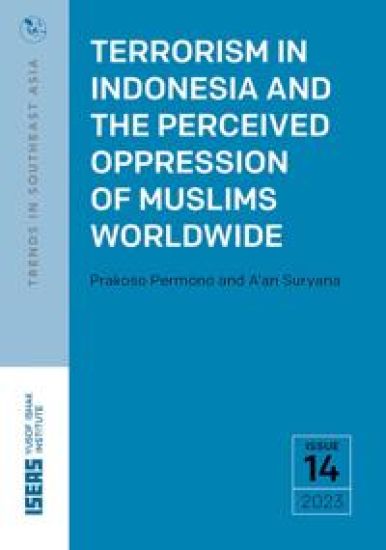
Terrorism in Indonesia and the Perceived Oppression of Muslims Worldwide
Various motivations underlying terrorism uncovered by recent scholarship include the radicals' desire for Muslim unity, political interest, yearning to correct social and economic deprivation in the Muslim world, and simply anti-Westernism. This article focuses on the radicals' call for Muslim solidarity and how this tends towards becoming their primary motivation for perpetrating terrorism. It discusses how radical groups and individuals exaggerate the perceived oppression of Muslims worldwide and how this encourages their sympathizers in planning, fundraising and/or executing terrorist attacks. The so-called ummah solidarity discourse is coupled with the prevalence of the dogma that Muslims are targets of Western or foreign oppression. This has legitimized jihadist terrorists' use of violence and facilitated the recruitment of new terrorists. Besides regular crackdowns on terrorists and putting limitations on access to radical websites and other Internet sources, this article contends that the Indonesian security apparatuses and the Ministry of Foreign Affairs must work with the embassies from India, China and Myanmar based in Jakarta to nullify any likelihood of terror attacks on their embassy compounds or their citizens.
Indonesia's Moderate Muslim Websites and Their Fight Against Online Islamic Extremism
It is worrying that, in many cases in Indonesia, exposure to the Internet, especially social media, increases knowledge seekers' religious radicalism. This exposure has not only resulted in increased radicalism but also compelled some individuals to turn to violence in the name of Islam. Moderate online media institutions have not been effective in counteracting the online dissemination of extremist religious content. The content disseminated by radical websites is still being popularly consumed, albeit those moderate Muslim websites have put in considerable effort to counteract radical narratives. This report argues that this ineffectiveness is due to structural and cultural challenges. The structural challenges include limited funding and sensitivity towards the policy of umbrella organizations. Cultural challenges include passiveness in corporate culture, alongside the "ivory tower" traditions among journalists which leaves them out of touch with Muslim communities. The government of Indonesia can assist moderate Muslim media websites in fighting radical narratives, for example, through better funding to them.
Religious Extremism in Major Campuses in Indonesia
Religious extremism among students in major campuses in Indonesia remains a problem for the Indonesian government, campus authorities and moderate Muslims. A substantial number of studies on Islam and religious extremism in Indonesia have focused on security and cultural paradigms. In contrast, this article discusses the factors that cause the rise of religious extremism among university students through an organizational and institutional lens. The dissemination and internalization of religious extremist narratives contribute to the rise of religious extremism among university students in Indonesia. Counter-extremism policies by the government and campus authorities have not been effective due to the absence of an integrative approach. All stakeholders—the government, campus authorities, parents of university students, communities and student organizations—need to establish a concerted and integrative effort to uproot religious extremism from among university students.
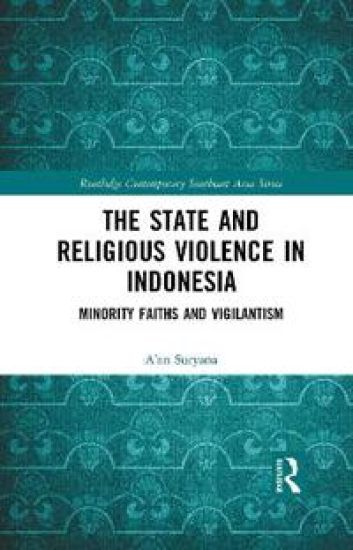
The State and Religious Violence in Indonesia

The State and Religious Violence in Indonesia

A’an Suryana

Taylor Francis Ltd
2021
nidottu
This book analyses the response of the Indonesian state to violence against Ahmadiyah and Shi’a minority communities by foregrounding the close connections between state officials and vigilante groups, which influenced the way the post-Soeharto democratic Indonesian governments addressed the problem of violence against religious minorities. Arguing that the violence stemmed in part from the state officials’ close connection with vigilante groups, and a general tendency for the authorities to forge mutual and material interests with such groups, the author demonstrates that vigilante groups were able to perpetrate violence against the minority congregations with a significant degree of impunity. While the Indonesian state has become far more democratic, accountable, and decentralized since 1998, the violence against Ahmadiyah and Shi’a communities shows a state that is still unwilling in assisting or allowing minority groups to practice their religion. The research undertaken for this book draws upon a lengthy period of ethnographic fieldwork in the communities of West Java and East Java. Research material includes in-depth interviews with community and religious leaders, state officials and security forces, and other prominent politicians. A novel approach to the problem of Islam, violence, and the state in Indonesia, the book will be of interest to researchers studying Southeast Asian Politics, Islam and Politics, Conflict Resolution, State and Violence, and Terrorism and Political Violence.
The Serious Social Impact on Non-Violent Extremism in Indonesia

The Serious Social Impact on Non-Violent Extremism in Indonesia

A'an Suryana; Nur Syafiqah Mohd Taufek

ISEAS
2021
nidottu
The rise of religious extremism in public discourses is a cause for concern for government officials and moderate Muslims. While a substantial body of research on violent extremism is available, the issue of non-violent extremism remains neglected by scholars. Although exposure and subscription to non-violent extremism do not automatically lead to violence, it still needs to be curbed because it can fan hatred that in turn can lead to physical violence and repression of human rights. Non-violent extremism also boosts polarization in the community. Given this potential impact, the government needs to pay more attention to the dissemination of non-violent extremist public discourses,especially on social media. It could work together with influential religious organizations which possess immense religious authority and legitimacy.
Challenges in Tackling Extremism in the Indonesian Civil Service

Challenges in Tackling Extremism in the Indonesian Civil Service

A'an Suryana

Institute of Southeast Asian Studies
2021
pokkari
In his second term, President Joko Widodo of Indonesia remains committed in combating radicalism. Anti-radicalism measures have been expanded to include the Indonesian civil service. This paper argues that some challenges arose during the process of implementing the policy including the lack of cooperation from Personnel Development Officers.
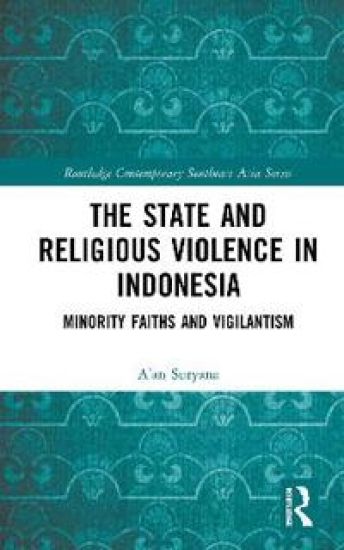
The State and Religious Violence in Indonesia
This book analyses the response of the Indonesian state to violence against Ahmadiyah and Shi’a minority communities by foregrounding the close connections between state officials and vigilante groups, which influenced the way the post-Soeharto democratic Indonesian governments addressed the problem of violence against religious minorities. Arguing that the violence stemmed in part from the state officials’ close connection with vigilante groups, and a general tendency for the authorities to forge mutual and material interests with such groups, the author demonstrates that vigilante groups were able to perpetrate violence against the minority congregations with a significant degree of impunity. While the Indonesian state has become far more democratic, accountable, and decentralized since 1998, the violence against Ahmadiyah and Shi’a communities shows a state that is still unwilling in assisting or allowing minority groups to practice their religion. The research undertaken for this book draws upon a lengthy period of ethnographic fieldwork in the communities of West Java and East Java. Research material includes in-depth interviews with community and religious leaders, state officials and security forces, and other prominent politicians. A novel approach to the problem of Islam, violence, and the state in Indonesia, the book will be of interest to researchers studying Southeast Asian Politics, Islam and Politics, Conflict Resolution, State and Violence, and Terrorism and Political Violence.