Kirjojen hintavertailu – 12 859 828 kirjaa ja 27 kauppaa

Kirjailija

A Brackob

Kirjat ja teokset yhdessä paikassa: 8 kirjaa, julkaisuja vuosilta 2018–2022, suosituimpiin kuuluu Formation of the Albanian National Consciousness. Vertaile teosten hintoja ja tarkista saatavuus suomalaisista kirjakaupoista.

8 kirjaa

Kirjojen julkaisuvuodet: 2018–2022.

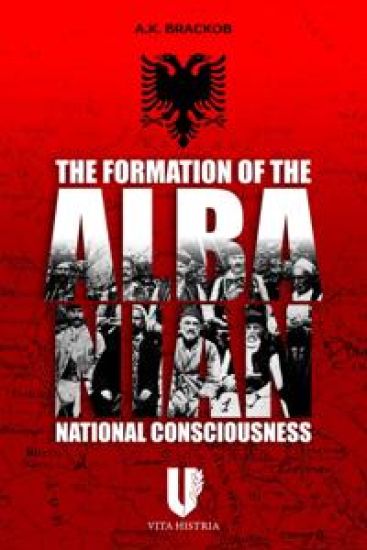
Formation of the Albanian National Consciousness
As the multi-national Ottoman Empire began to fall apart in the aftermath of the Russo-Turkish war of 1878, the Albanian people faced the peril of being absorbed into the surrounding newly formed nation-states of Southeastern Europe. Albanian leaders met at Prizren in 1878 to devise a strategy to defend their national rights. The Formation of the Albanian National Consciousness explores the origins of the movement that ultimately led to the creation of the modern-day Albanian nation-state. Had a national consciousness failed to develop prior to the crisis of 1878, the creation of a national movement, which not only sought to protect Albanian lands against foreign annexation but also strove to unite the four Albanian vilayets into a single autonomous administrative unit, would not have been possible. The development of a national consciousness during the decades preceding 1878 built the foundation for the national movement that culminated in the creation of the League of Prizren and ultimately led to the formation of an independent Albanian nation-state in 1912.
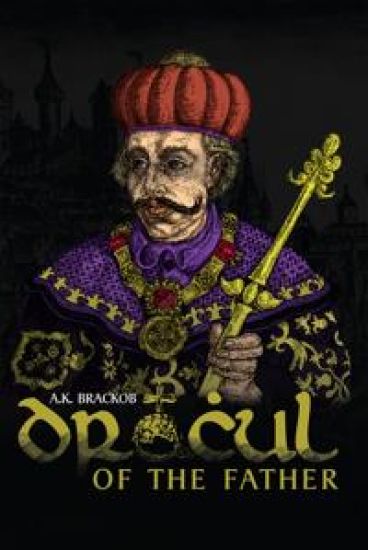
Dracul - Of the Father

Dracul - Of the Father

A Brackob

Histria LLC
2021
sidottu
Stories of Dracula have fascinated people around the world for generations. Both the fictional vampire created by the Irish author Bram Stoker at the end of the nineteenth century and the fifteenth century Prince called Vlad the Impaler, the man regarded as the historical Dracula, have become part of universal culture. Yet few realize that the Wallachian ruler dubbed “the Impaler,” is not the original Dracula. Instead, that distinction belongs to his father, a little-known prince called Vlad Dracul. The elder Vlad, who gained the sobriquet Dracul or Dracula when Holy Roman Emperor Sigismund of Luxemburg initiated him into the Order of the Dragon in February 1431, was among the most important political personalities of his day. He far surpassed his more famous namesake in those qualities that define a great ruler. Vlad Dracul struggled to protect the independence of his land, under the most difficult of circumstances, against the threats posed by his powerful neighbors, the Ottoman Empire and the Kingdom of Hungary. In so doing, he in no small way contributed to the survival of his principality at a time when Ottoman expansion in the Balkans expunged countries such as Bulgaria and Serbia from the map of Europe. Several books have been devoted to the study of his famous son, Vlad the Impaler, but any search for the historical Dracula must begin with the story of the father. Now, for the first time, based on extensive documentary research, the true story of the man who founded the Dracula dynasty is revealed. The author, A. K. Brackob is specialist on East European history. His other books include Scanderbeg: A History of George Castriota and the Albanian Resistance to Islamic Expansion in the Fifteenth Century, and Mircea the Old: Father of Wallachia, Grandfather of Dracula.
The Formation of the Albanian National Consciousness
As the multi-national Ottoman Empire began to fall apart in the aftermath of the Russo-Turkish war of 1878, the Albanian people faced the peril of being absorbed into the surrounding newly formed nation-states of Southeastern Europe. Albanian leaders met at Prizren in 1878 to devise a strategy to defend their national rights. The Formation of the Albanian National Consciousness explores the origins of the movement that ultimately led to the creation of the modern-day Albanian nation-state. Had a national consciousness failed to develop prior to the crisis of 1878, the creation of a national movement, which not only sought to protect Albanian lands against foreign annexation but also strove to unite the four Albanian vilayets into a single autonomous administrative unit, would not have been possible. The development of a national consciousness during the decades preceding 1878 built the foundation for the national movement that culminated in the creation of the League of Prizren and ultimately led to the formation of an independent Albanian nation-state in 1912.
Duty, Honor, Country

Duty, Honor, Country

A Brackob

Histria LLC
2020
sidottu
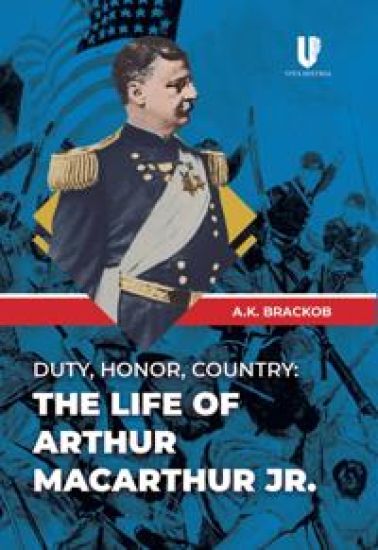
On September 15, 1906, Arthur MacArthur Jr. became the twelfth man in the history of the United States Army to be awarded the rank of Lieutenant General, the highest rank in the Army up to that time. This great honor, which marked the culmination of MacArthur's brilliant military career, included him in the ranks of such outstanding American military leaders as George Washington, Ulysses S. Grant, and William Tecumseh Sherman, all of whom had previously held this rank. This bespeaks of the importance of Arthur MacArthur as a figure in American history, yet invariably when the name MacArthur is mentioned today it is almost immediately associated with his son Douglas. Arthur MacArthur is, however, equally deserving of recognition as a great military leader. This biography, based on extensive archival research, reveals the remarkable career of this great patriot and his contribution to American history. This is all the more important because, to fully understand the career of his famous son, Douglas, who had such a profound impact on the military history of the United States in the twentieth century, it is essential to study the life and career of Arthur MacArthur Jr who began his military career as a mere boy fighting for the 23rd Wisconsin infantry regiment during the Civil War. Douglas MacArthur was himself conscious of the profound influence his father had upon his life. Douglas once said, "Of all men I have known my father was the one I most respected and admired." A. K. Brackob has a Ph. D. in history from the University of Illinois. His other books include Scanderbeg: A History of George Castriota and the Albanian Resistance to Islamic Expansion in Fifteenth Century Europe.
Poems and Prose of Mihai Eminescu

Poems and Prose of Mihai Eminescu

A Brackob; Ioana Lupusoru

Histria LLC
2020
nidottu
This new edition of poems and prose by Mihai Eminescu commemorates the 130th anniversary of the death of Romania’s national poet. This book includes a selection of the best English-language renditions of poems and prose by this remarkable cultural figure of the nineteenth-century, whom the British writer George Bernard Shaw once referred to as “the Moldavian who raised the XVIII-XIX fin de siÈcle from its grave.” It is undeniable that to have an appreciation of Romanian culture one must become acquainted with the works of Mihai Eminescu. The leading cultural figure of nineteenth century Romania, Eminescu (1850-1889) was not only a poet, but also a philosopher, prose writer, translator, and journalist. The selections in this volume include English language versions of some of Eminescu’s best-known poems such as Doina, Lacul, ?i daca, Luceafarul, Oda (În metru antic), Mai am un singur dor, Scrisoarea III, and many others. It also includes English versions of his most important prose writings. This beautiful, deluxe volume also includes an introduction on the life and work of Eminescu by A. K. Brackob and original artwork by Ioana Lupu?oru.
Poems and Prose of Mihai Eminescu

Poems and Prose of Mihai Eminescu

A Brackob; Ioana Lupusoru

Histria LLC
2019
sidottu
This new edition of poems and prose by Mihai Eminescu commemorates the 130th anniversary of the death of Romania’s national poet. This book includes a selection of the best English-language renditions of poems and prose by this remarkable cultural figure of the nineteenth-century, whom the British writer George Bernard Shaw once referred to as “the Moldavian who raised the XVIII-XIX fin de siÈcle from its grave.” It is undeniable that to have an appreciation of Romanian culture one must become acquainted with the works of Mihai Eminescu. The leading cultural figure of nineteenth century Romania, Eminescu (1850-1889) was not only a poet, but also a philosopher, prose writer, translator, and journalist. The selections in this volume include English language versions of some of Eminescu’s best-known poems such as Doina, Lacul, ?i daca, Luceafarul, Oda (În metru antic), Mai am un singur dor, Scrisoarea III, and many others. It also includes English versions of his most important prose writings. This beautiful, deluxe volume also includes an introduction on the life and work of Eminescu by A. K. Brackob and original artwork by Ioana Lupu?oru.
When Angels Sing

When Angels Sing

A Brackob; Alexandra Chirita; Elisabeta Isanos-Goian

Histria LLC
2019
nidottu
Magda Isanos (1916-1944) ranks among the greatest poets in the history of Romanian literature. When Angels Sing: Poetry and Prose of Magda Isanos presents, for the first time, English language versions of her writings, revealing their beauty, sensitivity, and aura of mysticism, along with a premonition of impending doom. One of the most remarkable female voices of her generation, the poetry and prose of Magda Isanos mirror the troubled era in which she lived, as well as the tragedy of her own life. The themes expounded in her literary works are universal, reflecting a wide spectrum of emotions. When Angels Sing is the first English language edition of poems and prose by this remarkable Romanian writer. It includes an introduction to the poet’s life and work by A. K. Brackob, along with a postscript by the poet’s late daughter, Elisabeta Isanos. A series of original illustrations by Romanian artist, Alexandra Chiri?a give visual expression to the literary creations of Magda Isanos. When Angels Sing is a book that belongs in any representative collection of world literature.
Scanderbeg

Scanderbeg

A Brackob

Histria LLC
2018
sidottu

Halvin toimitettuna 32,10 €

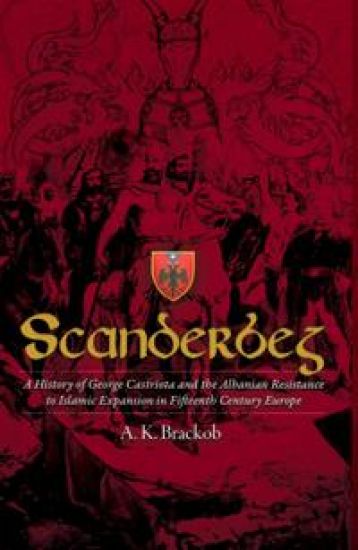
The struggle of the Albanian people led by George Castriota Scanderbeg to defend Europe against the assault of the Ottoman Turks has been much celebrated. For a quarter of a century, from 1443 until his death in 1468, he used his military prowess to thwart the efforts of the most powerful Empire in the world at the time to subdue his tiny country. One of the true heroes of the Middle Ages in Europe, unfortunately, the remarkable story of Scanderbeg remains little known outside of Albania. George Castriota defended Europe for a quarter of a century and, it can rightly be said, helped to save Western civilization from being overrun by Islam and suffering the same fate as the once-mighty Byzantine Empire. This book examines the genius and remarkable achievements of Scanderbeg who helped shape the identity of the Albanian people and reveals the important contribution this small but proud nation has made to European civilization. Although the challenges have changed over the centuries, the clash of civilizations, which the history of the Albanian struggle to fend off the Islamic onslaught illustrates, continues today. As a result, it is all the more worth noting the contribution that this tiny land, led by Scanderbeg, made in the fight to preserve Western culture and civilization. Equally important is the example set by the Albanian people in ultimately harmonizing these two great civilizations.