Kirjojen hintavertailu – 12 859 819 kirjaa ja 27 kauppaa

Kirjailija

A.D. Morrison-Low

Kirjat ja teokset yhdessä paikassa: 3 kirjaa, julkaisuja vuosilta 2007–2016, suosituimpiin kuuluu Scottish Photography. Vertaile teosten hintoja ja tarkista saatavuus suomalaisista kirjakaupoista.

Nimi esiintyy myös muodoissa: A. D. Morrison-Low

3 kirjaa

Kirjojen julkaisuvuodet: 2007–2016.

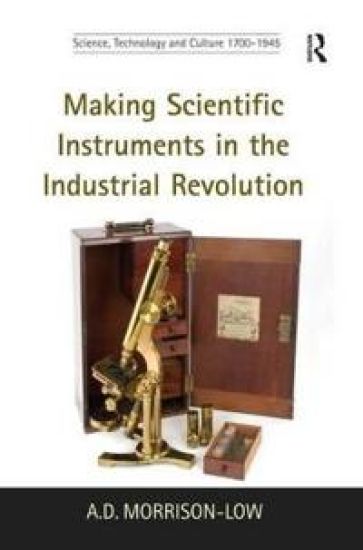
Making Scientific Instruments in the Industrial Revolution
At the start of the Industrial Revolution, it appeared that most scientific instruments were made and sold in London, but by the time of the Great Exhibition in 1851, a number of provincial firms had the self-confidence to exhibit their products in London to an international audience. How had this change come about, and why? This book looks at the four main, and two lesser, English centres known for instrument production outside the capital: Birmingham, Liverpool, Manchester and Sheffield, along with the older population centres in Bristol and York. Making wide use of new sources, Dr Morrison-Low, curator of history of science at the National Museums of Scotland, charts the growth of these centres and provides a characterisation of their products. New information is provided on aspects of the trade, especially marketing techniques, sources of materials, tools and customer relationships. From contemporary evidence, she argues that the principal output of the provincial trade (with some notable exceptions) must have been into the London marketplace, anonymously, and at the cheaper end of the market. She also discusses the structure and organization of the provincial trade, and looks at the impact of new technology imported from other closely-allied trades. By virtue of its approach and subject matter the book considers aspects of economic and business history, gender and the family, the history of science and technology, material culture, and patterns of migration. It contains a myriad of stories of families and firms, of entrepreneurs and customers, and of organizations and arms of government. In bringing together this wide range of interests, Dr Morrison-Low enables us to appreciate how central the making, selling and distribution of scientific instruments was for the Industrial Revolution.
Scottish Photography

Scottish Photography

Sara Stevenson; A. D. Morrison-Low

NMSE - Publishing Ltd
2015
sidottu
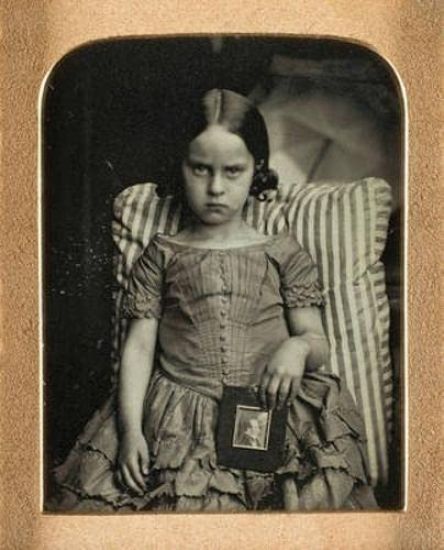
In the middle of the nineteenth century a sympathetic relationship between art, science and technology laid the groundwork for photography to flourish, including camera obscura and the panorama. This is a lavishly produced book on the eventful first thirty years of photography in Scotland - around 1840 - 70. The photographers whose work is discussed include David Octavius Hill, Robert Adamson, James Valentine, Thomas Annan and George Washington Wilson plus practitioners not previously mentioned in any publication. Julia Margaret Cameron's encounter with Scotland is also described as is the work of Scottish photographers abroad.
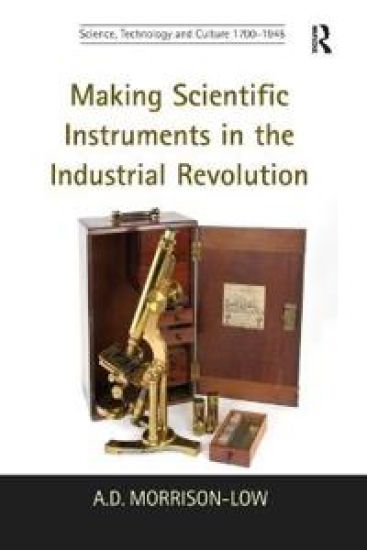
Making Scientific Instruments in the Industrial Revolution

Making Scientific Instruments in the Industrial Revolution

A.D. Morrison-Low

Ashgate Publishing Limited
2007
sidottu
At the start of the Industrial Revolution, it appeared that most scientific instruments were made and sold in London, but by the time of the Great Exhibition in 1851, a number of provincial firms had the self-confidence to exhibit their products in London to an international audience. How had this change come about, and why? This book looks at the four main, and two lesser, English centres known for instrument production outside the capital: Birmingham, Liverpool, Manchester and Sheffield, along with the older population centres in Bristol and York. Making wide use of new sources, Dr Morrison-Low, curator of history of science at the National Museums of Scotland, charts the growth of these centres and provides a characterisation of their products. New information is provided on aspects of the trade, especially marketing techniques, sources of materials, tools and customer relationships. From contemporary evidence, she argues that the principal output of the provincial trade (with some notable exceptions) must have been into the London marketplace, anonymously, and at the cheaper end of the market. She also discusses the structure and organization of the provincial trade, and looks at the impact of new technology imported from other closely-allied trades. By virtue of its approach and subject matter the book considers aspects of economic and business history, gender and the family, the history of science and technology, material culture, and patterns of migration. It contains a myriad of stories of families and firms, of entrepreneurs and customers, and of organizations and arms of government. In bringing together this wide range of interests, Dr Morrison-Low enables us to appreciate how central the making, selling and distribution of scientific instruments was for the Industrial Revolution.