Kirjailija
A. J. Cronin
Kirjat ja teokset yhdessä paikassa: 35 kirjaa, julkaisuja vuosilta 1983–2026, suosituimpiin kuuluu Adventures in Two Worlds. Vertaile teosten hintoja ja tarkista saatavuus suomalaisista kirjakaupoista.
Nimi esiintyy myös muodoissa: A J Cronin, A. J Cronin
35 kirjaa
Kirjojen julkaisuvuodet: 1983–2026.
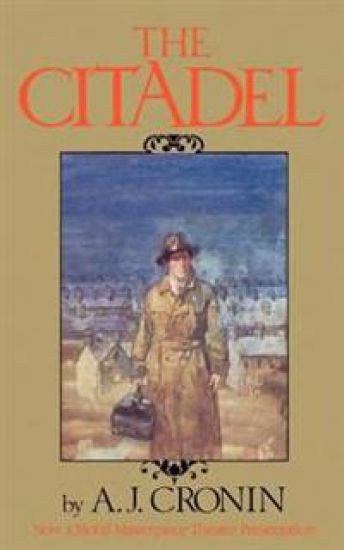
An influential part in laying the foundation of the NHS, The Citadel is a moving story of tragedy, triumph and redemption. When newly qualified doctor Andrew Manson takes up his first post in a Welsh mining community, the young Scot brings with him a bagful of idealism and enthusiasm. Both are soon strained to the limit as Andrew discovers the reality of performing operations on a kitchen table and washing in a scullery, of unspeakable sanitation, of common infantile cholera and enteritis. There are no X-rays, no ambulances – nothing to combat the disease and poverty. It isn’t long before Andrew’s outspokenness and determination make him enemies – as well as winning him friends, and the love of an idealistic schoolteacher. Riches that he risks losing when the fashionable, greedy world of London medicine claims him, with its private clinics, wealthy, spoilt patients and huge rewards. A classic saga by A J Cronin, one of the great masters of the genre, author of The Stars Look Down and Hatter's Castle.
The Keys of the Kingdom is the unforgettable story of the Reverend Francis Chisholm and his fight against the snares of the world he has given up . . . his forbidden attraction to women . . . his struggle with his superiors . . . One of Cronin’s most famous characters, we follow Chisholm from Scotland to China over the course of six decades as he tries to find the true path for himself and the church. Guided by humility and strength, courage and kindness, Chisholm must overcome the famine, plague and war his journey presents to him. From the pen of the author of The Citadel, Hatter’s Castle, The Stars Look Down, Shannon’s Way and The Spanish Gardener comes this compelling tale of an ordinary man of the people.
When Mr Harrington Brande moves himself and his precious young son Nicholas to a grand house in the deserted Spanish town of San Jorge he is planning on a fresh start for the two of them. And only the two of them. For Mr Harrington Brande is a proud man and a jealous man. His beloved wife has recently fled his stifling love and now Brande has transferred all of his adoration onto Nicholas. He monitors his son’s every move and is obsessed with ensuring that the bond between them is stronger than ever. But history begins to repeat itself when Nicholas befriends the gardener José. José is like no one Nicholas has ever met before and he instantly holds him in high regard. Brande does not take too kindly to having to vie for his son’s attention with the Spanish gardener, and becomes increasingly suspicious of his rival. Encouraged by his butler, Garcia, Brande becomes convinced that José is not the person he pretends to be. Blinded by love and jealousy, how far will Brande go to secure his son’s affections? In the magnificent narrative tradition of The Citadel, The Stars Look Down and Cronin’s other classic novels, The Spanish Gardener is a great book by a much-loved author.
Henry Page, owner of The Northern Light, the oldest and most respected newspaper in Tynecastle, is offered a vast sum to turn over control to a mass-circulation group based in London. He refuses – despite entreaties by his wife to accept – and so begins his fight with the Chronicle, an almost defunct newspaper in the same area which is given new life by London-thinking and London men. Against Henry Page, a journalist who believes in honest presentation of news without bringing in sensationalism, the Chronicle pulls every dirty trick in the trade. And Henry, brought eventually almost to his knees, stoically holds on to his principles and The Northern Light. It is only when he has won the battle that tragedy robs him of the most important thing in his life. In the magnificent narrative tradition of The Citadel, The Stars Look Down and Cronin’s other classic novels, The Northern Light is a great book by a much-loved author.
In a story of wide and fascinating detail A. J. Cronin tells of Dr. David Morey who tries to atone for his desertion of the woman he loved. Beguiled by the prospect of riches he goes on to marry Dottie, a spoiled but beautiful neurotic who brings him almost constant misery, until a chance remark makes him seek retribution in memories of the past and a return to his native Scotland. In the magnificent narrative tradition of The Citadel, The Stars Look Down and Cronin’s other classic novels, The Judas Tree is a great book by a much-loved author.
In the heat of late afternoon, a young boy waits at the station for his father. A plume of steam, white against the purple-heathered hills, marks the train. Beyond, blooming along the shoreline, the flowers of high summer, as a tall-funnelled paddle steamer beats and froths down the wide Clyde estuary . . . A narrative in the great Cronin tradition, this is the stirring chronicle of Laurence Carroll as he grows from childhood to adult years in Scotland. The tale of his struggles – early illness, a widowed mother, poverty, the uncles who try to help him, and the women who have such an unhappy effect upon him, is told with warm humour and with that intense and sympathetic realism for which A J Cronin is known. In the magnificent narrative tradition of The Citadel, The Stars Look Down and Cronin’s other classic novels, A Song of Sixpence is a great book by a much-loved author.
Robert Shannon was a devoted scientist on the brink of a medical discovery of great importance. He had no time or inclination for women . . . or for any of the world outside his laboratory. But Jean Law had other plans for him. Strictly brought up by narrow-minded parents, confined by her hospital lectures and her dingy boarding-house, she hardly knew the fires that burned beneath her calm exterior . . . except that they burned for Robert Shannon. She knew she had to have him for herself, and, despite her family’s religious beliefs , their shocked disapproval, and all she had been taught was her destiny, she was determined to fight for him. In the magnificent narrative tradition of The Citadel, The Stars Look Down and Cronin’s other classic novels, Shannon’s Way is a great book by a much-loved author.
Lady with Carnations is not only the traditional name of a famous Holbein miniature which unexpectedly comes into a London salesroom in the mid-thirties: it is also the soubriquet by which some of her close friends think of the antique-dealer who buys it. Katharine Lorimer, by hard work, flair and courage, has worked her way to the top of a trade that traditionally belongs to men. Yet, having acquired the Holbein despite fierce competition, she feels not triumph but a terrible anxiety and desolation. The antique business is going through the doldrums, and she herself is reaching the limit of her resources. Worse still, she feels appallingly alone in the world. Reserved and fastidious, she keeps a certain distance from even her dearest friends, and the person she loves most, her niece Nancy, is bound up in her own ambitions to become a famous actress. Katharine has bought the miniature as a gigantic gamble, hoping to sell it to a wealthy American collector, and she sets off for New York with Nancy and her niece’s fiancé. What happens to them all there, and how their lives are altered, makes an engrossing tale, a delightful love story, showing at its best Dr Cronin’s gifts as a novelist. Every Cronin ‘fan’, every reader who enjoys a novel with the old-fashioned virtues of a well-worked-out plot, sympathetic characters, and humanity, will find it absorbing. In the magnificent narrative tradition of The Citadel, The Stars Look Down and Cronin’s other classic novels, Lady With Carnations is a great book by a much-loved author.
Gracie Lindsay’s return to Levenford arouses mixed feelings: to her uncle Daniel she is the daughter he never had; to David Murray she is the woman he still loves though he is now engaged to another; and to the townspeople she is the girl who seven years earlier left Levenford pregnant and in disgrace. Now at 25 Gracie is more lovely than ever and just as careless of propriety as before . . . This is the poignant and moving story of Gracie’s struggle to win self-respect and the regard of the town. In the magnificent narrative tradition of The Citadel, The Stars Look Down and Cronin’s other classic novels, Gracie Lindsay is a great book by a much-loved author.
Paul Mathry, a student about to graduate and embark upon a teaching career, finds out that his father was convicted for murder, a secret that his mother had hidden from him since his childhood. Driven by an intense desire to see his father, Paul sets out to visit him in prison, only to find out that visitors are never allowed there. From there, he meets the primary witnesses in the case that convicted his father, not all of whom are supportive to Paul's cause. He encounters several dead ends but he persists, with the help of a store girl named Lena and a news reporter. His persistent campaign finally bears fruit. Rees Mathry, Paul's father, goes on appeal and is vindicated. The novel ends with Paul's father, a hardened, cynical man, seeing a fleeting hope for self-renewal and a purposeful life. In the magnificent narrative tradition of The Citadel, The Stars Look Down and Cronin’s other classic novels, Beyond This Place is a great book by a much-loved author.
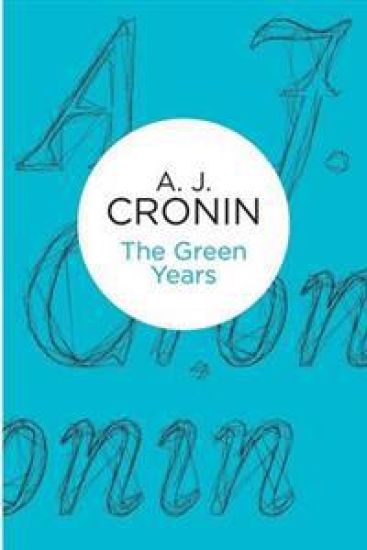
Originally published in 1945, The Green Years is one of A J Cronin’s best-loved novels. It tells the story of Robert Shannon, a young Irish Catholic boy, who, orphaned at the age of seven, is brought to live with his mother’s estranged family in Scotland. As he grows up in a dour Presbyterian town, only his great-grandfather, an incorrigible, swaggering, charming, larger-than-life character, seems able to rescue him from the narrow interests of the people who try to shape his life in their own image. Disappointed in love and in his burning ambition to study medicine, the eighteen-year-old Robert sees his future as a blank wall. But, once again, he is saved from despair by his fiery relative, much to the chagrin of the rest of the family. This compassionate story of a boy’s growth to manhood, set against the harsh reality of life at the turn of the century, shows A J Cronin at his masterly best, creating a vivid gallery of characters with his customary blend of imagination, insight and tenderness. In the magnificent narrative tradition of The Citadel, The Stars Look Down and Cronin’s other classic novels, The Green Years is a great book by a much-loved author
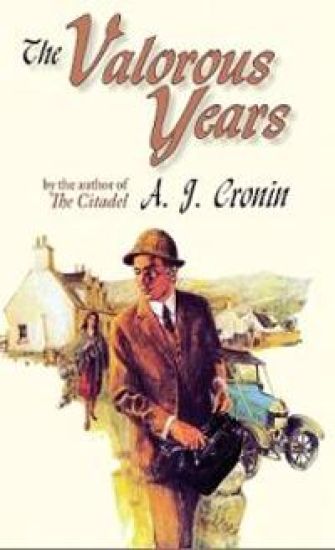
"The Valorous Years" represents something of an event for fans of A. J. Cronin. Here, published for the first time in book form, is his poignant and moving story of a young man, Duncan Stirling, who, though his left arm is crippled by polio, is determined to become a world-famous physician. Woven into Duncan's life are three unforgettable women-Margaret, whose charm and beauty cast a spell over him; Anna, a brilliant surgeon who wants to heal his useless arm; and Jean, the compassionate daughter of a kindly country doctor. With his keen understanding of the human condition, his deep moral conscience, and his extraordinary narrative skill, A. J. Cronin imbues "The Valorous Years" with all the qualities that have made his many other novels worldwide bestsellers.
"Cronin's distinguished achievement.... No one could have written as fine, honest, and moving a study of a young doctor as The Citadel without possessing great literary taste and skill." --The Atlantic MonthlyA groundbreaking novel of its time and a National Book Award winner. The Citadel follows the life of Andrew Manson, a young and idealistic Scottish doctor, as he navigates the challenges of practicing medicine across interwar Wales and England. Based on Cronin's own experiences as a physician, The Citadel boldly confronts traditional medical ethics, and has been noted as one of the inspirations for the formation of the National Health Service. The Citadel has been adapted into several successful film, radio, and television productions around the world, including the Oscar-nominated 1938 film starring Ralph Donat, Rosalind Russell, Ralph Richardson, and Rex Harrison.