Kirjojen hintavertailu – 12 903 742 kirjaa ja 27 kauppaa

Kirjailija

A.J.H. Latham

Kirjat ja teokset yhdessä paikassa: 12 kirjaa, julkaisuja vuosilta 1998–2026, suosituimpiin kuuluu The Rice Trade in Asia. Vertaile teosten hintoja ja tarkista saatavuus suomalaisista kirjakaupoista.

Nimi esiintyy myös muodoissa: A. J. H. Latham

12 kirjaa

Kirjojen julkaisuvuodet: 1998–2026.

The Rice Trade in Asia

The Rice Trade in Asia

A. J. H. Latham

TAYLOR FRANCIS LTD
2026
nidottu
This book analyses the development of the rice trade in Asia since 1945. This book focuses on the three historically important exporters Myanmar, Thailand, and Vietnam and the two key importers Indonesia and the Philippines. The book addresses the impacts of several major transitions during this period on the rice trade in these nations, namely their initial recovery post-war, the political turbulence during and following the independence struggles of these nations, and the impact of the Vietnam war. It also tracks the fluctuating impact of the various El Nino/ Southern Oscillation (ENSO) climatic events across the period on harvest and exports, for example in events such as the rice crisis of 1973-75. Using data from the London Rice Brokers’ Association Circular to create a detailed narrative of the rice trade, this book will be of interest to students and scholars of Asian history, economic history and economic development in post-war Asia.
The Rice Trade in Asia

The Rice Trade in Asia

A. J. H. Latham

TAYLOR FRANCIS LTD
2024
sidottu
This book analyses the development of the rice trade in Asia since 1945. This book focuses on the three historically important exporters Myanmar, Thailand and Vietnam as well as the two key importers Indonesia and the Philippines. The book addresses the impacts of several major transitions during this period on the rice trade in these nations, namely their initial recovery post-war, the political turbulence during and following the independence struggles of these nations and the impact of the Vietnam War. It also tracks the fluctuating impact of the various El Nino/Southern Oscillation (ENSO) climatic events across the period on harvest and exports, for example, in events such as the rice crisis of 1973–1975. Using data from the London Rice Brokers’ Association Circular to create a detailed narrative of the rice trade, this book will be of interest to students and scholars of Asian history, economic history and economic development in post-war Asia.
Rice and Industrialisation in Asia

Rice and Industrialisation in Asia

A.J.H. Latham

TAYLOR FRANCIS LTD
2023
nidottu
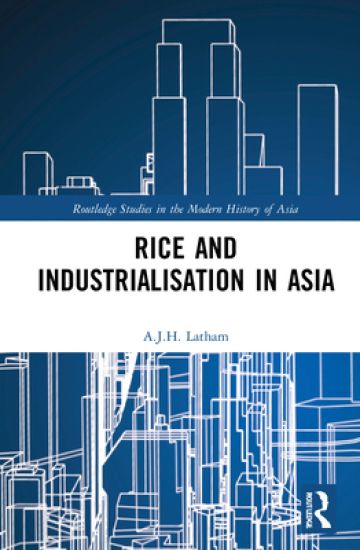
This book is about the introduction of modern power-driven rice milling to the main rice exporting countries of Burma (Myanmar), Siam (Thailand) and French Indo-China (Vietnam) from 1869. Rich in historical and empirical sources, the book draws extensively from the London Rice Brokers’ Association Circular archives, published monthly from 1869 to 2014, as well as numerical data gathered from historic trade and custom reports. It outlines how rice had been exported in the husk to be milled in Britain prior to 1869, after which mills were transferred to Asia and the rice shipped back having been milled. Rice processed in Asia is explained not only as a major saving in transport costs, but the marker of a crucial step in the industrialisation of Asia – namely through the introduction of modern mechanised value adding rice mills powered by steam engines. This is a reversal of the concept that the development of modern technology de-industrialised Asia, turning it into a supplier of raw materials. Later chapters address the inter-war years, when Chinese companies in particular took over the operation of mills and developed an Asia-wide market for rice milled in the great milling centers of Rangoon (Yangon), Bangkok and Saigon (Ho Chi Minh). Rice and Industrialisation in Asia will prove a valuable resource to students and scholars of economic history, postcolonial studies, and Asian studies more broadly.
Rice and Industrialisation in Asia

Rice and Industrialisation in Asia

A.J.H. Latham

TAYLOR FRANCIS LTD
2021
sidottu
This book is about the introduction of modern power-driven rice milling to the main rice exporting countries of Burma (Myanmar), Siam (Thailand) and French Indo-China (Vietnam) from 1869. Rich in historical and empirical sources, the book draws extensively from the London Rice Brokers’ Association Circular archives, published monthly from 1869 to 2014, as well as numerical data gathered from historic trade and custom reports. It outlines how rice had been exported in the husk to be milled in Britain prior to 1869, after which mills were transferred to Asia and the rice shipped back having been milled. Rice processed in Asia is explained not only as a major saving in transport costs, but the marker of a crucial step in the industrialisation of Asia – namely through the introduction of modern mechanised value adding rice mills powered by steam engines. This is a reversal of the concept that the development of modern technology de-industrialised Asia, turning it into a supplier of raw materials. Later chapters address the inter-war years, when Chinese companies in particular took over the operation of mills and developed an Asia-wide market for rice milled in the great milling centers of Rangoon (Yangon), Bangkok and Saigon (Ho Chi Minh). Rice and Industrialisation in Asia will prove a valuable resource to students and scholars of economic history, postcolonial studies, and Asian studies more broadly.
The International Economy and the Undeveloped World 1865-1914
Economic Historians generally consider the international economy through the lens of the most economically powerful nations. This Western perspective distorts the true picture of how the international economy operates. The International Economy and the Undeveloped World seeks to redress this fundamental bias and argues that Africa and Asia have a dramatic impact on the economies of the wealthier nations. This volume concentrates on the role of developing nations in the 50 years preceding the first world war. These regions, it argues, were instrumental in the evolution of the world economy. Indeed it could not have evolved in the manner that it did without them. Latham points to the fact that the so-called free-trade era was unsustainable without the developing countries, without which Europe and America would have had to make fundamental readjustments. This book was first published in 1978.
The Depression and the Developing World, 1914-1939
Usual interpretations of the Depression stress the disruption in Europe caused by the Versailles Settlement, and the downswing in the United States centred on the Wall Street Crash. This book, however, suggests that the situation in Asia was as important as the situation in Europe or the USA. The book examines the economic experience of Asia and Africa from 1914 to 1939 and looks at the influence of the developed world upon these two continents, showing how events there affected the entire international economy. In particular it suggests that the economic progress of the 1920s caused the depression by creating overproduction of foodstuffs and raw materials. The communications improvements of these years are examined in detail, and the complex problems of the monetary systems of the developing countries are outlined together with the flow of capital to these areas, and its reversal in the 1930s. In the discussion on trade, the disappearance of Britain's surplus with these countries is stressed, as it weakened her international trading balance and contributed to the collapse of the Sterling in 1931. First published in 1981, the book concludes that the overproduction of rice coupled with overproduction of wheat, forced down prices, thus causing the international agricultural depression. In turn, farm incomes fell and demand for industrial goods was destroyed across the world.
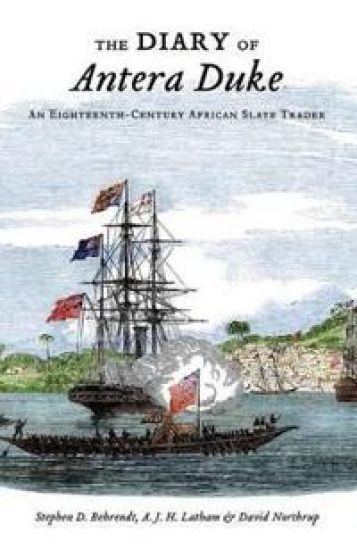
The Diary of Antera Duke, an Eighteenth-Century African Slave Trader

The Diary of Antera Duke, an Eighteenth-Century African Slave Trader

Stephen D. Behrendt; A.J.H. Latham; David Northrup

Oxford University Press Inc
2012
nidottu
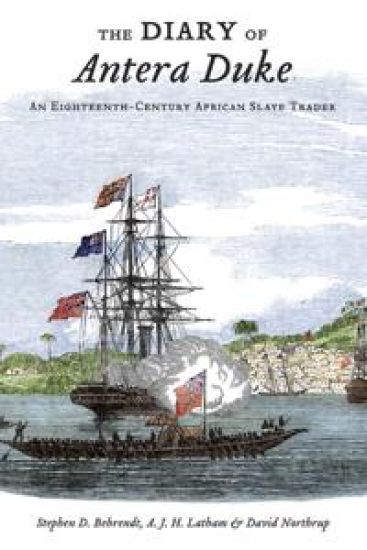
In his diary, Antera Duke (ca.1735-ca.1809) wrote the only surviving eyewitness account of the slave trade by an African merchant. A leader in late eighteenth-century Old Calabar, a cluster of Efik-speaking communities in the Cross River region, he resided in Duke Town, forty-five miles from the Atlantic Ocean in what is now southeast Nigeria. His diary, written in trade English from 1785 to 1788, is a candid account of daily life in an African community at the height of Calabar's overseas commerce. It provides valuable information on Old Calabar's economic activity both with other African businessmen and with European ship captains who arrived to trade for slaves, produce, and provisions. This new edition of Antera's diary, the first in fifty years, draws on the latest scholarship to place the diary in its historical context. Introductory essays set the stage for the Old Calabar of Antera Duke's lifetime, explore the range of trades, from slaves to produce, in which he rose to prominence, and follow Antera on trading missions across an extensive commercial hinterland. The essays trace the settlement and development of the towns that comprised Old Calabar and survey the community's social and political structure, rivalries among families, sacrifices of slaves, and witchcraft ordeals. This edition reproduces Antera's original trade-English diary with a translation into standard English on facing pages, along with extensive annotation. The editors draw on Antera's first language, Efik, to illuminate his diary. The Diary of Antera Duke furnishes a uniquely valuable source for the history of precolonial Nigeria and the Atlantic slave trade, and this new edition enriches our understanding of it.
The Diary of Antera Duke, an Eighteenth-Century African Slave Trader

The Diary of Antera Duke, an Eighteenth-Century African Slave Trader

Stephen D. Behrendt; A.J.H. Latham; David Northrup

Oxford University Press Inc
2010
sidottu
The diary of Antera Duke is one of the earliest and most extensive surviving documents written by an African residing in coastal West Africa predating the arrival of British missionaries and officials in the mid-19th century. Antera Duke (ca.1735-ca.1809) was a leader and merchant in late eighteenth-century Old Calabar, a cluster of Efik-speaking communities in the Cross River region. He resided in Duke Town, forty miles from the Atlantic Ocean in modern-day southeast Nigeria. His diary, written in trade English from 18 January 1785 to 31 January 1788, is a candid account of daily life in an African community during a period of great historical interest. Written by a major African merchant at the height of Calabar's overseas commerce, it provides valuable information on Old Calabar's economic activity both with other African businessmen and with European ship captains who arrived to trade for slaves, produce and provisions. It is also unique in chronicling the day-to-day social and cultural life of a vibrant African community. Antera Duke's diary is much more than a historical curiosity; it is the voice of a leading African-Atlantic merchant who lived during an age of expanding cross-cultural trade. The book reproduces the original diary of Antera Duke, as transcribed by a Scottish missionary, Arthur W. Wilkie, ca. 1907 and published by OUP in 1956. A new rendering of the diary into standard English appears on facing pages, and the editors have advanced the annotation completed by anthropologist Donald Simmons in 1954 by editing 71 and adding 158 footnotes. The updated reference information incorporates new primary and secondary source material on Old Calabar, and notes where their editorial decisions differ from those made by Wilkie and Simmons. Chapters 1 and 2 detail the eighteenth-century Calabar slave and produce trades, emphasizing how personal relationships between British and Efik merchants formed the nexus of trade at Old Calabar. To build a picture of Old Calabar's regional trading networks, Chapter 3 draws upon information contained in Antera Duke's diary, other contemporary sources, and shipping records from the 1820s. Chapter 4 places information in Antera Duke's diary in the context of eighteenth-century Old Calabar political, social and religious history, charting how Duke Town eclipsed Old Town and Creek Town through military power, lineage strength and commercial acumen.
The Depression and the Developing World, 1914-1939
Usual interpretations of the Depression stress the disruption in Europe caused by the Versailles Settlement, and the downswing in the United States centred on the Wall Street Crash. This book, however, suggests that the situation in Asia was as important as the situation in Europe or the USA. The book examines the economic experience of Asia and Africa from 1914 to 1939 and looks at the influence of the developed world upon these two continents, showing how events there affected the entire international economy. In particular it suggests that the economic progress of the 1920s caused the depression by creating overproduction of foodstuffs and raw materials. The communications improvements of these years are examined in detail, and the complex problems of the monetary systems of the developing countries are outlined together with the flow of capital to these areas, and its reversal in the 1930s. In the discussion on trade, the disappearance of Britain's surplus with these countries is stressed, as it weakened her international trading balance and contributed to the collapse of the Sterling in 1931. First published in 1981, the book concludes that the overproduction of rice coupled with overproduction of wheat, forced down prices, thus causing the international agricultural depression. In turn, farm incomes fell and demand for industrial goods was destroyed across the world.
The International Economy and the Undeveloped World 1865-1914
Economic Historians generally consider the international economy through the lens of the most economically powerful nations. This Western perspective distorts the true picture of how the international economy operates. The International Economy and the Undeveloped World seeks to redress this fundamental bias and argues that Africa and Asia have a dramatic impact on the economies of the wealthier nations. This volume concentrates on the role of developing nations in the 50 years preceding the first world war. These regions, it argues, were instrumental in the evolution of the world economy. Indeed it could not have evolved in the manner that it did without them. Latham points to the fact that the so-called free-trade era was unsustainable without the developing countries, without which Europe and America would have had to make fundamental readjustments. This book was first published in 1978.
Economics in the Developing World
There is a tendency to focus on developed nations as the predominant factors in world economics. Yet this key set reveals the dangers inherent in overlooking the vital roles played by developing nations: for example, author Latham suggests that the Great Depression was heavily influenced by the developing nations on the African and Asian continents, and that the economic progress experienced in the 1920's caused an overproduction of foodstuffs and raw materials which tipped the world into a depression.
Rice: The Primary Commodity

Rice: The Primary Commodity

A.J.H. Latham

Routledge
1998
sidottu
Rice: The Primary Commodity de-mystifies the trade, outlines its workings and the problems which confront it. A. J. Latham outlines the history and cultivation of rice, and the research programmes which have done so much to revolutionise its production in recent years. Including case studies of the rice markets in India, Pakistan, Malaysia, Indonesia, Japan, Brazil, the USA and many other countries, this book gives an up-to-date and comprehensive view of the unpredictable and rapidly changing world market in rice.