Kirjojen hintavertailu – 12 903 725 kirjaa ja 27 kauppaa

Kirjailija

A.J. Meadows

Kirjat ja teokset yhdessä paikassa: 4 kirjaa, julkaisuja vuosilta 1997–2025, suosituimpiin kuuluu The Future of the Universe. Vertaile teosten hintoja ja tarkista saatavuus suomalaisista kirjakaupoista.

Nimi esiintyy myös muodoissa: A. J. Meadows

4 kirjaa

Kirjojen julkaisuvuodet: 1997–2025.

The Lamp of Learning

The Lamp of Learning

W H Brock; A.J. Meadows

TAYLOR FRANCIS LTD
2025
sidottu
Originally published in 1998, when for two centuries Taylor & Francis had been committed to the publication of scholarly information. Ever since the launching of the Philosophical Magazine in 1798, the publishing company run by Richard Taylor and later by William Francis has specialised in the printing and publishing of scientific periodicals and books. Both founders wrote original scientific papers, and through close involvement with the scientific societies of London, and dedication to the business of scientific communication, both nationally and internationally, developed a high reputation for the quality of their publications. With the proliferation of periodicals and information generated by learned societies at the turn of the twentieth century, Taylor & Francis also became pioneers in the field of abstracting journals. This pioneering spirit remained at the time with the company at the forefront of the development of on-line electronic journals. Taylor & Francis publishes books and periodicals in the fields of science, engineering, social science and humanities yet continues to publish many of the early journals, including the Philosophical Magazine, whose current aims have evolved to meet the needs of modern physicists. The company had grown dramatically in the previous 15 years, being transformed from a small family business into a thriving international company with publishing offices in the UK and the USA (now in 14 countries worldwide), yet it was still one in which leading scientists were shareholders and directors. The story of the development of Taylor & Francis in this book is much more than an isolated account of one small company – it throws light on the whole process of scientific communication during the previous 200 years. In this bicentenary edition the story of the company’s growth into a significant academic publishing player was brought right up to date within the context of late twentieth century publishing innovation and expansion. Today T&F continues to go from strength to strength.
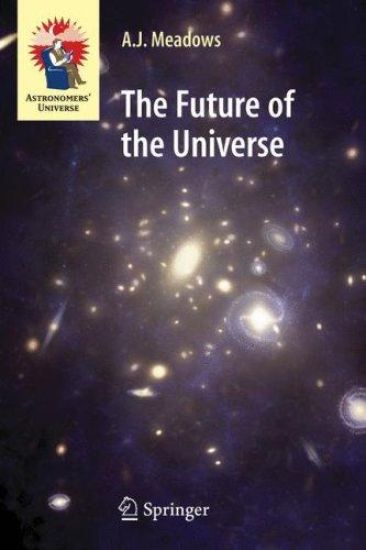
The Future of the Universe

The Future of the Universe

A.J. Meadows

Springer London Ltd
2010
nidottu

Halvin toimitettuna 34,50 €

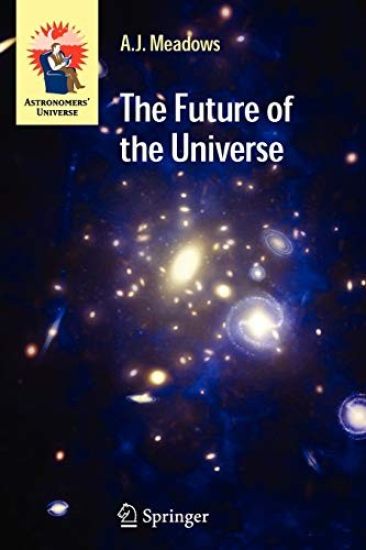
Many excellent books have been written about the past history of the universe and of the various objects—galaxies, stars, planets— to be found in it. All the exciting events from the original Big Bang to the appearance of human beings have been carefully recorded. Much less has been written about what comes next. What will happen to all these galaxies, stars, and planets in the future? And what will happen to us, and to any other intelligent life in the u- verse? It is obviously more dif?cult to examine the future than the past, but there are ways of doing it. Not everything in the universe is the same age; so a study of the older objects gives us some idea of what will happen to the younger objects. Some things vary in a fairly regular way, so you can guess what will happen next. For example, the number of spots visible on the Sun’s surface increases and then decreases again every eleven years on average. These ups and downs can be expected to continue for a considerable time in the future. Finally, theoretical explanations of how things work at present often give some hint of how they will develop in the future. One rule-of-thumb in astronomy—though there are plenty of exceptions—is that the further away objects are, the less we know about them. This means that it is often more dif?cult to forecast the future for distant objects than for ones nearby.
The Future of the Universe

The Future of the Universe

A.J. Meadows

Springer London Ltd
2006
sidottu
Many excellent books have been written about the past history of the universe and of the various objects—galaxies, stars, planets— to be found in it. All the exciting events from the original Big Bang to the appearance of human beings have been carefully recorded. Much less has been written about what comes next. What will happen to all these galaxies, stars, and planets in the future? And what will happen to us, and to any other intelligent life in the u- verse? It is obviously more dif?cult to examine the future than the past, but there are ways of doing it. Not everything in the universe is the same age; so a study of the older objects gives us some idea of what will happen to the younger objects. Some things vary in a fairly regular way, so you can guess what will happen next. For example, the number of spots visible on the Sun’s surface increases and then decreases again every eleven years on average. These ups and downs can be expected to continue for a considerable time in the future. Finally, theoretical explanations of how things work at present often give some hint of how they will develop in the future. One rule-of-thumb in astronomy—though there are plenty of exceptions—is that the further away objects are, the less we know about them. This means that it is often more dif?cult to forecast the future for distant objects than for ones nearby.
Communicating Research

Communicating Research

A. J. Meadows

Academic Press Inc
1997
sidottu
Communicating Research" explores how changing technologies affect academic research practices. The book begins with the rise of electronic media and fundamental changes in the dissemination of research. It then outlines the problems and concerns of researchers, librarians, and publishers: inadequacies of copyright laws, the rise of interlibrary loan practices, and the unchecked broadcast of working papers. These problems lead to a discussion of research practices across scholarly disciplines and an investigation of the biases and intentions of practitioners. The book includes historical data and observations on the current scene in order to make predictions about the future. "Communicating Research" draws conclusions about the ways that differing norms, such as the differences in the ways chemists and sociologists conduct, write, and publish their research, affect publication trends. The book also looks closely at the efficiency of publication strategies and their effectiveness in reaching the researchers' targeted audiences. Meadows uses two avenues to explore the communication of research findings. One is the medium used to convey the message; the other is the needs of the research community. He offers a solid base of analysis for understanding researchers, their biases, their assumptions about the communication, and the publishers. It explains variations in the reviewing processes for books and journals. It tailors communication and publishing insights for researchers, and offers superior historical information.