Kirjojen hintavertailu – 12 872 013 kirjaa ja 27 kauppaa

Kirjailija

A.J. Withers

Kirjat ja teokset yhdessä paikassa: 4 kirjaa, julkaisuja vuosilta 2019–2024, suosituimpiin kuuluu Fight to Win. Vertaile teosten hintoja ja tarkista saatavuus suomalaisista kirjakaupoista.

Nimi esiintyy myös muodoissa: A.J.¿ Withers

4 kirjaa

Kirjojen julkaisuvuodet: 2019–2024.

Disability Politics and Theory

Disability Politics and Theory

A.J. Withers; Robyn Maynard; Rachel da Silveira Gorman

FERNWOOD PUBLISHING CO LTD
2024
nidottu
Disability Politics and Theory, a historical exploration of the concept of disability, covers the late nineteenth century to the present, introducing the main models of disability theory and politics: eugenics, medicalization, rehabilitation, charity, rights, social and disability justice. A. J. Withers examines when, how and why new categories of disability are created and describes how capitalism benefits from and enforces disabled people's oppression. Critiquing the currently dominant social model of disability, this book offers an alternative. The radical framework Withers puts forward draws from schools of radical thought, particularly feminism and critical race theory, to emphasize the role of interlocking oppressions in the marginalization of disabled people and the importance of addressing disability both independently and in conjunction with other oppressions. Intertwining theoretical and historical analysis with personal experience, this book is a poignant portrayal of disabled people in Canada and the U. S. -- and a call for social and economic justice. This revised and expanded edition includes a new chapter on the rehabilitation model, expands the discussion of eugenics, and adds the context the growth of the disability justice movement, Black Lives Matter, calls for defunding the police, decolonial and Indigenous land protection struggles, and the COVID-19 pandemic

Fight to Win

Fight to Win

A.J.¿ Withers

Fernwood Publishing Co Ltd
2021
nidottu
AJ Withers draws on their own experiences as an organizer, extensive interviews with OCAP activists and Toronto bureaucrats, and freedom of information requests to provide a detailed account of the work of the Ontario Coalition Against Poverty (OCAP). This book shows that poor people's organizing can be effective even in periods of neoliberal retrenchment. Fight to Win tells the stories of three key OCAP homelessness campaigns: stopping the criminalization of homeless people in a public park; the fight for poor people's access to the Housing Shelter Fund; and a campaign to improve the emergency shelter system and the City's overarching, but inadequate, Housing First policy. This book shows how power works at the municipal level, including the use of a multitude of demobilization tactics, devaluing poor people as sources of knowledge about their own lives, and gaslighting poor people and anti-poverty activists. AJ Withers also details OCAP's dual activist strategy - direct-action casework coupled with mass mobilization - for both immediate need and long-term change. These campaigns demonstrate the validity of OCAP's longstanding critiques of dominant homelessness policies and practices. Each campaign was fully or partially successful: these victories were secured by anti-poverty activists through the use of, and the threat of, direct disruptive action tactics.
A Violent History of Benevolence

A Violent History of Benevolence

Chris Chapman; A.J. Withers

University of Toronto Press
2019
sidottu
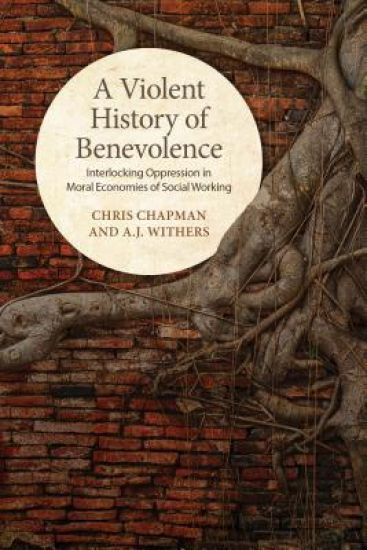
A Violent History of Benevolence traces how normative histories of liberalism, progress, and social work enact and obscure systemic violences. Chris Chapman and A. J. Withers explore how normative social work history is structured in such a way that contemporary social workers can know many details about social work’s violences, without ever imagining that they may also be complicit in these violences. Framings of social work history actively create present-day political and ethical irresponsibility, even among those who imagine themselves to be anti-oppressive, liberal, or radical. The authors document many histories usually left out of social work discourse, including communities of Black social workers (who, among other things, never removed children from their homes involuntarily), the role of early social workers in advancing eugenics and mass confinement, and the resonant emergence of colonial education, psychiatry, and the penitentiary in the same decade. Ultimately, A Violent History of Benevolence aims to invite contemporary social workers and others to reflect on the complex nature of contemporary social work, and specifically on the present-day structural violences that social work enacts in the name of benevolence.
A Violent History of Benevolence

A Violent History of Benevolence

Chris Chapman; A.J. Withers

University of Toronto Press
2019
pokkari
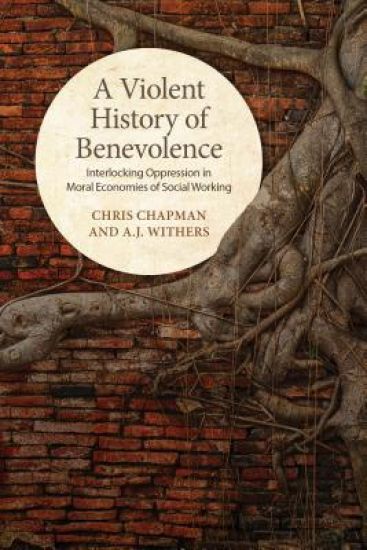
A Violent History of Benevolence traces how normative histories of liberalism, progress, and social work enact and obscure systemic violences. Chris Chapman and A. J. Withers explore how normative social work history is structured in such a way that contemporary social workers can know many details about social work’s violences, without ever imagining that they may also be complicit in these violences. Framings of social work history actively create present-day political and ethical irresponsibility, even among those who imagine themselves to be anti-oppressive, liberal, or radical. The authors document many histories usually left out of social work discourse, including communities of Black social workers (who, among other things, never removed children from their homes involuntarily), the role of early social workers in advancing eugenics and mass confinement, and the resonant emergence of colonial education, psychiatry, and the penitentiary in the same decade. Ultimately, A Violent History of Benevolence aims to invite contemporary social workers and others to reflect on the complex nature of contemporary social work, and specifically on the present-day structural violences that social work enacts in the name of benevolence.