Kirjojen hintavertailu – 12 903 724 kirjaa ja 27 kauppaa

Kirjailija

A. K. Haghi

Kirjat ja teokset yhdessä paikassa: 48 kirjaa, julkaisuja vuosilta 2011–2026, suosituimpiin kuuluu Green IoT and AI for Sustainable Development of Smart Cities. Vertaile teosten hintoja ja tarkista saatavuus suomalaisista kirjakaupoista.

Nimi esiintyy myös muodoissa: A K Haghi

48 kirjaa

Kirjojen julkaisuvuodet: 2011–2026.

Microalgae as a Sustainable Source of Green Energy Generation and Bioeconomy

Microalgae as a Sustainable Source of Green Energy Generation and Bioeconomy

Javid A Parray; Niraj Singh; A. K. Haghi

Springer International Publishing AG
2024
sidottu
The primary focus of the topic is on the production of energy. Here, energy production typically refers to the conversion of waste algal biomass into various forms of usable energy. This could include electricity, biofuels (e.g., biodiesel, bioethanol), biogas, or other forms of renewable energy. Conversion of algal biomass to fuels via extraction of lipids (and potentially other components), through 'algal lipid upgrading' or ALU pathway, combined algal process (CAP) and parallel algal process (PAP). ALU approach based on a biochemical processing strategy to selectively recover and convert select algal biomass components to fuels, namely carbohydrates to ethanol and lipids to a renewable diesel blendstock (RDB) product. The scope of the topic encompasses the various methods and technologies used to convert waste algal biomass into energy. This could involve processes like anaerobic digestion, fermentation, pyrolysis, hydrothermal liquefaction, or other innovative techniques. The topic may touch upon ongoing research, technological advancements, and potential areas of improvement related to waste algal biomass-based energy production.
Enzymes in Environmental Management

Enzymes in Environmental Management

Javid Ahmad Parray; Mohammad Yaseen Mir; A. K. Haghi

Springer International Publishing AG
2024
nidottu
Enzymes can help break down plastic waste and make it less harmful to the environment. They can also be used to treat various types of waste, including agricultural and food waste, and wastewater. Enzyme engineering is an important part of chemical biotechnology and helps to keep the environment clean. Making clean and renewable fuels is a priority, and many strategies are being developed to achieve this goal. However, food waste is still a major problem that can harm the environment because most disposal methods are not eco-friendly. This volume aims to inform readers about the latest developments in the use of enzymes for environmental management. This comprehensive resource provides a detailed overview of how enzymes can be used in various sectors to promote ecological sustainability. It covers the composition, properties, characterization, chemistry, and applications of different enzymes in emerging and eco-friendly approaches to waste treatment. It also highlights the latest advancements in sustainable technology and biotechnology enzymes. The book is divided into sections that feature various enzymes used for treating resistant pollutants in wastewater, enzymatically degrading synthetic plastics, and engineering enzymes to impact environmental sustainability positively. It also covers enzymes used in the valorization of waste, enzyme technology in biofuel production, and the recovery of enzymes from food waste. Each chapter presents the enzymes' chemical, physical, and biological attributes and reviews the recent research conducted in this emerging field. The authors hope this document will inspire scientists to explore novel chemical, material, and energy sources in the future and to continue developing innovative applications for enzymes in environmental management.
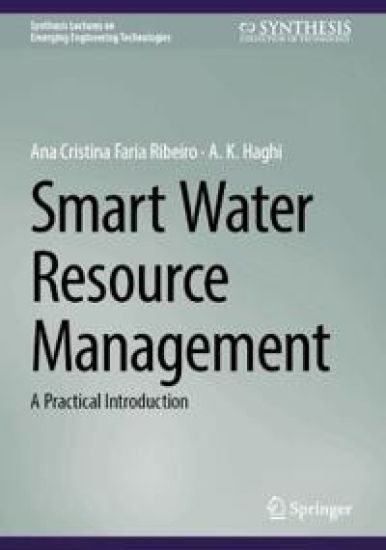
Smart Water Resource Management

Smart Water Resource Management

Ana Cristina Faria Ribeiro; A. K. Haghi

Springer International Publishing AG
2024
sidottu
Advanced methods for water consumption management can help save water and financial resources. This book introduces efficient methods and practical approaches for water consumption management through computational modeling to forecast water demand and optimization and through smart technology to help prevent or reduce water loss using the Geographic Information Systems (GIS) and the Internet of Things (IoT). The book will be a useful for researchers and graduate students focusing on research initiatives in the field of water resource management, and for researchers and practicing engineers in water utility companies.
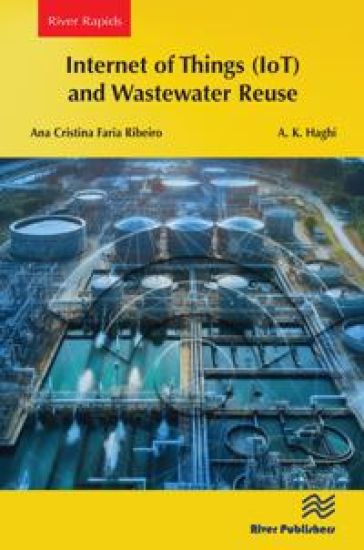
Internet of Things (IoT) and Wastewater Reuse

Internet of Things (IoT) and Wastewater Reuse

Ana Cristina Faria Ribeiro; A. K. Haghi

River Publishers
2024
nidottu
This work aims to present the practical application of an IoT model that can be used as the solution to the problems of water facilities. It presents IoT as one of the efficient tools for the control of a set of water and wastewater networks. Another novelty of this work is to investigate the utilization of remote sensing (RS) facilities equipped with networked sensors, advanced modems, data loggers, and the IoT in a case study. This volume is ideal for water industry personnel, academic staff, and master/research students in environmental engineering science.
Carbon Nanotubes

Carbon Nanotubes

A. K. Haghi; Sabu Thomas

Apple Academic Press Inc.
2021
nidottu
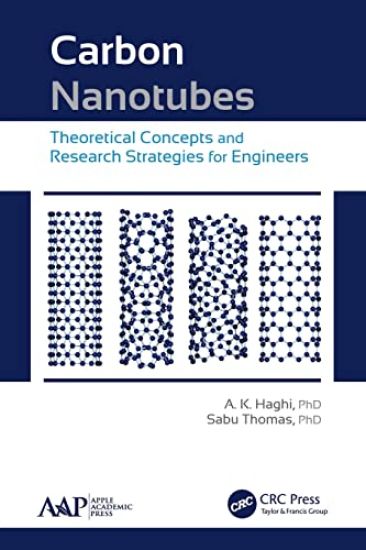
This book presents the diversity of recent advances in carbon nanotubes from a broad perspective that will be useful for scientists as well as for graduate students and engineers. Presenting leading-edge research in this dynamic field, this volume is an introduction to the physical concepts needed for investigating carbon nanotubes and other one-dimensional solid-state systems. Written for a wide scientific readership, each chapter consists of an instructive approach to the topic and sustainable ideas for solutions. Carbon nanotubes, with their extraordinary mechanical and unique electronic properties, have garnered much attention in recent years. With a broad range of potential applications, including nanoelectronics, composites, chemical sensors, biosensors, microscopy, nanoelectromechanical systems, and many more, the scientific community is more motivated than ever to move beyond basic properties and explore the real issues associated with carbon nanotube-based applications. Carbon nanotubes are exceptionally interesting from a fundamental research point of view. They open up new perspectives for various applications, such as nano-transistors in circuits, field-emission displays, artificial muscles, or added reinforcements in alloys. This book reviews the recent progress in modeling of carbon nanotubes and their composites. The advantages and disadvantages of different methods are discussed. The ability of continuum methods to bridge different scales is emphasized. Recommendations for future research are given by focusing on what each method has to learn from the nano-scale. The scope of the book is to provide current knowledge aiming to support researchers entering the scientific area of carbon nanotubes to choose the appropriate modeling tool for accomplishing their study and place their efforts to further improve continuum methods.
Foundations of Nanotechnology, Volume One

Foundations of Nanotechnology, Volume One

A. K. Haghi; Sabu Thomas; Moein MehdiPour MirMahaleh

Apple Academic Press Inc.
2021
nidottu
This volume covers a wide range of adsorption activities of porous carbon (PC), CNTs, and carbon nano structures that have been employed so far for the removal of various pollutants from water, wastewater, and organic compounds. The low cost, high efficiency, simplicity, and ease in the upscaling of adsorption processes using PC make the adsorption technique attractive for the removal and recovery of organic compounds. The activated carbon modification process has also been of interest to overcome some of the limitations of the adsorbents. Due to a large specific surface area, and small, hollow, and layered structures, CNTs and carbon nano structures have been investigated as promising adsorbents for various metal ions. Inorganic and organic pollutants can be easily modified by chemical treatment to increase their adsorption capacity. There is the huge hope that nanotubes applications will lead to a cleaner and healthier environment. A brief summary of these modeling methods is reviewed in this volume. Also, two important simulation methods, the Monte Carlo and the Molecular Dynamic, are included in this volume. The presence of micro and mesopores is essential for many researchers aiming to control micro or mesoporosity. The present volume attempts to give a general view of the recent activities on the study of pore structure control, with application novel simulation and modeling methods and the necessity and importance of this controlling. This volume also provides a brief overview of the methodology and modeling beside simulation methods for characterization of nanoporous carbons by using adsorption isotherm parameters.