
Kirjojen hintavertailu – 12 903 725 kirjaa ja 27 kauppaa

Kirjailija

A.M. Kligman

Kirjat ja teokset yhdessä paikassa: 2 kirjaa, julkaisuja vuosilta 2008–2011, suosituimpiin kuuluu Diagnosis of Aging Skin Diseases. Vertaile teosten hintoja ja tarkista saatavuus suomalaisista kirjakaupoista.

2 kirjaa

Kirjojen julkaisuvuodet: 2008–2011.

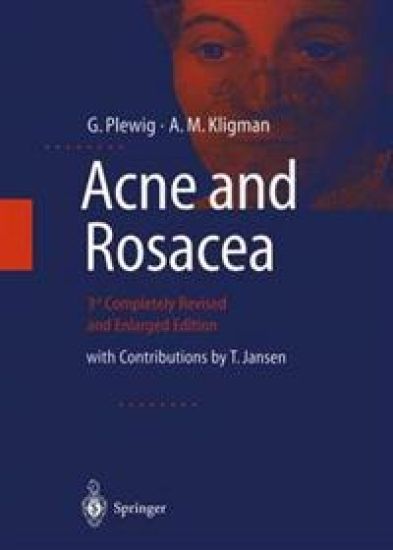
ACNE and ROSACEA

ACNE and ROSACEA

G. Plewig; A.M. Kligman

Springer-Verlag Berlin and Heidelberg GmbH Co. K
2011
nidottu
Twenty-five years have elapsed since the first publication of this book. The growth of basic knowledge since then has been both enormous and momentous. This has been a joyous enterprise for us. Our ability to treat acne and rosacea ef­ fectively has outpaced the vastly expanded understanding of their etiologies. Acne today is not only an eminently treatable disease; in some cases, for exam­ is actually curable. We think that no case is so severe as to pIe acne conglobata, it be beyond help with the array of diverse drugs now available. Treatment failure is really physician failure. Prevention of acne in high-risk children has also be­ come a promising possibility, now that it is possible to identify small comedones in prepuberty, as early as the age of 7 years. Topical comedolytic agents such as retinoids prescribed at the incipient stage might then prevent the evolution of the full-fledged disorder. This therapeutic maneuver could prevent the dreaded sequel of scarring. We adhere firmly to the beliefs expressed in 1975 regarding our mission. This text is dedicated to the dermatologists and other practitioners who must diagnose and treat these disfiguring, remarkably protean, common disorders.
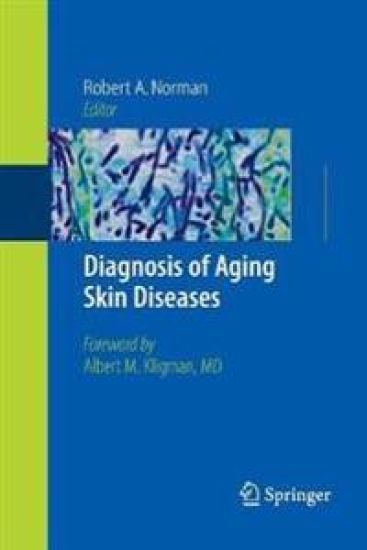
Diagnosis of Aging Skin Diseases

Diagnosis of Aging Skin Diseases

A.M. Kligman

Springer London Ltd
2008
nidottu
The population is aging rapidly, even faster than demographers envisioned two decades ago. Longevity, especially for women, has nearly doubled, since the beg- ning of the twentieth century, now approaching 85. People over 80 are the fastest growing segment in the aging epidemic. Remarkably every day now 1,000 Ame- cans will celebrate their 100th birthday! Today, many 70-year-old persons, who have aged successfully, have about the same degree of health and vigor as people 50 years old, a generation ago. Despite these gains, it is an inescapable truism that increasing age is associated with increasing physiologic losses, which negatively affect the quality of life. P- sons in their eighties and nineties may be taking as many as 10 different medicines daily to control and moderate age-dependent disorders such as arthritis, diabetes, hypertension, heart disease, Alzheimer’s. Textbooks of geriatric medicine recognize and give each of these the space they deserve. By contrast, age-associated cutaneous disorders are given short shrift in geriatric texts. Skin disorders, when mentioned at all, are inadequately presented. This do- grading of cutaneous disorders occurs despite the ndings of national health surveys which showed that people over 70 years of age had at least one skin disorder w- thy of medical attention. Startlingly, the same rigorously conducted epidemiologic survey showed that the number and diversity of skin problems increased proporti- ately with advancing age. Some older persons had as many as 10 problems which were deemed to be worthy of medical attention.