Kirjojen hintavertailu – 12 903 725 kirjaa ja 27 kauppaa

Kirjailija

A. Michael Huberman

Kirjat ja teokset yhdessä paikassa: 5 kirjaa, julkaisuja vuosilta 1984–2019, suosituimpiin kuuluu Qualitative Data Analysis - International Student Edition. Vertaile teosten hintoja ja tarkista saatavuus suomalaisista kirjakaupoista.

5 kirjaa

Kirjojen julkaisuvuodet: 1984–2019.

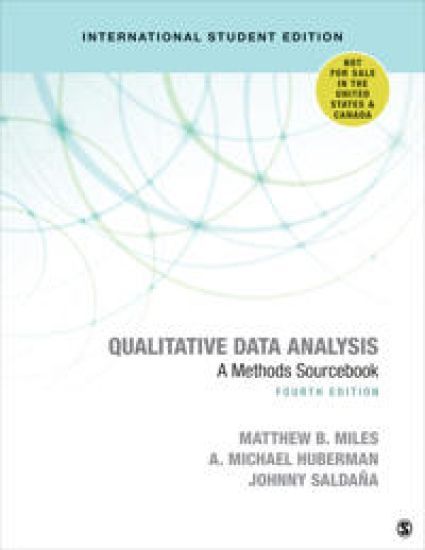
Qualitative Data Analysis - International Student Edition

Qualitative Data Analysis - International Student Edition

Matthew B. Miles; A. Michael Huberman; Johnny Saldaña

SAGE Publications Inc
2019
nidottu

Halvin toimitettuna 79,40 €

"This comprehensive, practical, user-friendly book provides a wealth of data analysis strategies that are essential for any qualitative research. It is a must-have tool book for moving from data analysis to writing for publication!" –Guofang Li, University of British Columbia, Canada Miles, Huberman, and Saldaña’s Qualitative Data Analysis: A Methods Sourcebook is the authoritative text for analyzing and displaying qualitative research data. The Fourth Edition maintains the analytic rigor of previous editions while showcasing a variety of new visual display models for qualitative inquiry. Graphics are added to the now-classic matrix and network illustrations of the original co-authors. Five chapters have been substantially revised, and the appendix’s annotated bibliography includes new titles in research methods. Graduate students and established scholars from all disciplines will find this resource an innovative compendium of ideas for the representation and presentation of qualitative data. As the authors demonstrate, when researchers "think display," their analyses of social life capture the complex and vivid processes of the people and institutions studied.
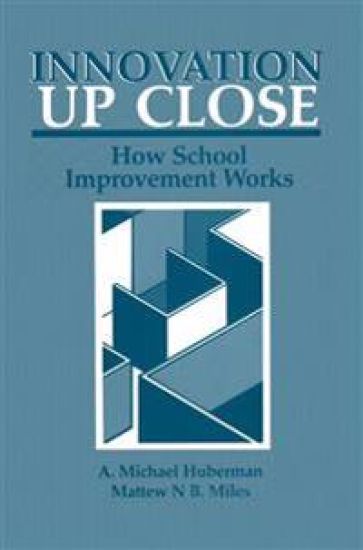
Innovation up Close

Innovation up Close

A. Michael Huberman; Matthew B. Miles

Springer-Verlag New York Inc.
2013
nidottu
School improvement, like motherhood, has many advocates. Everyone is for it, without having to campaign actively on its behalf. And just as the 100% of people who have had mothers think they know how mothering could be done better, so the (nearly) 100% of people who have been pupils in schools, or have even taught in or managed them, think they know how schools can be im­ proved. More precisely, they are sure that schools ought to be improved. The trouble is that they propose a staggering, conflicting range of methods of improving the schools, from ;'back to the woodshed" to teacher merit pay, a stiffer curriculum, a stronger tax base, reorganization, a more humane climate, "teacher-proof" innovations, community involvement-the list is nearly end­ less. Furthermore, the issues are not merely technical, but normative and po­ litical. The term improvement is itself problematic. One person's version of improvement is another's version of wastefulness or even of worsening the schools. Furthermore, the versions that win out in any particular school are not Improvement sometimes turns out to be merely a necessarily technically "best. " code word for the directives that administrators have successfully put into place, or for the agreements that teachers have lobbied into being. How much do we really know about school improvement? The available research literature is quite substantial, but not as helpful as it might be.
The Qualitative Researcher's Companion

The Qualitative Researcher's Companion

A. Michael Huberman; Matthew B. Miles

SAGE Publications Inc
2002
sidottu
There is no longer any question that qualitative inquiry is fundamental to the enterprise of social science research, with a broad reach and a history all its own. This book seeks to introduce—to reintroduce—readers to selections that provide a solid intellectual grounding in the area of qualitative research. Thoughtfully and painstakingly culled from over a thousand candidate articles by co-editors A. Michael Huberman and the late Matthew B. Miles (co-authors of the seminal Qualitative Data Analysis), The Qualitative Researcher's Companion examines the theoretical underpinnings, methodological perspectives, and empirical approaches that are crucial to the understanding and practice of qualitative inquiry. Incisive, provocative, and drawn from across the many disciplines that employ qualitative inquiry, The Qualitative Researcher's Companion is a key addition to the bookshelf of anyone involved in the research act.
The Qualitative Researcher's Companion

The Qualitative Researcher's Companion

A. Michael Huberman; Matthew B. Miles

SAGE Publications Inc
2002
nidottu
There is no longer any question that qualitative inquiry is fundamental to the enterprise of social science research, with a broad reach and a history all its own. This book seeks to introduce—to reintroduce—readers to selections that provide a solid intellectual grounding in the area of qualitative research. Thoughtfully and painstakingly culled from over a thousand candidate articles by co-editors A. Michael Huberman and the late Matthew B. Miles (co-authors of the seminal Qualitative Data Analysis), The Qualitative Researcher's Companion examines the theoretical underpinnings, methodological perspectives, and empirical approaches that are crucial to the understanding and practice of qualitative inquiry. Incisive, provocative, and drawn from across the many disciplines that employ qualitative inquiry, The Qualitative Researcher's Companion is a key addition to the bookshelf of anyone involved in the research act.
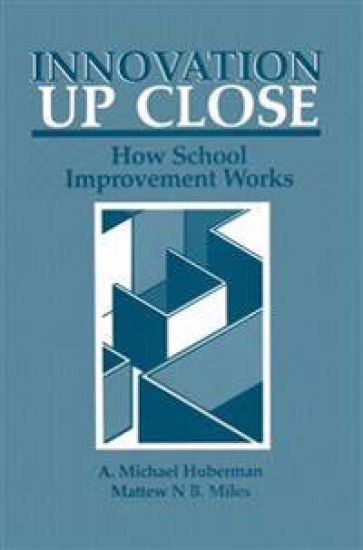
Innovation up Close

Innovation up Close

A. Michael Huberman; Matthew B. Miles

Kluwer Academic/Plenum Publishers
1984
sidottu
School improvement, like motherhood, has many advocates. Everyone is for it, without having to campaign actively on its behalf. And just as the 100% of people who have had mothers think they know how mothering could be done better, so the (nearly) 100% of people who have been pupils in schools, or have even taught in or managed them, think they know how schools can be im­ proved. More precisely, they are sure that schools ought to be improved. The trouble is that they propose a staggering, conflicting range of methods of improving the schools, from ;'back to the woodshed" to teacher merit pay, a stiffer curriculum, a stronger tax base, reorganization, a more humane climate, "teacher-proof" innovations, community involvement-the list is nearly end­ less. Furthermore, the issues are not merely technical, but normative and po­ litical. The term improvement is itself problematic. One person's version of improvement is another's version of wastefulness or even of worsening the schools. Furthermore, the versions that win out in any particular school are not Improvement sometimes turns out to be merely a necessarily technically "best. " code word for the directives that administrators have successfully put into place, or for the agreements that teachers have lobbied into being. How much do we really know about school improvement? The available research literature is quite substantial, but not as helpful as it might be.