Kirjojen hintavertailu – 12 903 725 kirjaa ja 27 kauppaa

Kirjailija

A. Salem

Kirjat ja teokset yhdessä paikassa: 3 kirjaa, julkaisuja vuosilta 1997–2018, suosituimpiin kuuluu Higher Education in Post-Communist States. Vertaile teosten hintoja ja tarkista saatavuus suomalaisista kirjakaupoista.

3 kirjaa

Kirjojen julkaisuvuodet: 1997–2018.

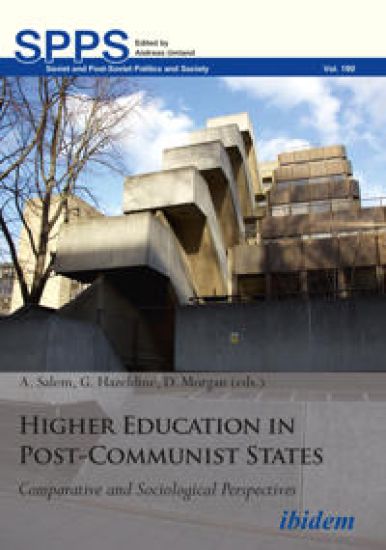
Higher Education in Post-Communist States

Higher Education in Post-Communist States

Gary Hazeldine; A. Salem; David Morgan

ibidem-Verlag, Jessica Haunschild u Christian Schon
2018
nidottu
How far have universities in post-Communist states adopted the practices and habits of their branded and consumer-oriented equivalents in the English-speaking world? While not assuming that university education in those states reflects in any mechanistic way the regulated, business-led system long established in places like the US, and now being dramatically realized in countries like Britain, this edited collection identifies some marked shifts in the direction of what might best be described as neoliberalisation, examining its particularities in local situations where establishment ideologies were, until the early 1990s, deeply alien to all kinds of commercially driven entities. Many of the authors are concerned not only with the linked issues of commercialism, instrumentalism, bureaucracy, and managerialism, framed locally and nationally, but also with the meaning and purpose of universities outside or against their status as efficient gatherers of income. The collection makes specific reference to Lithuania, Hungary, Azerbaijan, Ukraine, Georgia, and Russia, and comprises theoretical as well as empirical studies of diverse but connected subjects, including the marketization of the academy, regional reactions to globalization as expressed in the representational rhetoric of specific curricula, the role and place of civic education, comparisons between educational settings, pedagogies for a critical and ethical consciousness, corporate and state demands and their effects on academic freedom, and the positive potential of new communication technologies. In all these cases, the system of neoliberalism, or rather an uneven process of neoliberalisation, forms a backdrop to the particular issues discussed.
Exploring Textual Data

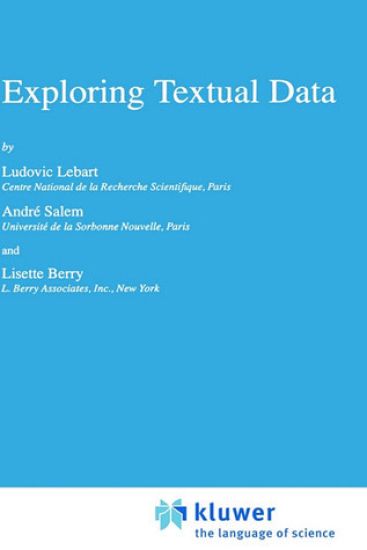
Exploring Textual Data

Ludovic Lebart; A. Salem; L. Berry

Springer
2010
nidottu
Researchers in a number of disciplines deal with large text sets requiring both text management and text analysis. Faced with a large amount of textual data collected in marketing surveys, literary investigations, historical archives and documentary data bases, these researchers require assistance with organizing, describing and comparing texts. Exploring Textual Data demonstrates how exploratory multivariate statistical methods such as correspondence analysis and cluster analysis can be used to help investigate, assimilate and evaluate textual data. The main text does not contain any strictly mathematical demonstrations, making it accessible to a large audience. This book is very user-friendly with proofs abstracted in the appendices. Full definitions of concepts, implementations of procedures and rules for reading and interpreting results are fully explored. A succession of examples is intended to allow the reader to appreciate the variety of actual and potential applications and the complementary processing methods. A glossary of terms is provided.
Exploring Textual Data

Exploring Textual Data

Ludovic Lebart; A. Salem; L. Berry

Springer
1997
sidottu
Researchers in a number of disciplines deal with large text sets requiring both text management and text analysis. Faced with a large amount of textual data collected in marketing surveys, literary investigations, historical archives and documentary data bases, these researchers require assistance with organizing, describing and comparing texts. Exploring Textual Data demonstrates how exploratory multivariate statistical methods such as correspondence analysis and cluster analysis can be used to help investigate, assimilate and evaluate textual data. The main text does not contain any strictly mathematical demonstrations, making it accessible to a large audience. This book is very user-friendly with proofs abstracted in the appendices. Full definitions of concepts, implementations of procedures and rules for reading and interpreting results are fully explored. A succession of examples is intended to allow the reader to appreciate the variety of actual and potential applications and the complementary processing methods. A glossary of terms is provided.