Kirjojen hintavertailu – 12 903 739 kirjaa ja 27 kauppaa

Kirjailija

Aaron Sheehan-Dean

Kirjat ja teokset yhdessä paikassa: 9 kirjaa, julkaisuja vuosilta 2013–2025, suosituimpiin kuuluu Concise Historical Atlas of the U.S. Civil War. Vertaile teosten hintoja ja tarkista saatavuus suomalaisista kirjakaupoista.

9 kirjaa

Kirjojen julkaisuvuodet: 2013–2025.

Fighting with the Past

Fighting with the Past

Aaron Sheehan-Dean

THE UNIVERSITY OF NORTH CAROLINA PRESS
2025
pokkari
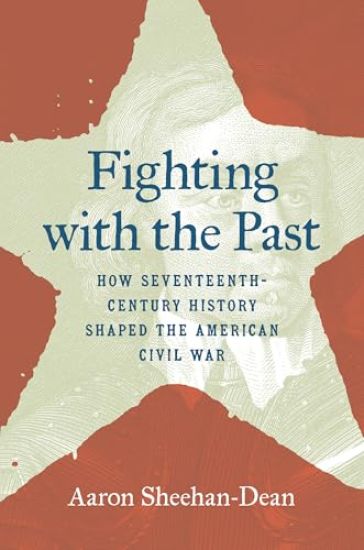
Civil War Americans, like people today, used the past to understand and traverse their turbulent present. As Aaron Sheehan-Dean reveals in this fascinating work of comparative intellectual history, nineteenth-century Americans were especially conversant with narratives of the English Civil Wars of the 1600s. Northerners and Southerners alike drew from histories of the English past to make sense of their own conflict, interpreting the events of the past in drastically different ways. Confederates, for example, likened themselves to England’s Royalists (also known as Cavaliers), hoping to preserve a social order built on hierarchy and claiming the right to resist what they perceived as radicals' assaults on tradition. Meanwhile, conservative Northerners painted President Lincoln as a tyrant in the mold of English Lord Protector Oliver Cromwell, while radical abolitionists drew inspiration from Cromwell and sought to rebuild the South as Cromwell had attempted with Ireland. Surveying two centuries of history-making and everyday engagement with historical thought, Sheehan-Dean convincingly argues that history itself was a battlefront of the American Civil War, with narratives of the past exercising surprising agency in interpretations of the nineteenth-century present. Sheehan-Dean’s surprising discoveries provide an entirely fresh perspective on the role of historical memory in the Civil War era and offer a broader meditation on the construction and uses of history itself.
Fighting with the Past

Fighting with the Past

Aaron Sheehan-Dean

THE UNIVERSITY OF NORTH CAROLINA PRESS
2025
sidottu
Civil War Americans, like people today, used the past to understand and traverse their turbulent present. As Aaron Sheehan-Dean reveals in this fascinating work of comparative intellectual history, nineteenth-century Americans were especially conversant with narratives of the English Civil Wars of the 1600s. Northerners and Southerners alike drew from histories of the English past to make sense of their own conflict, interpreting the events of the past in drastically different ways. Confederates, for example, likened themselves to England’s Royalists (also known as Cavaliers), hoping to preserve a social order built on hierarchy and claiming the right to resist what they perceived as radicals' assaults on tradition. Meanwhile, conservative Northerners painted President Lincoln as a tyrant in the mold of English Lord Protector Oliver Cromwell, while radical abolitionists drew inspiration from Cromwell and sought to rebuild the South as Cromwell had attempted with Ireland. Surveying two centuries of history-making and everyday engagement with historical thought, Sheehan-Dean convincingly argues that history itself was a battlefront of the American Civil War, with narratives of the past exercising surprising agency in interpretations of the nineteenth-century present. Sheehan-Dean’s surprising discoveries provide an entirely fresh perspective on the role of historical memory in the Civil War era and offer a broader meditation on the construction and uses of history itself.

American Horizons

American Horizons

Michael Schaller; Janette Thomas Greenwood; Andrew Kirk; Sarah J. Purcell; Aaron Sheehan-Dean; Christina Snyder

OXFORD UNIVERSITY PRESS INC
2025
nidottu
American Horizons presents an opportunity to view the nation's history as more than a mere sequence of events for students to memorize. Although adhering to a familiar chronological organization, its narrative style and structure provide the flexibility of shifting emphasis from time to time to the global aspects of American history. Although the story of the United States is always at the center, that story is told through the movement of people, goods, and ideas into, within, or out of the United States. This unique approach provides a fully integrated global perspective that seamlessly contextualizes American events within the wider world.
American Horizons

American Horizons

Michael Schaller; Janette Thomas Greenwood; Andrew Kirk; Sarah J. Purcell; Aaron Sheehan-Dean; Christina Snyder

OXFORD UNIVERSITY PRESS INC
2025
nidottu
American Horizons presents an opportunity to view the nation's history as more than a mere sequence of events for students to memorize. Although adhering to a familiar chronological organization, its narrative style and structure provide the flexibility of shifting emphasis from time to time to the global aspects of American history. Although the story of the United States is always at the center, that story is told through the movement of people, goods, and ideas into, within, or out of the United States. This unique approach provides a fully integrated global perspective that seamlessly contextualizes American events within the wider world.
Reckoning with Rebellion

Reckoning with Rebellion

Aaron Sheehan-Dean

University Press of Florida
2020
sidottu
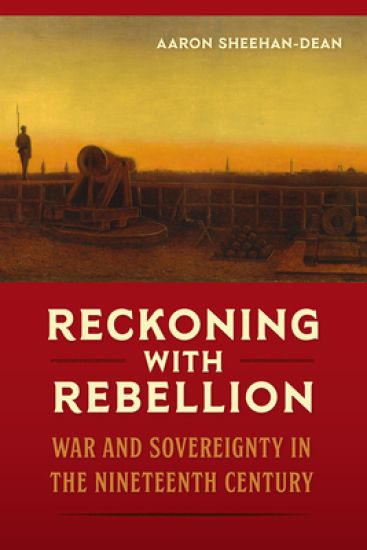
An innovative global history of the American Civil War, Reckoning with Rebellion compares and contrasts the American experience with other civil and national conflicts that happened at nearly the same time—the Indian Rebellion of 1857, the Polish Insurrection of 1863, and China's Taiping Rebellion. Aaron Sheehan-Dean identifies surprising new connections between these historical moments across three continents. Sheehan-Dean shows that insurgents around the globe often relied on irregular warfare and were labeled as criminals, mutineers, or rebels by the dominant powers. He traces commonalities between the United States, British, Russian, and Chinese empires, all large and ambitious states willing to use violence to maintain their authority. These powers were also able to control how these conflicts were described, affecting the way foreigners perceived them and whether they decided to intercede. While the stories of these conflicts are now told separately, Sheehan-Dean argues, the participants understood them in relation to each other. When Union officials condemned secession, they pointed to the violence unleashed by the Indian Rebellion. When Confederates denounced Abraham Lincoln as a tyrant, they did so by comparing him to Tsar Alexander II. Sheehan-Dean demonstrates that the causes and issues of the Civil War were also global problems, revealing the important paradigms at work in the age of nineteenth-century nation-building. A volume in the series Frontiers of the American South, edited by William A. Link
Concise Historical Atlas of the U.S. Civil War

Concise Historical Atlas of the U.S. Civil War

Aaron Sheehan-Dean

Oxford University Press
2020
nidottu
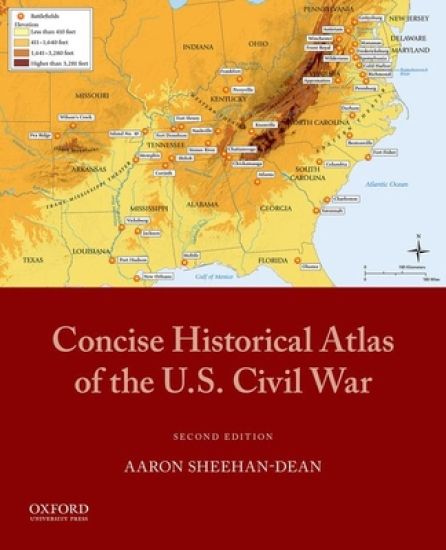
Offering a striking and reasonably priced alternative to expensive atlases that focus almost exclusively on military movements, Concise Historical Atlas of the U. S. Civil War, Second Edition, is the only atlas that includes data maps and covers key issues before and after the war years. It balances military and non-military coverage, presenting maps that deal with political and social changes along with campaign and battle maps. Accessible to students with limited geographic knowledge, the maps are clearly labeled, with key features marked. Each map is accompanied by a short narrative that provides helpful contextual information.
The Calculus of Violence

The Calculus of Violence

Aaron Sheehan-Dean

Harvard University Press
2018
sidottu
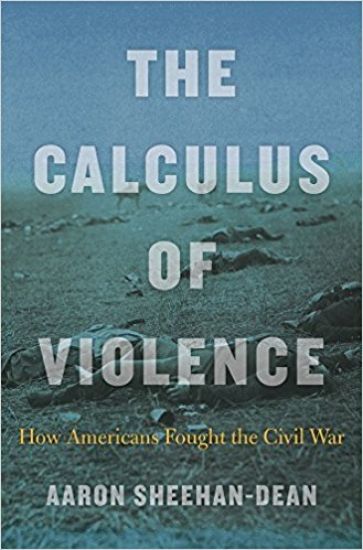
Winner of the Jefferson Davis AwardWinner of the Johns Family Book AwardWinner of the Army Historical Foundation Distinguished Writing Award“A work of deep intellectual seriousness, sweeping and yet also delicately measured, this book promises to resolve longstanding debates about the nature of the Civil War.”—Gregory P. Downs, author of After AppomattoxShiloh, Chancellorsville, Gettysburg—tens of thousands of soldiers died on these iconic Civil War battlefields, and throughout the South civilians suffered terrible cruelty. At least three-quarters of a million lives were lost during the American Civil War. Given its seemingly indiscriminate mass destruction, this conflict is often thought of as the first “total war.” But Aaron Sheehan-Dean argues for another interpretation. The Calculus of Violence demonstrates that this notoriously bloody war could have been much worse. Military forces on both sides sought to contain casualties inflicted on soldiers and civilians. In Congress, in church pews, and in letters home, Americans debated the conditions under which lethal violence was legitimate, and their arguments differentiated carefully among victims—women and men, black and white, enslaved and free. Sometimes, as Sheehan-Dean shows, these well-meaning restraints led to more carnage by implicitly justifying the killing of people who were not protected by the laws of war. As the Civil War raged on, the Union’s confrontations with guerrillas and the Confederacy’s confrontations with black soldiers forced a new reckoning with traditional categories of lawful combatants and raised legal disputes that still hang over military operations around the world today. In examining the agonizing debates about the meaning of a just war in the Civil War era, Sheehan-Dean discards conventional abstractions—total, soft, limited—as too tidy to contain what actually happened on the ground.
Freedom's Witness

Freedom's Witness

Aaron Sheehan-Dean

West Virginia University Press
2013
nidottu
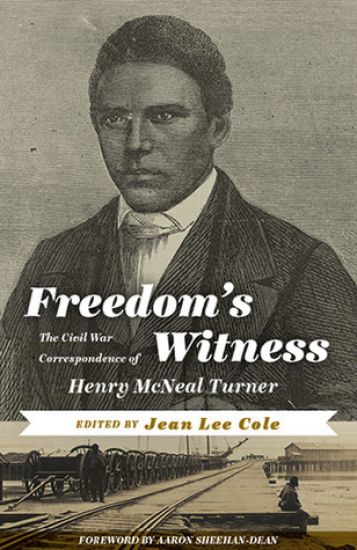
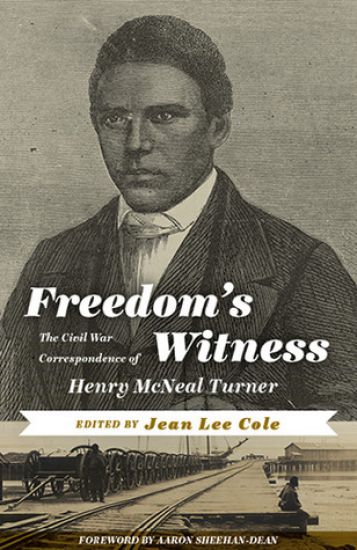
In a series of columns published in the African American newspaper The Christian Recorder, the young, charismatic preacher Henry McNeal Turner described his experience of the Civil War, first from the perspective of a civilian observer in Washington, D. C., and later, as one of the Union army's first black chaplains. In the halls of Congress, Turner witnessed the debates surrounding emancipation and black enlistment. As army chaplain, Turner dodged ""grape"" and cannon, comforted the sick and wounded, and settled disputes between white southerners and their former slaves. He was dismayed by the destruction left by Sherman's army in the Carolinas, but buoyed by the bravery displayed by black soldiers in battle. After the war ended, he helped establish churches and schools for the freedmen, who previously had been prohibited from attending either. Throughout his columns, Turner evinces his firm belief in the absolute equality of blacks with whites, and insists on civil rights for all black citizens. In vivid, detailed prose, laced with a combination of trenchant commentary and self-deprecating humor, Turner established himself as more than an observer: he became a distinctive and authoritative voice for the black community, and a leader in the African Methodist Episcopal church. After Reconstruction failed, Turner became disillusioned with the American dream and became a vocal advocate of black emigration to Africa, prefiguring black nationalists such as Marcus Garvey and Malcolm X. Here, however, we see Turner's youthful exuberance and optimism, and his open-eyed wonder at the momentous changes taking place in American society. Well-known in his day, Turner has been relegated to the fringes of African American history, in large part because neither his views nor the forms in which he expressed them were recognized by either the black or white elite. With an introduction by Jean Lee Cole and a foreword by Aaron Sheehan-Dean, Freedom's Witness: The Civil War Correspondence of Henry McNeal Turner restores this important figure to the historical and literary record.
Freedom's Witness

Freedom's Witness

Aaron Sheehan-Dean

West Virginia University Press
2013
sidottu
In a series of columns published in the African American newspaper The Christian Recorder, the young, charismatic preacher Henry McNeal Turner described his experience of the Civil War, first from the perspective of a civilian observer in Washington, D. C., and later, as one of the Union army's first black chaplains. In the halls of Congress, Turner witnessed the debates surrounding emancipation and black enlistment. As army chaplain, Turner dodged ""grape"" and cannon, comforted the sick and wounded, and settled disputes between white southerners and their former slaves. He was dismayed by the destruction left by Sherman's army in the Carolinas, but buoyed by the bravery displayed by black soldiers in battle. After the war ended, he helped establish churches and schools for the freedmen, who previously had been prohibited from attending either. Throughout his columns, Turner evinces his firm belief in the absolute equality of blacks with whites, and insists on civil rights for all black citizens. In vivid, detailed prose, laced with a combination of trenchant commentary and self-deprecating humor, Turner established himself as more than an observer: he became a distinctive and authoritative voice for the black community, and a leader in the African Methodist Episcopal church. After Reconstruction failed, Turner became disillusioned with the American dream and became a vocal advocate of black emigration to Africa, prefiguring black nationalists such as Marcus Garvey and Malcolm X. Here, however, we see Turner's youthful exuberance and optimism, and his open-eyed wonder at the momentous changes taking place in American society. Well-known in his day, Turner has been relegated to the fringes of African American history, in large part because neither his views nor the forms in which he expressed them were recognized by either the black or white elite. With an introduction by Jean Lee Cole and a foreword by Aaron Sheehan-Dean, Freedom's Witness: The Civil War Correspondence of Henry McNeal Turner restores this important figure to the historical and literary record.