Kirjojen hintavertailu – 12 903 725 kirjaa ja 27 kauppaa

Kirjailija

Abbas Mirakhor

Kirjat ja teokset yhdessä paikassa: 25 kirjaa, julkaisuja vuosilta 2014–2025, suosituimpiin kuuluu Revisiting Islamic Economics. Vertaile teosten hintoja ja tarkista saatavuus suomalaisista kirjakaupoista.

25 kirjaa

Kirjojen julkaisuvuodet: 2014–2025.

Revisiting Islamic Economics

Revisiting Islamic Economics

Nabil El Maghrebi; Abbas Mirakhor; Tarik Akin; Zamir Iqbal

Springer International Publishing AG
2025
nidottu
This book discusses the need for a paradigm shift from Islamic economics universe of discourse to Iqtisad, a socio-economic system that is entirely independent from other economic doctrines and systems of thought. It provides an overview of critiques of the science and dogma of mainstream, orthodox, neoclassical, or simply Economics, with its axioms of rationality, scarcity, and unlimited wants. There is also a critical analysis of Islamic economics, and its failures to set its own policy agenda and development objectives. Our contention in this book is that Iqtisad--the Qur’an’s vision of how the economy is to be arranged—provides such a paradigm with a radically different philosophical foundation from that of Economics to the point that makes grafting one onto the other Impossible. Iqtisad offers a genuine and authentic Islamic paradigm with unique etymological and philosophical foundations. It is a unique system that derivesits organizing principles from the principal source of the Quran, rather than Economics. The logical coherence of its immutable system of rules compliance, institutional structures, and risk-sharing relations provides the foundations for economic dynamism, financial stability, and shared prosperity. It ensures that resources are efficiently managed, poverty is eradicated, income and wealth mal-distributions are corrected, and the internal sources of economic injustices gripping human societies are eliminated. The Impossibility Theorem proposed in this book implies that, metaphysically, ontologically, epistemologically, axiologically, and teleologically, the two polar cases of Iqtisad and Economics are so radically different to rule out any grafting of one onto the other in order to present an intermediate paradigm with a synthetic discipline called Islamic economics. Given its multidisciplinary contents,this book will be of interest to a wide audience, including economists, policymakers, philosophers, theologians, and jurists, and can guide also free-thinking readers to a clarity of understanding about the conditions of humanity and the imperative of change with a sincerity of purpose and coherence in knowledge.
Revisiting Islamic Economics

Revisiting Islamic Economics

Nabil El Maghrebi; Abbas Mirakhor; Tarik Akin; Zamir Iqbal

Springer International Publishing AG
2023
sidottu
This book discusses the need for a paradigm shift from Islamic economics universe of discourse to Iqtisad, a socio-economic system that is entirely independent from other economic doctrines and systems of thought. It provides an overview of critiques of the science and dogma of mainstream, orthodox, neoclassical, or simply Economics, with its axioms of rationality, scarcity, and unlimited wants. There is also a critical analysis of Islamic economics, and its failures to set its own policy agenda and development objectives. Our contention in this book is that Iqtisad--the Qur’an’s vision of how the economy is to be arranged—provides such a paradigm with a radically different philosophical foundation from that of Economics to the point that makes grafting one onto the other Impossible. Iqtisad offers a genuine and authentic Islamic paradigm with unique etymological and philosophical foundations. It is a unique system that derivesits organizing principles from the principal source of the Quran, rather than Economics. The logical coherence of its immutable system of rules compliance, institutional structures, and risk-sharing relations provides the foundations for economic dynamism, financial stability, and shared prosperity. It ensures that resources are efficiently managed, poverty is eradicated, income and wealth mal-distributions are corrected, and the internal sources of economic injustices gripping human societies are eliminated. The Impossibility Theorem proposed in this book implies that, metaphysically, ontologically, epistemologically, axiologically, and teleologically, the two polar cases of Iqtisad and Economics are so radically different to rule out any grafting of one onto the other in order to present an intermediate paradigm with a synthetic discipline called Islamic economics. Given its multidisciplinary contents,this book will be of interest to a wide audience, including economists, policymakers, philosophers, theologians, and jurists, and can guide also free-thinking readers to a clarity of understanding about the conditions of humanity and the imperative of change with a sincerity of purpose and coherence in knowledge.
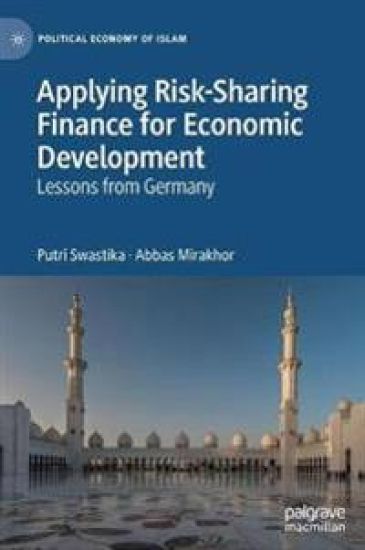
Applying Risk-Sharing Finance for Economic Development

Applying Risk-Sharing Finance for Economic Development

Putri Swastika; Abbas Mirakhor

Springer Nature Switzerland AG
2022
nidottu
This book examines the application of risk-sharing finance as a national economic policy in history and how it stimulated economic recovery during a short period in Germany between 1933 and 1935. Economic history indicates that risk-sharing instruments have promoted socio-economic development in many parts of the world while risk-shifting methods have imposed huge socio-economic costs on many nations, leading to debt slavery on individual members. This book highlights lessons to be learned from history and argues that risk-sharing is a powerful tool for generating rapid economic recovery and resumption of growth.
Applying Risk-Sharing Finance for Economic Development

Applying Risk-Sharing Finance for Economic Development

Putri Swastika; Abbas Mirakhor

Springer Nature Switzerland AG
2021
sidottu
This book examines the application of risk-sharing finance as a national economic policy in history and how it stimulated economic recovery during a short period in Germany between 1933 and 1935. Economic history indicates that risk-sharing instruments have promoted socio-economic development in many parts of the world while risk-shifting methods have imposed huge socio-economic costs on many nations, leading to debt slavery on individual members. This book highlights lessons to be learned from history and argues that risk-sharing is a powerful tool for generating rapid economic recovery and resumption of growth.
Risk-Sharing Finance

Risk-Sharing Finance

Saad Bakkali; Abbas Mirakhor

De Gruyter Oldenbourg
2021
sidottu
The contemporary finance deals mainly with multilateral and multi-counterparty transactions. Islamic Jurisprudence (Fiqh) has yet to develop its conceptualization of this modality of financing. Thus far, it has become a norm for large financing projects to rely on a complex structure of interconnected bilateral contracts that in totality becomes opaque, complex and costly. An unfortunate result of the unavailability of an efficient Fiqhi model applicable to modern multilateral and multi-counterparty contracts has been the fact that the present Islamic finance has been forced to replicate conventional risk-transfer (interest rate based) debt contracts thus drawing severe criticisms of duplicating conventional finance. In 2012, a gathering of some of the Muslim world’s most prominent experts in Jurisprudence (Fuqaha) and economists issued the Kuala Lumpur Declaration (Fatwa) in which they identified risk sharing as the essence of Islamic finance. The Declaration opened the door for a new Fiqh approach to take the lead in developing the jurisprudence of multilateral and multi-counterparty transactions. This Declaration (Fatwa) provides a prime motivation to search for a comprehensive model of risk sharing that can serve as an archetypal contract encompassing all potential contemporary financial transactions. From the perspective of Islamic Jurisprudence (Fiqh), the technicalities of the concept of risk sharing in contemporary finance have yet to be defined in Islamic literature. This book attempts to clarify and shed light on these technicalities from the perspective of Fiqh. It is a comprehensive study that relies on the fundamental Islamic sources to establish a theoretical and practical perspective of Fiqh encompassing risk-sharing Islamic finance as envisioned in the Kuala Lumpur Declaration of 2012. This new paradigm should lead to a more efficient approach to multilateral and multi-counterparty Islamic contracts which, here-to-fore has been lacking in the current configuration of Islamic finance.
Shariah Investment Agreement

Shariah Investment Agreement

Syed Adam Alhabshi; Abbas Mirakhor; Haji Mohd. Na’im Haji Mokhtar; Syed Othman Alhabshi

De Gruyter Oldenbourg
2021
sidottu
Risk-sharing investment is currently the buzz word in Islamic finance. However, there is an incongruence in applying multilayered and opaque Tijarah contracts for investment purposes. This has contributed to the divergence between Shariah and Common Law and caused tremendous problems and systemic legal risks to Islamic finance. The authors of Shariah Investment Agreement introduce a legal tool in the form of a Shariah Investment Agreement carefully drafted to ensure that it is Shariah-compliant and can be applied in Common Law jurisdictions as well, so as to allow for the execution of risk-sharing investment in Islamic finance. It details the building blocks and key considerations that must be noted when drafting such agreements so the investor and investee will know what to expect when entering into such a contract. Proper implementation of the Shariah Investment Agreement will pave a clear route to a harmonious convergence between Shariah and Common Law and lead to Islamic finance developing further to become a stronger, unstoppable force in the finance industry.
An Alternative Approach to Liquidity Risk Management of Islamic Banks

An Alternative Approach to Liquidity Risk Management of Islamic Banks

Muhammed Habib Dolgun; Abbas Mirakhor

De Gruyter Oldenbourg
2021
sidottu
Despite noticeable growth in Islamic banking and finance literature in recent years, very few published books in this area deal with supervisory and regulatory issues in Islamic banking – theoretically or empirically – and none with the critical issue of risks involved in liquidity management of Islamic banks. This unique book is the first of its kind in dealing with challenges these financial institutions face in the absence of interest rate mechanism and debt-based financial instruments. The book examines critically issues involve in managing the risk of liquidity management for these types of institutions, including those stemming from Basel requirements. It then offers an alternative regulatory framework more appropriately suited for such banks without compromising safety and security. The book's unique features and innovative dimensions diagnostically differentiate between Islamic banks and conventional banks as related to liquidity management risks. It proposes a risk-sharing regulatory framework that, once implemented, would mitigate risks posed by balance-sheet mismatches. The book aims to assist regulators, supervisors, Islamic finance practitioners, academicians and other relevant stakeholders.
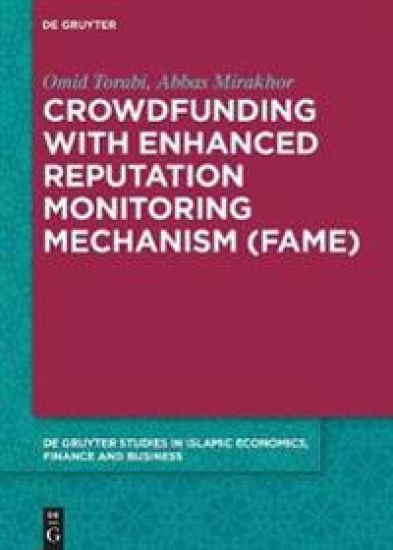
Crowdfunding with Enhanced Reputation Monitoring Mechanism (Fame)

Crowdfunding with Enhanced Reputation Monitoring Mechanism (Fame)

Omid Torabi; Abbas Mirakhor

De Gruyter Oldenbourg
2020
sidottu
Crowdfunding is increasingly becoming a method of mobilizing project finance ventures, particularly in a sharing economy. Moreover, the element of risk sharing which is found in equity crowdfunding makes up the essence of Islamic finance. However, as with any type of risk-sharing contract, Islamic crowdfunding faces the problem of lack of trust and information asymmetry. The author employs a game theory approach to Islamic crowdfunding as a means to tackle the issue of information asymmetry through a "reputation mechanism" which is touted as one of the latest means of solving information asymmetry in web-based social networks. The primary objective of the reputation mechanism is to enable more efficient transactions in communities where cooperation is compromised by post-contractual opportunism or information asymmetry. The game theory approach in this study involves two different games: "without Fame" and "with Fame", and it is proposed that a "with Fame" crowdfunding game produces better results. The reputational mechanism in this research was also designed specifically to eliminate any potential moral hazards and minimize information asymmetry. In this study, "Fame" refers to the credibility of every individual within the crowdfunding system. Fame is a form of systematic, measurable and computable (implicit and explicit) reputation, which allows other members of the crowdfunding social network to better learn about the individual and their credibility.
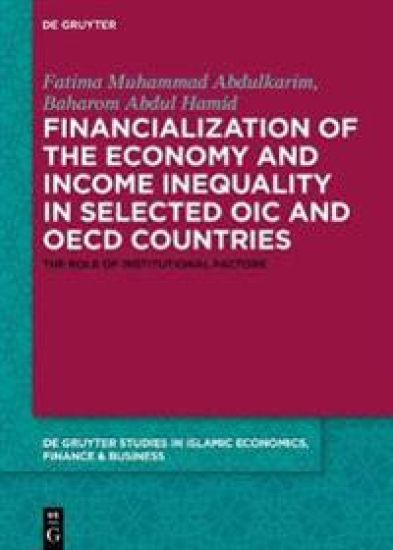
Financialization of the economy and income inequality in selected OIC and OECD countries

Financialization of the economy and income inequality in selected OIC and OECD countries

Fatima Muhammad Abdulkarim; Abbas Mirakhor; Baharom Abdul Hamid

De Gruyter Oldenbourg
2019
sidottu
Income inequality is a serious problem confronting not only the developed world but also developing countries. Recently, financialization has been one of the culprits identified in literature as one of the cause of income inequality. This book offers the only detailed presentation of the how financialization aided the spread of income inequality in Organization of Islamic Cooperation, OIC countries. Finance has taking a center stage in the affairs of most developing economies, surpassing the real sector of the economy. The result is the creation of an indebted society in which people are comfortable with financing their financial needs through credit. This creates a debt laden society that is trapped in the cycle of debt. This book represents a comprehensive and indispensable source for students, practitioners and the general public at large. It presents data which shows the buildup of debt and the rising income inequality in Muslim countries. It includes discussion of the rise in rentier income, financialization of everyday life, decline in physical capital accumulation and deregulation of the financial sector. The book therefore, proffers solutions on how Muslim countries can come out of the present economic problem facing them. The promotion and adoption of Islamic principles, which promotes risk sharing based contracts as against debt based transaction is the way to go. When financial contracts are based on the principles of risk sharing, any gains from economic activities get to be shared equitably. Hence, not only capital owners get to enjoy the benefit from the income derived from investments, but rather, all parties that partake in the contract. Distinguished by its clarity and readability as it is written in a very easy to understand language, it is an important reference work for any concerned individual interested on the recent causes of income inequality in Muslim World.
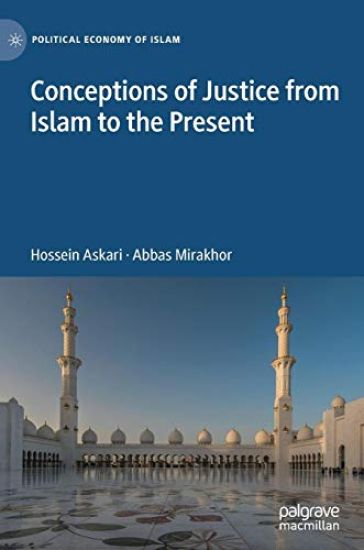
Conceptions of Justice from Islam to the Present

Conceptions of Justice from Islam to the Present

Hossein Askari; Abbas Mirakhor

Springer Nature Switzerland AG
2019
sidottu
This book explains a perspective on the system of justice that emerges in Islam if rules are followed and how the Islamic system is differentiated from the conventional thinking on justice. It examines conceptions of justice from the Enlightenment to Bentham to Rawls to contemporary philosophers including Sen, Cohen, Nussbaum, and Pogge. The authors present the views of twentieth century Muslim thinkers on justice who see Muslims upholding rituals but not living according to Qur’anic rules. It provides empirical surveys of the current state of justice in Muslim countries analyzing the economic, social, and political state of affairs. The authors conclude by assessing the state of justice-injustice in Muslim countries and highlighting areas in need of attention for justice to prevail.
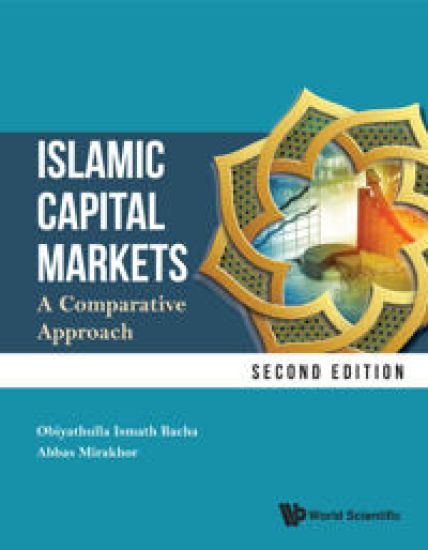
Islamic Capital Markets: A Comparative Approach

Islamic Capital Markets: A Comparative Approach

Obiyathulla Ismath Bacha; Abbas Mirakhor

World Scientific Publishing Co Pte Ltd
2019
nidottu
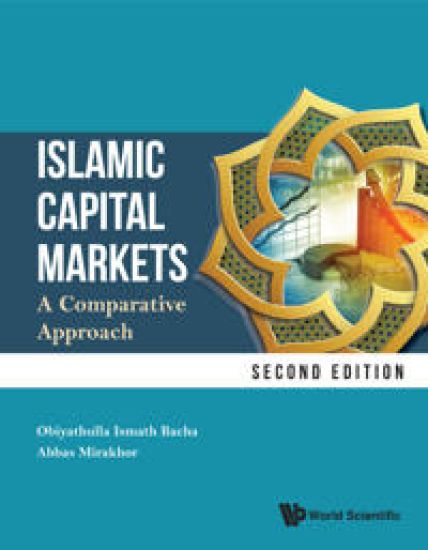
Islamic Capital Markets: A Comparative Approach (2nd Edition) looks at the similarities and differences between Islamic capital markets and conventional capital markets. The book explains each topic from both the conventional and the Islamic perspective, offering a full understanding of Islamic capital markets, processes, and instruments. In addition to a full explanation of Islamic products, the book also ensures a holistic understanding of the dual markets within which Islamic capital markets operate. Ideal for both students and current practitioners, the second edition of the highly successful Islamic Capital Markets: A Comparative Approach fills a large gap in the current literature on the subject, featuring case studies from Malaysia, Indonesia, Europe, and the Middle East. One of the few comprehensive, dedicated guides to the subject available, the book offers comprehensive and in-depth insights on the topic of Islamic finance for students and professionals alike.
Islamic Capital Markets: A Comparative Approach

Islamic Capital Markets: A Comparative Approach

Obiyathulla Ismath Bacha; Abbas Mirakhor

World Scientific Publishing Co Pte Ltd
2019
sidottu
Islamic Capital Markets: A Comparative Approach (2nd Edition) looks at the similarities and differences between Islamic capital markets and conventional capital markets. The book explains each topic from both the conventional and the Islamic perspective, offering a full understanding of Islamic capital markets, processes, and instruments. In addition to a full explanation of Islamic products, the book also ensures a holistic understanding of the dual markets within which Islamic capital markets operate. Ideal for both students and current practitioners, the second edition of the highly successful Islamic Capital Markets: A Comparative Approach fills a large gap in the current literature on the subject, featuring case studies from Malaysia, Indonesia, Europe, and the Middle East. One of the few comprehensive, dedicated guides to the subject available, the book offers comprehensive and in-depth insights on the topic of Islamic finance for students and professionals alike.
Conceptions of Justice from Earliest History to Islam

Conceptions of Justice from Earliest History to Islam

Abbas Mirakhor; Hossein Askari

Palgrave Macmillan
2019
sidottu
This book examines the conceptions of justice from Zarathustra to Islam. The text explores the conceptions of justice by Zarathustra, Ancient Egypt, India, Mesopotamia, Noah, Abraham, and Moses. During the Axial Age (800-200BCE), the focus of justice is in India, China, and Greece. In the post-Axial age, the focus is on Christianity. The authors then turn to Islam, where justice is conceived as a system, which emerges if the Qur’anic rules are followed. This work concludes with the views of early Muslim thinkers and on how these societies deteriorated after the death of the Prophet. The monograph is ideal for those interested in the conception of justice through the ages, Islamic studies, political Islam, and issues of peace and justice.
Wealth Inequality, Asset Redistribution and Risk-Sharing Islamic Finance
Wealth inequality has been not only rising at unsustainable pace but also dissociated from income inequality because of the fact that wealth is increasing without concomitant increase in savings and productive capital. Compelling evidence indicates that capital gains and other economic rents are mainly responsible for wealth inequality and its divergence from income inequality. The main argument of the book is that interest-based debt contracts are one of the drivers of wealth inequality through creating disproportional economic rents for the asset-rich. The book also introduces the idea of risk-sharing asset-based redistribution, which is a novel and viable policy proposal, as an effective redistribution tool to address the wealth inequality problem. Furthermore, a large-scale stock-flow consistent macroeconomic model, which is step by step constructed in the book, sheds light on the formation of wealth inequality in a debt-based economy and on the prospective benefits of implementing risk-sharing asset-based redistribution policy tools compared to traditional redistribution policy options. The research presented in this book is novel in many respects and first of its kind in the Islamic economics and finance literature.
Public Finance and Islamic Capital Markets

Public Finance and Islamic Capital Markets

Syed Aun R. Rizvi; Obiyathulla I. Bacha; Abbas Mirakhor

Palgrave Macmillan
2019
nidottu
This book addresses the financing of government budgets with non-debt-creating flows through risk-sharing capital market instruments. It offers a comparative analysis with conventional finance to demonstrate the ability of Islamic capital market instruments to create an impetus for economic stability and growth. Rizvi, Bacha, and Mirakhor guide readers chronologically through the unfolding effects of macroeconomic policy implemented to reduce crippling sovereign debt, increase government financing, and guide governments to the path of economic progress.
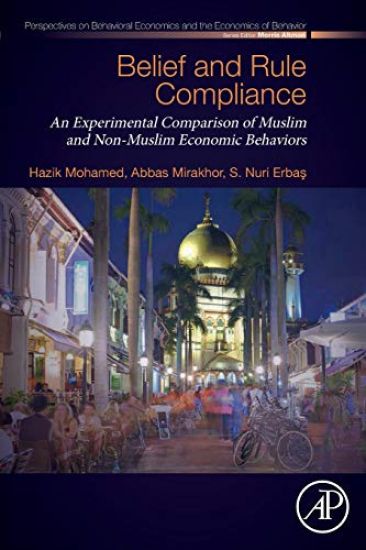
Belief and Rule Compliance

Belief and Rule Compliance

Hazik Mohamed; Abbas Mirakhor; Nuri Erbas

Academic Press Inc
2018
nidottu
Belief and Rule Compliance: An Experimental Comparison of Muslim and Non-Muslim Economic Behavior uses modern behavioral science and game theory to examine the behavior and compliance of Muslim populations to Islamic Finance laws and norms. The work identifies behaviors characterized by unexpected complexity and profound divergence, including expectations for sharing, cooperation and entrepreneurship gleaned from studies. Adopting a unique set of recent empirical observations, the work provides a reliable behavioral foundation for practitioners seeking to evaluate, create and market Islamic financial products.
Ethical Dimensions of Islamic Finance

Ethical Dimensions of Islamic Finance

Zamir Iqbal; Abbas Mirakhor

Springer International Publishing AG
2018
nidottu
This book provides an introductory theoretical foundation of the ethics embedded in Islamic economics and finance, and it shows how this ethical framework could pave the way to economic and social justice. It demonstrates how Islamic finance—a risk-sharing and asset-backed finance—has embedded universal values, ethical rules, and virtues, and how these qualities may be applied to a supposedly value-neutral social science to influence policy-making. This book argues that ethical and responsible finance, such as Islamic finance, could lead the efforts to achieve sustainable economic development. Iqbal and Mirakhor then conduct a comparative analysis of Islamic and conventional financial systems and present Islamic finance as an alternative that can address today’s growing problems of inequality, social injustice, financial repression, unethical leadership, and lack of opportunity to share prosperity.
Resource Rich Muslim Countries and Islamic Institutional Reforms

Resource Rich Muslim Countries and Islamic Institutional Reforms

Liza Mydin; Hossein Askari; Abbas Mirakhor

Peter Lang Publishing Inc
2018
sidottu
Resource Rich Muslim Countries and Islamic Institutional Reforms explores the "resource curse," a condition in which a country’s abundance of natural resources is negatively linked with the country’s development and economic growth, in resource rich Muslim countries. The resource curse puzzle has been studied for over twenty years, with prior researchers looking to prove its existence and explore its causes. Recent studies have begun to indicate institutional failure as a likely cause of the curse, as wealth of resources tends to cause counterproductive behaviors such as rent-seeking, patronage and corruption. The subpar economic performance of resource rich Muslim countries in the Organization of the Islamic Cooperation (OIC) could be attributed to the manifestation of a resource curse. Collectively, the member countries of the OIC contribute over 9% of the world’s total GDP with 22.8% of the world’s population. Saudi Arabia and the United Arab Emirates alone contribute about 17% of world oil production. Resource rich Muslim countries should be at the forefront of economic performance and growth, yet we see the opposite when we compare the performance of these countries to countries that are not resource rich (such as Spain, France, Hong Kong and Japan). Through an analysis of sample countries, the authors have discovered that natural resources exert a drag on the countries’ economic growth, thereby indicating the presence of the resource curse. Their research also found weaknesses in the quality of institutions as the cause of the curse. To counteract the negative effects of the resource curse in resource rich Muslim countries, the authors provide a number of Islamic institutional reforms.
Antifragility of Islamic Finance

Antifragility of Islamic Finance

Umar Rafi; Abbas Mirakhor

Peter Lang Publishing Inc
2017
sidottu
Antifragility of Islamic Finance: The Risk-Sharing Alternative explains how risk-sharing, as defined under Islamic finance, makes financial systems antifragile. It highlights the benefits of 100% equity-based finance over debt-based finance. The recent financial crisis has given rise to discussions on a new approach to risk management called antifragility. This concept specifies conditions under which systems become resilient to shocks caused by Black Swans—highly unpredictable outlier events that have a major negative (or positive) consequence when they occur, with their occurrence only explained retrospectively. Per this concept, the long-term survivability of any system centers exclusively on its antifragile nature, that is, its ability to absorb and even benefit from Black Swan–type shocks. This book aims to investigate risk-sharing Islamic finance as an antifragile system. As a by-product of the Great Recession, the problems of debt-based financial systems are starting to be highlighted by industry and by academia. The antifragile solution for avoiding future financial crises is primarily centered on moving the existing financial system towards more equity and less debt, thereby introducing skin-in-the-game into financial transactions. This book introduces a model of a 100% equity-based financial system, centered on risk sharing, as a possible alternative to the contemporary debt-based, conventional financial system, which is based on risk transfer and on risk shifting. In essence, this book attempts to provide a practical model for an antifragile financial system by evaluating the characteristics of Islamic finance under the criteria of antifragility.
Macroeconomic Policy and Islamic Finance in Malaysia

Macroeconomic Policy and Islamic Finance in Malaysia

Azura Othman; Norhanim Mat Sari; Syed Othman Alhabshi; Abbas Mirakhor

Palgrave Macmillan
2017
sidottu
This book offers an alternative framework for macroeconomic policy in Malaysia, derived from the universal principles of social justice espoused in the objectives of the Shariah. It attempts to holistically analyze issues related to public finance, which has been criticized for lack of transparency and justice in wealth distribution. This book explores these criticisms and discusses the principles of Islamic finance that may be applied to macroeconomic policymaking to create a better economy overall. It presents a case for a flat tax system, to make the economy more resilient to shocks, and financing methods that limit interest-rate-based debt contracts and allow greater risk sharing among the market participants on a broad scale. Using both qualitative and quantitative methods, this book models the Malaysian economy based on policies that apply the fundamental Islamic finance principle of risk sharing to demonstrate its benefits in spurring growth, promoting distributive justice, rendering the economy more stable, strengthening the potency of monetary policy, enhancing fiscal governance, and improving financial inclusion. The book will be of interest to students, policymakers, financial institutions, researchers, ministries of finance, central banks, securities commissions, and anyone interested in alternative economic paradigms.