Kirjojen hintavertailu – 12 903 724 kirjaa ja 27 kauppaa

Kirjailija

Abdelwahab Meddeb

Kirjat ja teokset yhdessä paikassa: 8 kirjaa, julkaisuja vuosilta 2003–2026, suosituimpiin kuuluu Returns to Marrakesh / Retour à Marrakech. Vertaile teosten hintoja ja tarkista saatavuus suomalaisista kirjakaupoista.

8 kirjaa

Kirjojen julkaisuvuodet: 2003–2026.

Returns to Marrakesh / Retour à Marrakech

Returns to Marrakesh / Retour à Marrakech

Abdelwahab Meddeb

SYRACUSE UNIVERSITY PRESS
2026
pokkari
"On the way to Marrakesh, a superb sunrise, the sun high in the sky." With this simple yet luminous opening, Abdelwahab Meddeb invites the reader to wander the vibrant streets and sacred sites of this lively city in the heart of Morocco. Returns to Marrakesh chronicles Meddeb’s return visits to the Red City from 1968 through the 1990s, documenting both his personal journey and the city’s transformation across three pivotal decades. Through his distinctive blend of poetic prose and keen observation, Meddeb reveals Marrakesh as a historical crossroads where diverse populations—Jewish and Muslim communities, different social classes, Sufi mystics, and merchants—have created a uniquely multilayered urban space. Capturing Marrakesh’s sounds, scents, and sights, these vivid travel notes portrays a city teeming with life and infused with an intense array of colors. The bilingual edition includes both Meddeb’s original French and its English translation, making accessible the work of one of North Africa’s most important voices.

Vita genomfarter & Ibn Arabis grav

Vita genomfarter & Ibn Arabis grav

Abdelwahab Meddeb

Ellerströms Förlag
2021
nidottu
I essän Vita genomfarter låter Abdel­wahab Meddeb sina minnen från Tunis bli utgångspunkt för en poetisk reflektion över det vitas resonans i religionen och kulturen. Genom skriftens befläckande utforskas här betydelsen av kontraster, allt för att ”kortsluta strömmen som utfodrar myten” där vitheten, det vita, dröms rent och obefläckat. I diktsamlingen Ibn Arabis grav fortsätter poeten att utforska olika traditioner med varandra. Med ordagrann grund i den sufiske mystikern Ibn Arabis diktcykel Begärens översättare från 1200-talet blir Meddebs diktsamling en plats där spåren myllrar från den europeiska litteraturhistorien, för-islamska kärlekspoeter och sufismens mystiker.
Islam and the Challenge of Civilization

Islam and the Challenge of Civilization

Abdelwahab Meddeb

Fordham University Press
2015
pokkari
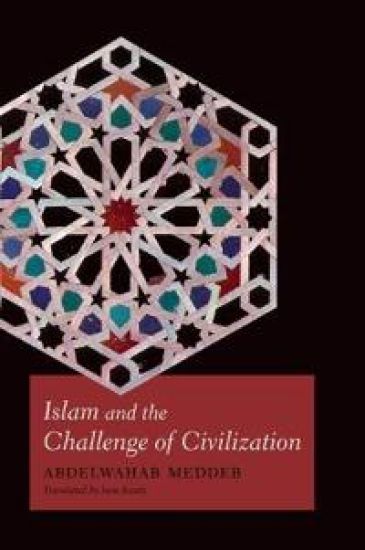
Abdelwahab Meddeb makes an urgent case for an Islamic reformation, located squarely in Western Europe, now home to millions of Muslims, where Christianity and Judaism have come to coexist with secular humanism and positivist law. He is not advocating "moderate" Islam, which he characterizes as thinly disguised Wahabism, but rather an Islam inspired by the great Sufi thinkers, whose practice of religion was not bound by doctrine. To accomplish this, Meddeb returns to the doctrinal question of the text as transcription of the uncreated word of God and calls upon Muslims to distinguish between Islam's spiritual message and the temporal, material, and historically grounded origins of its founding scriptures. He contrasts periods of Islamic history—when philosophers and theologians engaged in lively dialogue with other faiths and civilizations and contributed to transmitting the Hellenistic tradition to early modern Europe—with modern Islam's collective amnesia of this past. Meddeb wages a war of interpretations in this book, in his attempt to demonstrate that Muslims cannot join the concert of nations unless they set aside outmoded notions such as jihad and realize that feuding among the monotheisms must give way to the more important issue of what it means to be a citizen in today's postreligious global setting.
Islam and the Challenge of Civilization

Islam and the Challenge of Civilization

Abdelwahab Meddeb

FORDHAM UNIVERSITY PRESS
2013
sidottu
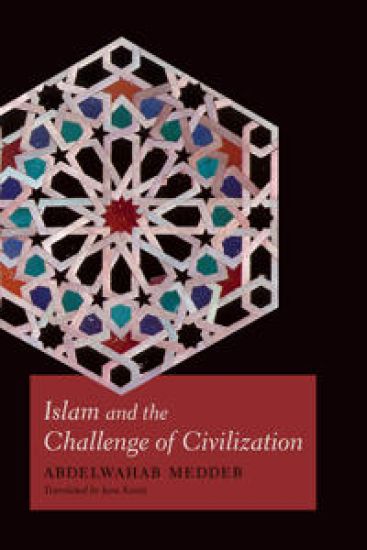
Abdelwahab Meddeb makes an urgent case for an Islamic reformation, located squarely in Western Europe, now home to millions of Muslims, where Christianity and Judaism have come to coexist with secular humanism and positivist law. He is not advocating "moderate" Islam, which he characterizes as thinly disguised Wahabism, but rather an Islam inspired by the great Sufi thinkers, whose practice of religion was not bound by doctrine. To accomplish this, Meddeb returns to the doctrinal question of the text as transcription of the uncreated word of God and calls upon Muslims to distinguish between Islam's spiritual message and the temporal, material, and historically grounded origins of its founding scriptures. He contrasts periods of Islamic history—when philosophers and theologians engaged in lively dialogue with other faiths and civilizations and contributed to transmitting the Hellenistic tradition to early modern Europe—with modern Islam's collective amnesia of this past. Meddeb wages a war of interpretations in this book, in his attempt to demonstrate that Muslims cannot join the concert of nations unless they set aside outmoded notions such as jihad and realize that feuding among the monotheisms must give way to the more important issue of what it means to be a citizen in today's postreligious global setting.
Talismano

Talismano

Abdelwahab Meddeb

Dalkey Archive Press
2011
nidottu
"Talismano" is a novelistic exploration of writing seen as a hallucinatory journey through half-remembered, half-imagined cities--in particular, the city of Tunis, both as it is now, and as it once was. Walking and writing, journey and journal, mirror one another to produce a calligraphic, magical work: a palimpsest of various languages and cultures, highlighting Abdelwahab Meddeb's beguiling mastery of both the Western and Islamic traditions. Meddeb's journey is first and foremost a sensual one, almost decadent, where the narrator luxuriates in the Tunis of his memories and intercuts these impressions with recollections of other cities at other times, reviving the mythical figures of Arab-Islamic legend that have faded from memory in a rapidly westernizing North Africa. A fever dream situated on the knife-edge between competing cultures, "Talismano" is a testament to the power of language to evoke, and subdue, experience.
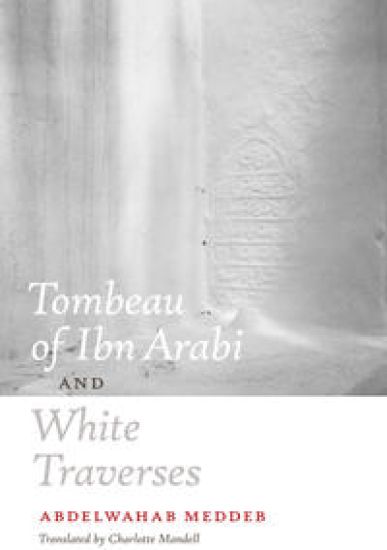
Tombeau of Ibn Arabi and White Traverses

Tombeau of Ibn Arabi and White Traverses

Abdelwahab Meddeb; Jean-Luc Nancy

Fordham University Press
2010
pokkari
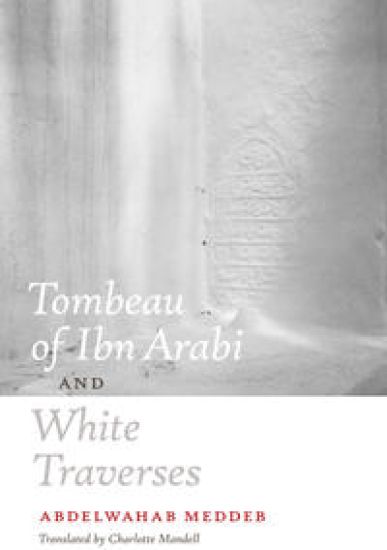
Abdelwahab Meddeb crosses boundaries in unusual and important ways. Born in Tunis, he is now a French national. In his academic and literary work, he is concerned with the roots and history of Islam and with crossings, like his own, between Islam and Europe. He is an author of extraordinarily beautiful French; this is the first book to represent this lyrical aspect of his work in English translation. White Traverses is a poetic memoir about growing up in Tunisia and the contrasts between Islamic and European influences. In it, the intense colors and blinding whites of the Maghreb interweave with the rich traditions of French poetic discourse. In Africa as in Europe, white designates purity. Yet the complex Mediterranean streams of culture that flow together in Tunis problematize this myth. Meddeb captures their white refractions in vignettes that teach us the truth of the coincidence of contraries, of how the impure lodges in the pure. Tombeau of Ibn Arabi is a series of prose poems that draw their inspiration from the great Sufi poet of mediaeval Andalusia, Ibn Arabi, whose fervent love poetry both scandalized and transformed Islamic culture, and from Dante, who learned from Ibn Arabi a poetry of sensual love as initiation into spiritual experience. It seeks to show how a text written in the present day can maintain a link with the great dead . Ibn Arabi and Dante are two symbolic figures confirming the author's twofold spiritual genealogy--Arabic and European.
Tombeau of Ibn Arabi and White Traverses

Tombeau of Ibn Arabi and White Traverses

Abdelwahab Meddeb; Jean-Luc Nancy

Fordham University Press
2010
sidottu
Abdelwahab Meddeb crosses boundaries in unusual and important ways. Born in Tunis, he is now a French national. In his academic and literary work, he is concerned with the roots and history of Islam and with crossings, like his own, between Islam and Europe. He is an author of extraordinarily beautiful French; this is the first book to represent this lyrical aspect of his work in English translation. White Traverses is a poetic memoir about growing up in Tunisia and the contrasts between Islamic and European influences. In it, the intense colors and blinding whites of the Maghreb interweave with the rich traditions of French poetic discourse. In Africa as in Europe, white designates purity. Yet the complex Mediterranean streams of culture that flow together in Tunis problematize this myth. Meddeb captures their white refractions in vignettes that teach us the truth of the coincidence of contraries, of how the impure lodges in the pure. Tombeau of Ibn Arabi is a series of prose poems that draw their inspiration from the great Sufi poet of mediaeval Andalusia, Ibn Arabi, whose fervent love poetry both scandalized and transformed Islamic culture, and from Dante, who learned from Ibn Arabi a poetry of sensual love as initiation into spiritual experience. It seeks to show how a text written in the present day can maintain a link with the great dead . Ibn Arabi and Dante are two symbolic figures confirming the author's twofold spiritual genealogy--Arabic and European.
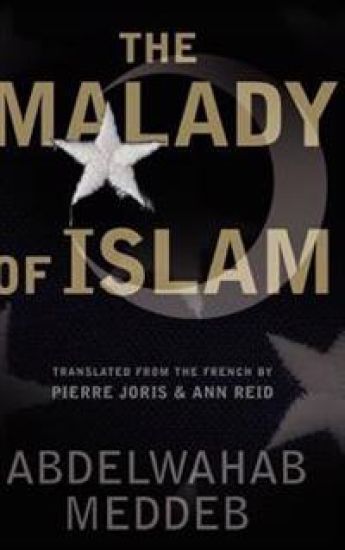
The Malady of Islam

The Malady of Islam

Abdelwahab Meddeb

Basic Books
2003
sidottu
A defense of Islam, and an indictment of religious fundamentalism, addressed to Islamic and Western readers. . In this impassioned, erudite, and deeply moving book, Abdelwahab Meddeb, born and raised in Tunis and now living in Paris, details the breadth and scope of the Arab intellectual tradition and dismantles common preconceptions held by the Islamic and Western worlds. He describes the growing resentment between the West and the Islamic world as being due, in large part, to Islam's drift away from its own pluralist tradition. Tracing the history of the "conquering" of the Arab world by the West, he provides a detailed history of the ways in which Islamic fundamentalism has come to compensate for Western dominance. Directly addressing the terrorist attacks of September 11, he challenges us to reconsider the presumption that the gulf between the Islamic world and the West is too wide to breach. The "malady" of Islam lies in its alienation from the West and the corrosive influence that fundamentalism has wrought. This book is a correction of the historical record, a passionate description of the best of Islamic thought and culture, and an absolutely necessary read for those seeking a better understanding not only of Islam but also ourselves.