Kirjojen hintavertailu – 12 903 735 kirjaa ja 27 kauppaa

Kirjailija

Abdullah Saeed

Kirjat ja teokset yhdessä paikassa: 19 kirjaa, julkaisuja vuosilta 2001–2026, suosituimpiin kuuluu Using CLAUDE AI In Medical and Clinical Research From Idea to Publication. Vertaile teosten hintoja ja tarkista saatavuus suomalaisista kirjakaupoista.

19 kirjaa

Kirjojen julkaisuvuodet: 2001–2026.

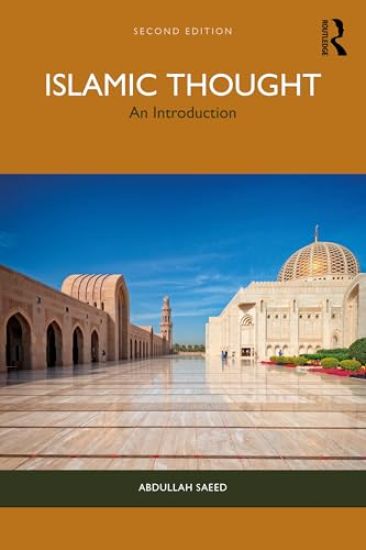
Islamic Thought

Islamic Thought

Abdullah Saeed

TAYLOR FRANCIS LTD
2026
nidottu
Islamic Thought is a comprehensive introduction to the philosophies, thought and doctrines of Islam. Abdullah Saeed, a distinguished Muslim scholar, traces the development of religious knowledge from the pre-modern period to the present day. This book examines how Muslim thought has evolved, exploring the production, transmission, and interpretation of religious knowledge, and the trends, schools, and movements that have shaped it. Key topics in Islamic culture and thought are discussed, including the development of the Islamic intellectual tradition, the Qur’an and hadith, legal and theological thought, mystical traditions, Islamic art, philosophy, political thought, and contemporary renewal, reform, and rethinking. This thoroughly revised new edition offers expanded coverage of Shi?i and other non-Sunni perspectives, alongside the significant emphasis on the Sunni tradition covered in the first edition. Through this rich and varied discussion, Saeed offers a compelling portrayal of the workings of Islamic thought, both in the past and in the present. Islamic Thought is essential reading for students approaching the study of Islam for the first time and anyone interested in learning more about one of the world’s great religions.

Islamic Thought

Islamic Thought

Abdullah Saeed

TAYLOR FRANCIS LTD
2026
sidottu
Islamic Thought is a comprehensive introduction to the philosophies, thought and doctrines of Islam. Abdullah Saeed, a distinguished Muslim scholar, traces the development of religious knowledge from the pre-modern period to the present day. This book examines how Muslim thought has evolved, exploring the production, transmission, and interpretation of religious knowledge, and the trends, schools, and movements that have shaped it. Key topics in Islamic culture and thought are discussed, including the development of the Islamic intellectual tradition, the Qur’an and hadith, legal and theological thought, mystical traditions, Islamic art, philosophy, political thought, and contemporary renewal, reform, and rethinking. This thoroughly revised new edition offers expanded coverage of Shi?i and other non-Sunni perspectives, alongside the significant emphasis on the Sunni tradition covered in the first edition. Through this rich and varied discussion, Saeed offers a compelling portrayal of the workings of Islamic thought, both in the past and in the present. Islamic Thought is essential reading for students approaching the study of Islam for the first time and anyone interested in learning more about one of the world’s great religions.

The Qur'an

The Qur'an

Abdullah Saeed

TAYLOR FRANCIS LTD
2026
nidottu
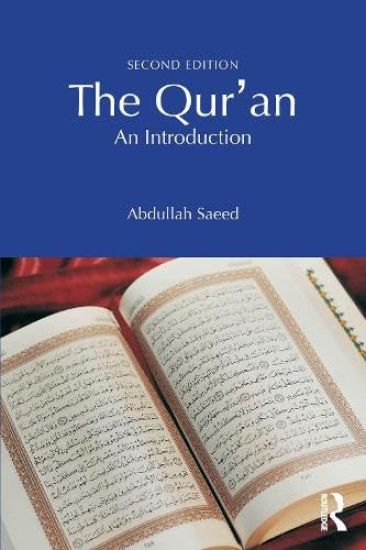
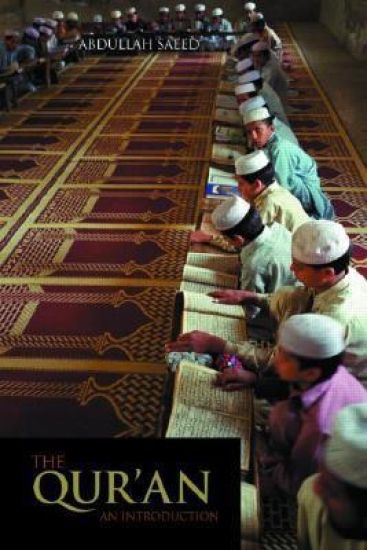
There is much more to the Qur'an than the selective quotations favored by Islamic fundamentalists. This thoroughly revised third edition of The Qur'an: An Introduction provides an accessible yet scholarly guide to the many dimensions of Qur'anic study, designed for both Muslim and Western non-Muslim students alike. This comprehensive new edition reflects significant developments in Qur'anic scholarship since 2008 and features: A new dedicated chapter exploring diverse Islamic theories of revelation and the concept of the Preserved Tablet Expanded discussion on the history of the Qur'anic text, incorporating recent groundbreaking research A broader, more nuanced examination of Orientalism's relationship with Qur'anic interpretation A newly added chapter on prophets in the Qur'an and their significance Thoroughly updated recommended readings reflecting contemporary scholarship The book maintains its student-friendly approach with illustrative examples, clear summaries, helpful timelines, and a comprehensive glossary. It examines the Qur'an through Western academic perspectives while honoring the rich interpretive traditions that have evolved from the time of Prophet Muhammad to the present day. This essential guide bridges historical understanding with contemporary relevance, offering readers a balanced and thorough introduction to Islam's foundational text and its profound influence across centuries of religious thought.
The Qur'an

The Qur'an

Abdullah Saeed

TAYLOR FRANCIS LTD
2026
sidottu
There is much more to the Qur'an than the selective quotations favored by Islamic fundamentalists. This thoroughly revised third edition of The Qur'an: An Introduction provides an accessible yet scholarly guide to the many dimensions of Qur'anic study, designed for both Muslim and Western non-Muslim students alike. This comprehensive new edition reflects significant developments in Qur'anic scholarship since 2008 and features: A new dedicated chapter exploring diverse Islamic theories of revelation and the concept of the Preserved Tablet Expanded discussion on the history of the Qur'anic text, incorporating recent groundbreaking research A broader, more nuanced examination of Orientalism's relationship with Qur'anic interpretation A newly added chapter on prophets in the Qur'an and their significance Thoroughly updated recommended readings reflecting contemporary scholarship The book maintains its student-friendly approach with illustrative examples, clear summaries, helpful timelines, and a comprehensive glossary. It examines the Qur'an through Western academic perspectives while honoring the rich interpretive traditions that have evolved from the time of Prophet Muhammad to the present day. This essential guide bridges historical understanding with contemporary relevance, offering readers a balanced and thorough introduction to Islam's foundational text and its profound influence across centuries of religious thought.
Contemporary Approaches to the Qur?an and its Interpretation in Iran
This book sets out how contemporary Iranian scholars have approached the Qur?an during recent decades. It particularly aims to explore the contributions of scholars that have emerged in the post 1979-revolution era, outlining their primary interpretive methods and foundational theories regarding the reading of the Qur?an. Examining issues such as the status of women, democracy, freedom of religion and human rights, this book analyses the theoretical contributions of several Iranian scholars, some of which are new to the English-speaking academy. The hermeneutical approaches of figures such Abdolkarim Soroush, Muhammad Mojtahed Shabestari, Mohsen Kadivar, Hasan Yousefi-Eshkevari, Abolqasem Fanaie and Mostafa Malekian are presented and then analysed to demonstrate how a contextualist approach to the Qu’ran has been formed in response to the influence of Western Orientalism. The effect of this approach to the Qu’ran is then shown to have wide-ranging effects on Iranian society. This study reveals Qu’ranic thought that has been largely overlooked by the West. It will, therefore. Be of great use to academics in Religious, Islamic and Qur?anic studies as well as those studying the culture of Iran and the Middle East more generally.
Contemporary Approaches to the Qur?an and its Interpretation in Iran
This book sets out how contemporary Iranian scholars have approached the Qur?an during recent decades. It particularly aims to explore the contributions of scholars that have emerged in the post 1979-revolution era, outlining their primary interpretive methods and foundational theories regarding the reading of the Qur?an. Examining issues such as the status of women, democracy, freedom of religion and human rights, this book analyses the theoretical contributions of several Iranian scholars, some of which are new to the English-speaking academy. The hermeneutical approaches of figures such Abdolkarim Soroush, Muhammad Mojtahed Shabestari, Mohsen Kadivar, Hasan Yousefi-Eshkevari, Abolqasem Fanaie and Mostafa Malekian are presented and then analysed to demonstrate how a contextualist approach to the Qu’ran has been formed in response to the influence of Western Orientalism. The effect of this approach to the Qu’ran is then shown to have wide-ranging effects on Iranian society. This study reveals Qu’ranic thought that has been largely overlooked by the West. It will, therefore. Be of great use to academics in Religious, Islamic and Qur?anic studies as well as those studying the culture of Iran and the Middle East more generally.
Human Rights and Islam

Human Rights and Islam

Abdullah Saeed

Edward Elgar Publishing Ltd
2018
sidottu
Is there a basis for human rights in Islam? Beginning with an exploration of what rights are and how the human rights discourse developed, Abdullah Saeed explores the resources that exist within Islamic tradition in support of human rights. He identifies those that are compatible with international human rights law and can be garnered to promote and protect human rights in Muslim-majority states. Relying on significant texts in the Qur'an and hadith, early juristic discourses and modern Islamic scholarship, Saeed explains the compatibilities and incompatibilities between Islamic law and international human rights law. He also deals separately with a number of specific rights that are usually considered somewhat incompatible with Islamic law, such as the rights of women and children, freedom of expression and religion and jihad and the laws of war. Each chapter also contains a case to allow readers to look more closely at issues of relevance. Human Rights and Islam emphasises the need for Muslims to rethink problematic areas of Islamic thought that are difficult to reconcile with ontemporary conceptions of human rights. Students of Islamic law, human rights and Islam in the modern period will appreciate this challenging but accessible look at an important topic.
Reading the Qur'an in the Twenty-First Century
Reading the Qur’an in the Twenty-First Century considers the development of Qur’anic interpretation and highlights modern debates around new approaches to interpretation. It explores how Muslims from various theological, legal, socio-political and philosophical backgrounds think about the meaning and relevance of the Qur’an, and how their ideas apply in the contemporary world. The book:reflects on one of the most dominant approaches to interpretation in the pre-modern period, textualism, and the reaction to that in Muslim feminist readings of the Qur’an todaycovers issues such as identifying the hierarchical nature of Qur’anic values, the criteria for the use of hadith in interpretation, fluidity of meaning and ways of ensuring a degree of stability in interpretationexamines key Qur'anic passages and compares pre-modern and modern interpretations to show the evolving nature of interpretation. Examples discussed include: the authority of men over women, the death of Jesus, shura and democracy, and riba and interestAbdullah Saeed provides a practical guide for interpretation and presents the principal ideas of a contextualist approach, which situates the original message of the Qur’an in its wider social, political, cultural, economic and intellectual context. He advocates a more flexible method of interpretation that gives due recognition to earlier interpretations of the Qur’an while also being aware of changing conditions and the need to approach the Qur’an afresh today. The Open Access version of this book, available at http://www.taylorfrancis.com, has been made available under a Creative Commons [Attribution-Non Commercial-No Derivatives (CC-BY-NC-ND)] 4.0 license.
Reading the Qur'an in the Twenty-First Century
Reading the Qur’an in the Twenty-First Century considers the development of Qur’anic interpretation and highlights modern debates around new approaches to interpretation. It explores how Muslims from various theological, legal, socio-political and philosophical backgrounds think about the meaning and relevance of the Qur’an, and how their ideas apply in the contemporary world. The book:reflects on one of the most dominant approaches to interpretation in the pre-modern period, textualism, and the reaction to that in Muslim feminist readings of the Qur’an todaycovers issues such as identifying the hierarchical nature of Qur’anic values, the criteria for the use of hadith in interpretation, fluidity of meaning and ways of ensuring a degree of stability in interpretationexamines key Qur'anic passages and compares pre-modern and modern interpretations to show the evolving nature of interpretation. Examples discussed include: the authority of men over women, the death of Jesus, shura and democracy, and riba and interestAbdullah Saeed provides a practical guide for interpretation and presents the principal ideas of a contextualist approach, which situates the original message of the Qur’an in its wider social, political, cultural, economic and intellectual context. He advocates a more flexible method of interpretation that gives due recognition to earlier interpretations of the Qur’an while also being aware of changing conditions and the need to approach the Qur’an afresh today. The Open Access version of this book, available at http://www.taylorfrancis.com, has been made available under a Creative Commons [Attribution-Non Commercial-No Derivatives (CC-BY-NC-ND)] 4.0 license.
The Qur'an

The Qur'an

Abdullah Saeed

Routledge
2008
sidottu
There is much more to the Qur'an than the selective quotations favoured by Islamic fundamentalists. This book provides a student-friendly guide to the many ways in which the Qur'an can be read. Designed for both Muslims and Western non-Muslim students, it examines the Qur'an in Western scholarship as well as giving an overview of the rich interpretive traditions from the time of the Prophet Muhammad to the present day. This guide is a concise introduction to all aspects of the Qur'an: history, understanding and interpretation, providing:coverage of both pre-modern and modern periodsplenty of examples to illustrate key points and aid student understandingsummaries, timelines and a glossary.
The Qur'an

The Qur'an

Abdullah Saeed

Routledge
2008
nidottu
There is much more to the Qur'an than the selective quotations favoured by Islamic fundamentalists. This book provides a student-friendly guide to the many ways in which the Qur'an can be read. Designed for both Muslims and Western non-Muslim students, it examines the Qur'an in Western scholarship as well as giving an overview of the rich interpretive traditions from the time of the Prophet Muhammad to the present day. This guide is a concise introduction to all aspects of the Qur'an: history, understanding and interpretation, providing:coverage of both pre-modern and modern periodsplenty of examples to illustrate key points and aid student understandingsummaries, timelines and a glossary.
Islamic Thought

Islamic Thought

Abdullah Saeed

Routledge
2006
nidottu
Islamic Thought is a fresh and contemporary introduction to the philosophies and doctrines of Islam. Abdullah Saeed, a distinguished Muslim scholar, traces the development of religious knowledge in Islam, from the pre-modern to the modern period. The book focuses on Muslim thought, as well as the development, production and transmission of religious knowledge, and the trends, schools and movements that have contributed to the production of this knowledge. Key topics in Islamic culture are explored, including the development of the Islamic intellectual tradition, the two foundation texts, the Qur’an and Hadith, legal thought, theological thought, mystical thought, Islamic Art, philosophical thought, political thought, and renewal, reform and rethinking today. Through this rich and varied discussion, Saeed presents a fascinating depiction of how Islam was lived in the past and how its adherents practise it in the present. Islamic Thought is essential reading for students beginning the study of Islam but will also interest anyone seeking to learn more about one of the world’s great religions.
Islamic Thought

Islamic Thought

Abdullah Saeed

Routledge
2006
sidottu
Islamic Thought is a fresh and contemporary introduction to the philosophies and doctrines of Islam. Abdullah Saeed, a distinguished Muslim scholar, traces the development of religious knowledge in Islam, from the pre-modern to the modern period. The book focuses on Muslim thought, as well as the development, production and transmission of religious knowledge, and the trends, schools and movements that have contributed to the production of this knowledge. Key topics in Islamic culture are explored, including the development of the Islamic intellectual tradition, the two foundation texts, the Qur’an and Hadith, legal thought, theological thought, mystical thought, Islamic Art, philosophical thought, political thought, and renewal, reform and rethinking today. Through this rich and varied discussion, Saeed presents a fascinating depiction of how Islam was lived in the past and how its adherents practise it in the present. Islamic Thought is essential reading for students beginning the study of Islam but will also interest anyone seeking to learn more about one of the world’s great religions.
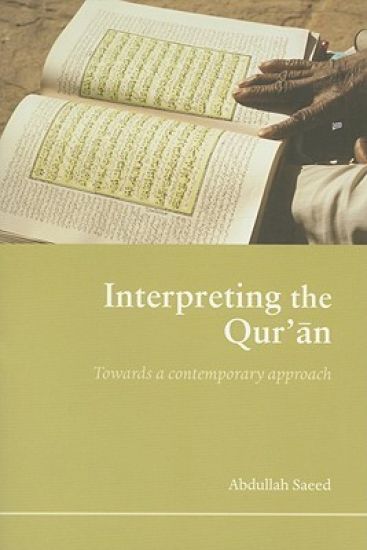
Interpreting the Qur'an

Interpreting the Qur'an

Abdullah Saeed

Routledge
2005
sidottu
How is the Qur'an - central to all Muslim societies - to be understood today in order to meet the needs of these societies? Abdullah Saeed, a distinguished Muslim scholar, explores the interpretation of the ethico-legal content of the Qur'an, whilst taking into consideration the changing nature of the modern world. Saeed explores the current debates surrounding the interpretation of the Qur'an, and their impact on contemporary understanding of this sacred text. Discussing the text's relevance to modern issues without compromising the overall framework of the Qur'an and its core beliefs and practices, he proposes a fresh approach, which takes into account the historical and contemporary contexts of interpretation. Inspiring healthy debate, this book is essential reading for students and scholars seeking a contemporary approach to the interpretation of the Qur'anic text. The Open Access version of this book, available at http://www.taylorfrancis.com, has been made available under a Creative Commons [Attribution-Non Commercial-No Derivatives (CC-BY-NC-ND)] 4.0 license.
Interpreting the Qur'an

Interpreting the Qur'an

Abdullah Saeed

Routledge
2005
nidottu
How is the Qur'an - central to all Muslim societies - to be understood today in order to meet the needs of these societies? Abdullah Saeed, a distinguished Muslim scholar, explores the interpretation of the ethico-legal content of the Qur'an, whilst taking into consideration the changing nature of the modern world. Saeed explores the current debates surrounding the interpretation of the Qur'an, and their impact on contemporary understanding of this sacred text. Discussing the text's relevance to modern issues without compromising the overall framework of the Qur'an and its core beliefs and practices, he proposes a fresh approach, which takes into account the historical and contemporary contexts of interpretation. Inspiring healthy debate, this book is essential reading for students and scholars seeking a contemporary approach to the interpretation of the Qur'anic text. The Open Access version of this book, available at http://www.taylorfrancis.com, has been made available under a Creative Commons [Attribution-Non Commercial-No Derivatives (CC-BY-NC-ND)] 4.0 license.
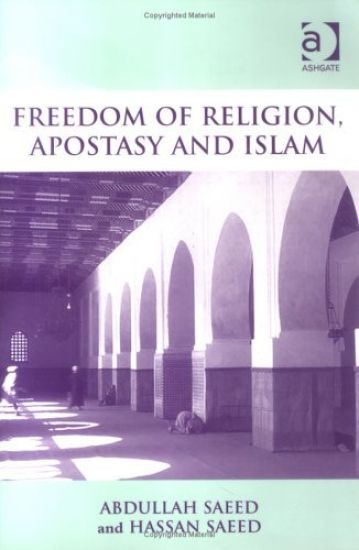
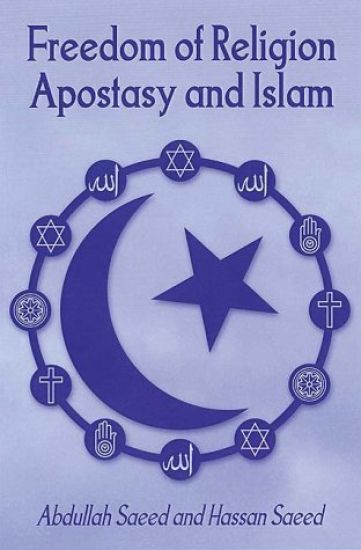
Freedom of Religion, Apostasy and Islam

Freedom of Religion, Apostasy and Islam

Abdullah Saeed

Ashgate Publishing Limited
2004
nidottu
Debate on freedom of religion as a human right takes place not only in the Western world but also in Muslim communities throughout the world. For Muslims concerned for this freedom, one of the major difficulties is the 'punishment for apostasy' - death for those who desert Islam. This book argues that the law of apostasy and its punishment by death in Islamic law is untenable in the modern period. Apostasy conflicts with a variety of foundation texts of Islam and with the current ethos of human rights, in particular the freedom to choose one's religion. Demonstrating the early development of the law of apostasy as largely a religio-political tool, the authors show the diversity of opinion among early Muslims on the punishment, highlighting the substantial ambiguities about what constitutes apostasy, the problematic nature of some of the key textual evidence on which the punishment of apostasy is based, and the neglect of a vast amount of clear Qur'anic texts in favour of freedom of religion in the construction of the law of apostasy. Examining the significant challenges the punishment of apostasy faces in the modern period inside and outside Muslim communities - exploring in particular how apostasy and its punishment is dealt with in a multi-religious Muslim majority country, Malaysia, and the challenges and difficulties it faces there - the authors discuss arguments by prominent Muslims today for an absolute freedom of religion and for discarding the punishment of apostasy.
Freedom of Religion, Apostasy and Islam

Freedom of Religion, Apostasy and Islam

Abdullah Saeed

Ashgate Publishing Limited
2004
sidottu
Debate on freedom of religion as a human right takes place not only in the Western world but also in Muslim communities throughout the world. For Muslims concerned for this freedom, one of the major difficulties is the 'punishment for apostasy' - death for those who desert Islam. This book argues that the law of apostasy and its punishment by death in Islamic law is untenable in the modern period. Apostasy conflicts with a variety of foundation texts of Islam and with the current ethos of human rights, in particular the freedom to choose one's religion. Demonstrating the early development of the law of apostasy as largely a religio-political tool, the authors show the diversity of opinion among early Muslims on the punishment, highlighting the substantial ambiguities about what constitutes apostasy, the problematic nature of some of the key textual evidence on which the punishment of apostasy is based, and the neglect of a vast amount of clear Qur'anic texts in favour of freedom of religion in the construction of the law of apostasy. Examining the significant challenges the punishment of apostasy faces in the modern period inside and outside Muslim communities - exploring in particular how apostasy and its punishment is dealt with in a multi-religious Muslim majority country, Malaysia, and the challenges and difficulties it faces there - the authors discuss arguments by prominent Muslims today for an absolute freedom of religion and for discarding the punishment of apostasy.
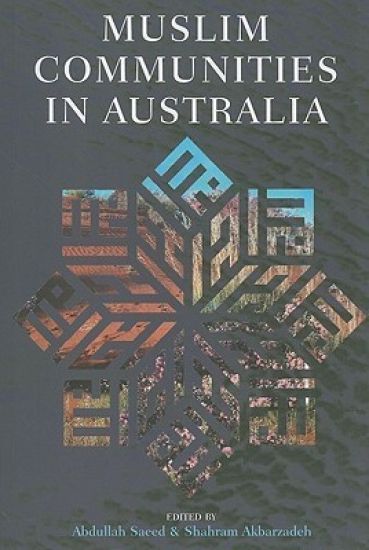
Muslim Communities in Australia

Muslim Communities in Australia

Abdullah Saeed; Shahram Akbarzaden

UNSW Press
2001
nidottu
This book brings together the foremost scholars of Islam and Muslim politics in Australia to consider the relationship between Australian politics and society and Muslim Communities in Australia. - The book responds to such questions as: - Is there a Muslim community in Australia? - How do national differences affect the assumed 'Muslim community'? - How do Muslim residents in Australia identify themselves? - How has the experience of migration affected their sense of identity? - Does the establishment of Islamic schooling and finance amount to the separation of Muslims from the mainstream of Australian society? - How has the Australian mainstream media portrayed Muslims in Australia and how has this portrayal changed over the last 30 years? - By addressing such critical issues, the book will present a well-rounded picture of the Muslim experience in Australia and highlight key issues of concern for the Muslim community.