Kirjojen hintavertailu – 12 859 824 kirjaa ja 27 kauppaa

Kirjailija

Abhijit Majumdar

Kirjat ja teokset yhdessä paikassa: 4 kirjaa, julkaisuja vuosilta 2016–2020, suosituimpiin kuuluu Advanced Optimization and Decision-Making Techniques in Textile Manufacturing. Vertaile teosten hintoja ja tarkista saatavuus suomalaisista kirjakaupoista.

4 kirjaa

Kirjojen julkaisuvuodet: 2016–2020.

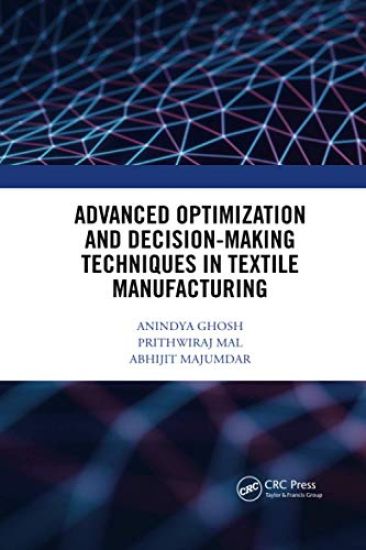
Advanced Optimization and Decision-Making Techniques in Textile Manufacturing

Advanced Optimization and Decision-Making Techniques in Textile Manufacturing

Anindya Ghosh; Prithwiraj Mal; Abhijit Majumdar

CRC Press
2020
nidottu
Optimization and decision making are integral parts of any manufacturing process and management system. The objective of this book is to demonstrate the confluence of theory and applications of various types of multi-criteria decision making and optimization techniques with reference to textile manufacturing and management. Divided into twelve chapters, it discusses various multi-criteria decision-making methods such as AHP, TOPSIS, ELECTRE, and optimization techniques like linear programming, fuzzy linear programming, quadratic programming, in textile domain. Multi-objective optimization problems have been dealt with two approaches, namely desirability function and evolutionary algorithm. Key Features Exclusive title covering textiles and soft computing fields including optimization and decision making Discusses concepts of traditional and non-traditional optimization methods with textile examples Explores pertinent single-objective and multi-objective optimizations Provides MATLAB coding in the Appendix to solve various types of multi-criteria decision making and optimization problems Includes examples and case studies related to textile engineering and management
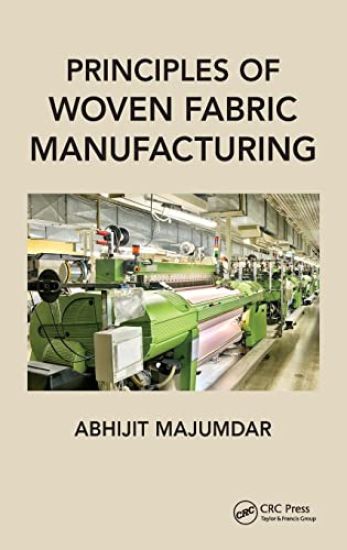
Principles of Woven Fabric Manufacturing
Weaving as a subject is an integral part of any textile engineering/technology program, the others being fibre manufacturing, yarn manufacturing and textile chemical processing. This book amalgamates both the compartments (preparatory processes and the loom mechanism) of weaving technology and presents a holistic picture. The machine descriptions are presented from the viewpoint of principles and no attempt has been made to make them exhaustive by incorporating various models or variants. The mathematical relations among various parameters have been derived starting from the first principles and each chapter concludes with solved numerical examples.
Advanced Optimization and Decision-Making Techniques in Textile Manufacturing

Advanced Optimization and Decision-Making Techniques in Textile Manufacturing

Anindya Ghosh; Prithwiraj Mal; Abhijit Majumdar

CRC Press
2019
sidottu
Optimization and decision making are integral parts of any manufacturing process and management system. The objective of this book is to demonstrate the confluence of theory and applications of various types of multi-criteria decision making and optimization techniques with reference to textile manufacturing and management. Divided into twelve chapters, it discusses various multi-criteria decision-making methods such as AHP, TOPSIS, ELECTRE, and optimization techniques like linear programming, fuzzy linear programming, quadratic programming, in textile domain. Multi-objective optimization problems have been dealt with two approaches, namely desirability function and evolutionary algorithm. Key Features Exclusive title covering textiles and soft computing fields including optimization and decision making Discusses concepts of traditional and non-traditional optimization methods with textile examples Explores pertinent single-objective and multi-objective optimizations Provides MATLAB coding in the Appendix to solve various types of multi-criteria decision making and optimization problems Includes examples and case studies related to textile engineering and management
Principles of Woven Fabric Manufacturing

Principles of Woven Fabric Manufacturing

Abhijit Majumdar

Productivity Press
2016
sidottu
Weaving as a subject is an integral part of any textile engineering/technology program, the others being fibre manufacturing, yarn manufacturing and textile chemical processing. This book amalgamates both the compartments (preparatory processes and the loom mechanism) of weaving technology and presents a holistic picture. The machine descriptions are presented from the viewpoint of principles and no attempt has been made to make them exhaustive by incorporating various models or variants. The mathematical relations among various parameters have been derived starting from the first principles and each chapter concludes with solved numerical examples.