Kirjojen hintavertailu – 12 903 724 kirjaa ja 27 kauppaa

Kirjailija

Abhijit Mishra

Kirjat ja teokset yhdessä paikassa: 3 kirjaa, julkaisuja vuosilta 2018–2026, suosituimpiin kuuluu The Trust Architect. Vertaile teosten hintoja ja tarkista saatavuus suomalaisista kirjakaupoista.

3 kirjaa

Kirjojen julkaisuvuodet: 2018–2026.

The Trust Architect

The Trust Architect

Abhijit Mishra

Ritera Publishing
2026
sidottu
The Trust Architect is a leadership doctrine for a world where technology moves faster than human judgment, and trust has become the most fragile-and most valuable-currency. In an era shaped by cyber risk, artificial intelligence, and invisible digital dependencies, traditional leadership models no longer hold. This book challenges leaders to rethink authority, responsibility, and decision-making in systems where failure is silent, breaches are systemic, and ethics lag behind innovation. Blending cybersecurity strategy, organizational psychology, and executive leadership, The Trust Architect introduces a new mental model for building resilient institutions-where trust is engineered, not assumed. Written for CXOs, CISOs, board members, and senior leaders, this book is not about tools or checklists. It is about mindset. It asks one uncomfortable question: who designs trust when systems outgrow human control?
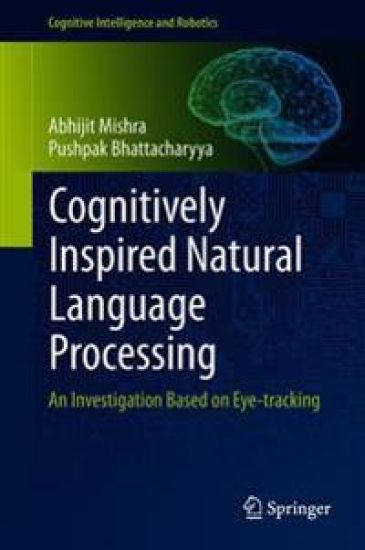
Cognitively Inspired Natural Language Processing

Cognitively Inspired Natural Language Processing

Abhijit Mishra; Pushpak Bhattacharyya

Springer Verlag, Singapore
2018
nidottu
This book shows ways of augmenting the capabilities of Natural Language Processing (NLP) systems by means of cognitive-mode language processing. The authors employ eye-tracking technology to record and analyze shallow cognitive information in the form of gaze patterns of readers/annotators who perform language processing tasks. The insights gained from such measures are subsequently translated into systems that help us (1) assess the actual cognitive load in text annotation, with resulting increase in human text-annotation efficiency, and (2) extract cognitive features that, when added to traditional features, can improve the accuracy of text classifiers. In sum, the authors’ work successfully demonstrates that cognitive information gleaned from human eye-movement data can benefit modern NLP. Currently available Natural Language Processing (NLP) systems are weak AI systems: they seek to capture the functionality of human language processing, without worrying about how thisprocessing is realized in human beings’ hardware. In other words, these systems are oblivious to the actual cognitive processes involved in human language processing. This ignorance, however, is NOT bliss! The accuracy figures of all non-toy NLP systems saturate beyond a certain point, making it abundantly clear that “something different should be done.”
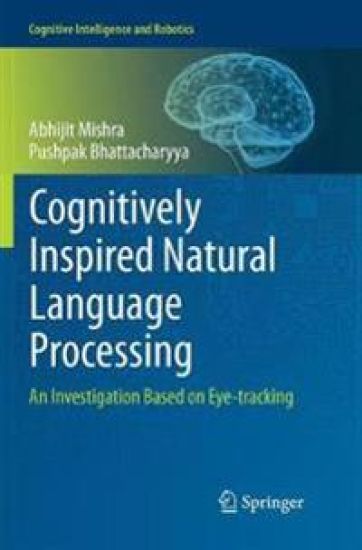
Cognitively Inspired Natural Language Processing

Cognitively Inspired Natural Language Processing

Abhijit Mishra; Pushpak Bhattacharyya

Springer Verlag, Singapore
2018
sidottu
This book shows ways of augmenting the capabilities of Natural Language Processing (NLP) systems by means of cognitive-mode language processing. The authors employ eye-tracking technology to record and analyze shallow cognitive information in the form of gaze patterns of readers/annotators who perform language processing tasks. The insights gained from such measures are subsequently translated into systems that help us (1) assess the actual cognitive load in text annotation, with resulting increase in human text-annotation efficiency, and (2) extract cognitive features that, when added to traditional features, can improve the accuracy of text classifiers. In sum, the authors’ work successfully demonstrates that cognitive information gleaned from human eye-movement data can benefit modern NLP. Currently available Natural Language Processing (NLP) systems are weak AI systems: they seek to capture the functionality of human language processing, without worrying about how thisprocessing is realized in human beings’ hardware. In other words, these systems are oblivious to the actual cognitive processes involved in human language processing. This ignorance, however, is NOT bliss! The accuracy figures of all non-toy NLP systems saturate beyond a certain point, making it abundantly clear that “something different should be done.”