Kirjojen hintavertailu – 12 903 724 kirjaa ja 27 kauppaa

Kirjailija

Abhishek Mishra

Kirjat ja teokset yhdessä paikassa: 32 kirjaa, julkaisuja vuosilta 2016–2025, suosituimpiin kuuluu Architecting a Modern Data Warehouse for Large Enterprises. Vertaile teosten hintoja ja tarkista saatavuus suomalaisista kirjakaupoista.

32 kirjaa

Kirjojen julkaisuvuodet: 2016–2025.

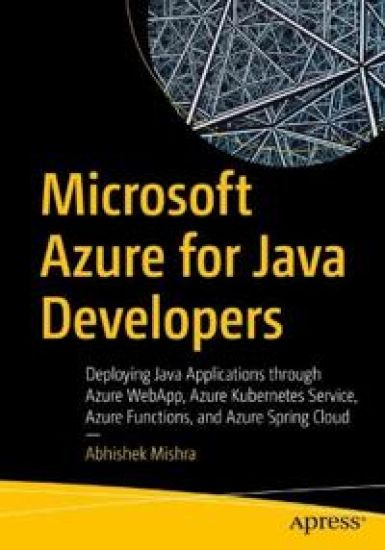
Microsoft Azure for Java Developers
Learn Azure-based features to build and deploy Java applications on Microsoft’s Azure cloud platform. This book provides examples of components on Azure that are of special interest to Java programmers, including the different deployment models that are available. The book shows how to deploy your Java applications in Azure WebApp, Azure Kubernetes Service, Azure Functions, and Azure Spring Cloud. Also covered is integration with components such as Graph API, Azure Storage, Azure Redis Cache, and Azure SQL. The book begins with a brief discussion of cloud computing and an introduction to Java support on Azure. You’ll then learn how to deploy Java applications using each of the deployment models, and you’ll see examples of integrating with Azure services that are of particular interest to Java programmers. Security is an important aspect, and this book shows you how to enable authentication and authorization for your Java applications using Azure Active Directory. Implementing a DevOps strategy is essential in today’s market when building any application. Examples in this book show you how to build continuous integration and continuous deployment pipelines to build and deploy Java applications on Azure. The book focuses on the best practices you should follow while designing and implementing Java applications on Azure. The book also elaborates on monitoring and debugging Java applications running on Azure using Application Insights and Azure Monitor. What You Will LearnDesign and build Azure-based Java applicationsRun Azure-based Java applications on services such as Azure App Services, Azure Spring Cloud, Azure Functions, and Azure Kubernetes ServiceIntegrate Azure services such as Azure SQL, Azure Storage Account, Azure Redis Cache, Azure Active Directory, and more with Java applications runningon Azure Monitor and debug Java applications running on AzureSecure Azure-based Java applicationsBuild DevOps CI/CD strategy for Azure-based Java applicationsPackage and deploy Azure-based Java applications on Azure Who This Book Is ForJava developers planning to build Azure-based Java applications and deploy them on Azure. Developers should be aware of the preliminary cloud fundamentals to help them understand the Java capability available on Azure. They do not need to be an expert in Azure to grasp the book’s content and start building Java-based applications using the capability available on Azure. However, they should have a good understanding of the Java programming language and frameworks.
Hands-on Azure Functions with C#

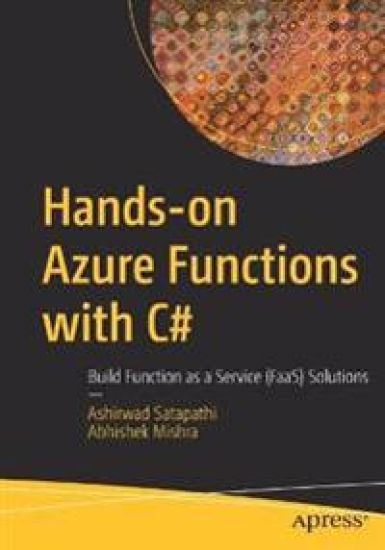
Hands-on Azure Functions with C#

Ashirwad Satapathi; Abhishek Mishra

APRESS
2021
nidottu
Build serverless solutions using Azure Functions. This book provides you with a deep understanding of Azure Functions so you can build highly scalable and reliable serverless applications. The book starts with an introduction to Azure Functions and demonstrates triggers and bindings with use cases. The process to build an OTP mailer with Queue Storage Trigger and SendGrid output binding is presented, and timer triggers and blob storage binding are covered. Creating custom binding for Azure Functions and building a serverless API using Azure Functions and Azure SQL are discussed. You will know how to build a serverless API using Azure Functions and Azure Cosmos DB, and you will go over enabling application insights and Azure Monitor. Storing function secrets in Azure Key Vault is discussed as well as authentication and authorization using Azure Active Directory. You will learn how to secure your serverless apps using API Management and deploy your Azure Functions using IDEs. Deploying your Azure Functions using CI/CD pipelines is demonstrated along with running Azure Functions in containers. You will learn how to leverage Azure Cognitive Services to build intelligent serverless apps. And the authors introduce you to Azure Durable functions and teach you how to integrate Azure Functions in the logic app workflow. They also discuss best practices and pitfalls to avoid while designing Azure Functions. After reading this book, you will be able to design and deploy Azure Functions and implement solutions to real-world business problems through serverless applications. What Will You LearnMonitor and secure Azure FunctionsBuild and deploy Azure FunctionsEnable continuous integration/continuous deployment (CI/CD) DevOps strategies for Azure FunctionsRun Azure Functions on Azure Kubernetes ClusterWho This Book Is ForExperienced developers, cloud architects, and tech enthusiasts in Azure
Machine Learning for iOS Developers

Machine Learning for iOS Developers

Abhishek Mishra

Sybex Inc.,U.S.
2020
nidottu
Harness the power of Apple iOS machine learning (ML) capabilities and learn the concepts and techniques necessary to be a successful Apple iOS machine learning practitioner! Machine earning (ML) is the science of getting computers to act without being explicitly programmed. A branch of Artificial Intelligence (AI), machine learning techniques offer ways to identify trends, forecast behavior, and make recommendations. The Apple iOS Software Development Kit (SDK) allows developers to integrate ML services, such as speech recognition and language translation, into mobile devices, most of which can be used in multi-cloud settings. Focusing on Apple’s ML services, Machine Learning for iOS Developers is an up-to-date introduction to the field, instructing readers to implement machine learning in iOS applications. Assuming no prior experience with machine learning, this reader-friendly guide offers expert instruction and practical examples of ML integration in iOS. Organized into two sections, the book’s clearly-written chapters first cover fundamental ML concepts, the different types of ML systems, their practical uses, and the potential challenges of ML solutions. The second section teaches readers to use models—both pre-trained and user-built—with Apple’s CoreML framework. Source code examples are provided for readers to download and use in their own projects. This book helps readers: Understand the theoretical concepts and practical applications of machine learning used in predictive data analyticsBuild, deploy, and maintain ML systems for tasks such as model validation, optimization, scalability, and real-time streamingDevelop skills in data acquisition and modeling, classification, and regression. Compare traditional vs. ML approaches, and machine learning on handsets vs. machine learning as a service (MLaaS)Implement decision tree based models, an instance-based machine learning system, and integrate Scikit-learn & Keras models with CoreML Machine Learning for iOS Developers is a must-have resource software engineers and mobile solutions architects wishing to learn ML concepts and implement machine learning on iOS Apps.
Machine Learning in the AWS Cloud

Machine Learning in the AWS Cloud

Abhishek Mishra

Sybex Inc.,U.S.
2019
nidottu
Put the power of AWS Cloud machine learning services to work in your business and commercial applications! Machine Learning in the AWS Cloud introduces readers to the machine learning (ML) capabilities of the Amazon Web Services ecosystem and provides practical examples to solve real-world regression and classification problems. While readers do not need prior ML experience, they are expected to have some knowledge of Python and a basic knowledge of Amazon Web Services. Part One introduces readers to fundamental machine learning concepts. You will learn about the types of ML systems, how they are used, and challenges you may face with ML solutions. Part Two focuses on machine learning services provided by Amazon Web Services. You’ll be introduced to the basics of cloud computing and AWS offerings in the cloud-based machine learning space. Then you’ll learn to use Amazon Machine Learning to solve a simpler class of machine learning problems, and Amazon SageMaker to solve more complex problems. • Learn techniques that allow you to preprocess data, basic feature engineering, visualizing data, and model building • Discover common neural network frameworks with Amazon SageMaker • Solve computer vision problems with Amazon Rekognition • Benefit from illustrations, source code examples, and sidebars in each chapter The book appeals to both Python developers and technical/solution architects. Developers will find concrete examples that show them how to perform common ML tasks with Python on AWS. Technical/solution architects will find useful information on the machine learning capabilities of the AWS ecosystem.
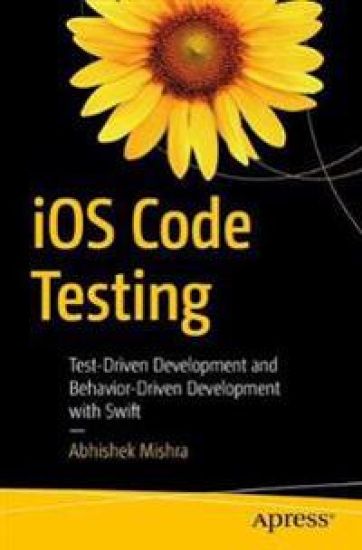
iOS Code Testing

iOS Code Testing

Abhishek Mishra

APress
2017
nidottu
Put into motion practical examples to master Test-Driven Development (TDD) and acceptance testing in Swift. This book uses a pragmatic approach to writing well-tested code and provides techniques that can be used to retrofit tests to legacy code bases. You'll be introduced to basic principles of TDD, such as Test First, Red-Green-Refactor, Remove Duplicate code, Dependency Injection, and Single Responsibility. Approaches covered include TDD, behavior-driven development (BDD), UI, and acceptance testing with common standard/open source frameworks. iOS Code Testing offers helpful instruction to teach iOS developers to retrospectively fit tests to legacy code, refactor legacy code so as to make the code more testable, install and configure a popular Swift BDD framework, practice BDD with Xcode, and create automated UI tests with Xcode. Additionally, many projects have legacy code bases. Legacy code is often seen as a blocker when it comes to implementing any kind of testing. What You Will LearnFit test to legacy code retrospectivelyInstall and configure popular Swift BDD frameworksPractice BDD with XcodeWho This Book Is ForSoftware practitioners, such as Swift developers and mobile app testers.
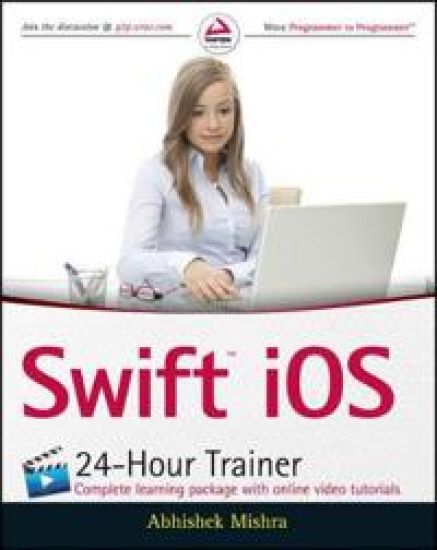
Swift iOS 24-Hour Trainer

Swift iOS 24-Hour Trainer

Abhishek Mishra

Wiley-Blackwell
2016
nidottu
Jump into the app development world with confidence! iOS Swift 24-Hour Trainer combines book and video lessons in Apple's Swift programming language to prepare you to build iPhone and iPad apps—and distribute them through the Appstore. First, this approachable text covers the fundamentals of Swift by introducing you to iOS development in this language, and presenting best practices for setting up a development environment and using variables, statements, expressions, operators, functions, and closures. Next, you explore common tasks, such as alert views, table views, and collection views. You then deepen your knowledge of Swift by considering network programming and local data storage. Finally, this engaging resource dives into slightly more advanced concepts, such as tab bars, web views, the accelerometer, camera, photo library, Google maps, and core location. Swift was designed by Apple to incorporate modern scripting features while offering simpler, cleaner syntax than Objective-C to maintain a minimal and easy to read style. This more expressive code offers numerous key features, such as closures unified with function pointers, tuples and multiple value returns, generics, and functional programming patterns. Learn how to obtain a device UDIDTest your applications on an actual device, so you can see your work in actionDistribute your applications outside of the App store, allowing you to test your work with real usersReview common reasons why apps are rejected by Apple to strengthen your case when submitting your apps for distribution iOS Swift 24-Hour Trainer is an essential guide to Apple's Swift programming language for beginning programmers.