Kirjojen hintavertailu – 12 859 819 kirjaa ja 27 kauppaa

Kirjailija

Abiodun Alao

Kirjat ja teokset yhdessä paikassa: 14 kirjaa, julkaisuja vuosilta 1998–2025, suosituimpiin kuuluu State, Society and Corruption in Africa. Vertaile teosten hintoja ja tarkista saatavuus suomalaisista kirjakaupoista.

14 kirjaa

Kirjojen julkaisuvuodet: 1998–2025.

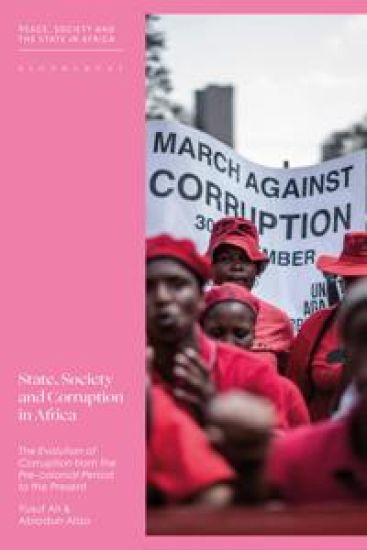
State, Society and Corruption in Africa

State, Society and Corruption in Africa

Yusuf Ali; Abiodun Alao

BLOOMSBURY PUBLISHING PLC
2025
sidottu

Halvin toimitettuna 133,10 €

An illuminating and comprehensive interrogation of the impacts of corruption on state structures and institutions in Africa from two expert African scholars. Focusing on a variety of institutions and establishments – from the judiciary to the legislature, civil service to religion, tertiary education to national economies – and drawing on key countries across the continent, including Nigeria, Ghana, Sierra Leone, Kenya, Ethiopia, South Africa and Zimbabwe, the book explains why national, continental and global initiatives addressing corruption have achieved such limited success. This provides a much-needed nuanced understanding of corruption which rejects stereotypical depictions of Africa as a corruption-ridden continent and also offers new insights into the international community's role in making and sustaining corrupt systems in Africa.
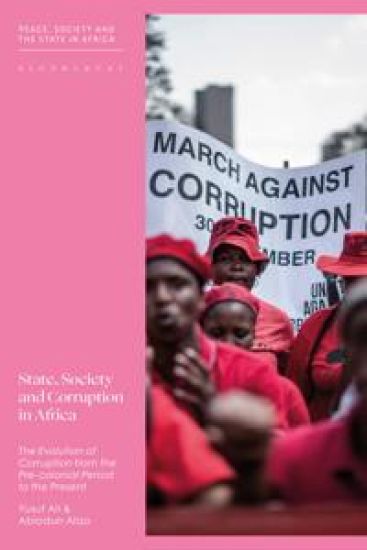
State, Society and Corruption in Africa

State, Society and Corruption in Africa

Yusuf Ali; Abiodun Alao

BLOOMSBURY PUBLISHING PLC
2025
nidottu
An illuminating and comprehensive interrogation of the impacts of corruption on state structures and institutions in Africa from two expert African scholars. Focusing on a variety of institutions and establishments – from the judiciary to the legislature, civil service to religion, tertiary education to national economies – and drawing on key countries across the continent, including Nigeria, Ghana, Sierra Leone, Kenya, Ethiopia, South Africa and Zimbabwe, the book explains why national, continental and global initiatives addressing corruption have achieved such limited success. This provides a much-needed nuanced understanding of corruption which rejects stereotypical depictions of Africa as a corruption-ridden continent and also offers new insights into the international community's role in making and sustaining corrupt systems in Africa.
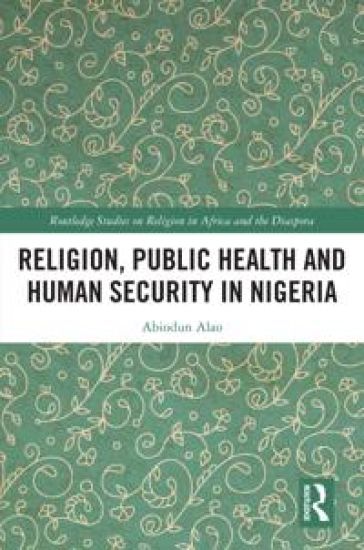
Religion, Public Health and Human Security in Nigeria
This book critically examines the intersection of religion, public health and human security in Nigeria. Focusing on Christianity, Islam, traditional religions and "intra-religious" doctrinal divergencies, the book explores the impact faith has on health-related decisions and how this affects security in Nigeria. The book assesses the connection between religion and five contemporary major health and medical issues in the country. This includes the issue of epidemics and pandemics such as the Covid-19 pandemic, vaccines, contraception, blood transfusion and the controversies associated with "miracle healing". In particular, this book explores situations where individuals have the power of choice but instead embraces faith and religious positions that contradict science in the management of their health and, in the process, expose themselves and others to personal health insecurity. It investigates aspects of human security including the wider international ramifications of health issues, approaches to cures and the interpretation of causes of diseases, as well as the ethno-religious connotations of such interpretations. Exploring key issues that have brought religion into the politics of health and human security in Nigeria, this book will be of interest to students and scholars in the field of African Religion, African Politics, African Studies, public health, security, and Sociology.
Rage and Carnage in the Name of God

Rage and Carnage in the Name of God

Abiodun Alao

DUKE UNIVERSITY PRESS
2022
pokkari
In Rage and Carnage in the Name of God, Abiodun Alao examines the emergence of a culture of religious violence in postindependence Nigeria, where Christianity, Islam, and traditional religions have all been associated with violence. He investigates the root causes and historical evolution of Nigeria’s religious violence, locating it in the forced coming together of disparate ethnic groups under colonial rule, which planted the seeds of discord that religion, elites, and domestic politics exploit. Alao discusses the histories of Christianity, Islam, and traditional religions in the territory that became Nigeria, the effects of colonization on the role of religion, the development of Islamic radicalization and its relation to Christian violence, the activities of Boko Haram, and how religious violence intermixes with politics and governance. In so doing, he uses religious violence as a way to more fully understand intergroup relations in contemporary Nigeria.
Rage and Carnage in the Name of God

Rage and Carnage in the Name of God

Abiodun Alao

DUKE UNIVERSITY PRESS
2022
sidottu
In Rage and Carnage in the Name of God, Abiodun Alao examines the emergence of a culture of religious violence in postindependence Nigeria, where Christianity, Islam, and traditional religions have all been associated with violence. He investigates the root causes and historical evolution of Nigeria’s religious violence, locating it in the forced coming together of disparate ethnic groups under colonial rule, which planted the seeds of discord that religion, elites, and domestic politics exploit. Alao discusses the histories of Christianity, Islam, and traditional religions in the territory that became Nigeria, the effects of colonization on the role of religion, the development of Islamic radicalization and its relation to Christian violence, the activities of Boko Haram, and how religious violence intermixes with politics and governance. In so doing, he uses religious violence as a way to more fully understand intergroup relations in contemporary Nigeria.
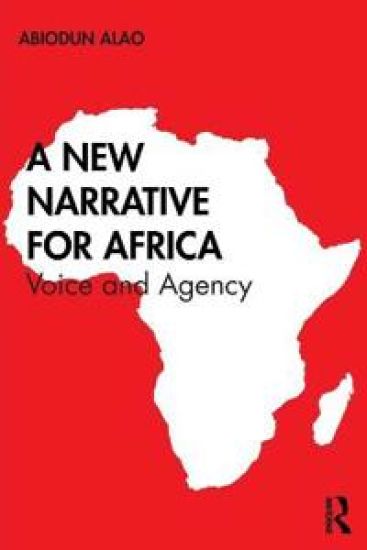
A New Narrative for Africa

A New Narrative for Africa

Abiodun Alao

Routledge
2019
sidottu
This book examines the perception of Africa in the global system, tracing Africa’s transition from a "problem" to be solved into an agent with a rising voice in the world. Mixing Afro-optimism with heavy doses of Afro-reality and Afro-responsibility, this book calls for a new political narrative about Africa that captures the multi-disciplinary dimensions of Africa’s “transition” and critically examining its ramifications. The author discusses the origins of the “Problem” perception held about Africa and explains how things are turning around and how the continent is now becoming a voice to be heard rather than a problem to be solved. He then goes on to interrogate some of the key manifestations of this new “voice” and identifies how the world is responding to the new “voice” of Africa before finally examining some of the contradictions that have been embedded in the transition. The book is strategically multi-disciplinary - emphasizing key disciplines of African studies in different chapters - for example: anthropology, ethnography, and philosophy in Chapter 1; history, in Chapter 2; economics, in Chapter 3; politics, in Chapter 4; arts, literature, and aesthetics, in Chapter 5; religion, in Chapter 6; and globalization, in Chapter 7. Through this, A New Narrative for Africa explores and analyses several of the various strands of the African studies discipline, examining the transformation of African on the global stage over the course of its history. Taking an interdisciplinary approach, this book will be of interest across African Studies, Global Affairs, Politics, Economics, and Development studies.
A New Narrative for Africa

A New Narrative for Africa

Abiodun Alao

Routledge
2019
nidottu
This book examines the perception of Africa in the global system, tracing Africa’s transition from a "problem" to be solved into an agent with a rising voice in the world. Mixing Afro-optimism with heavy doses of Afro-reality and Afro-responsibility, this book calls for a new political narrative about Africa that captures the multi-disciplinary dimensions of Africa’s “transition” and critically examining its ramifications. The author discusses the origins of the “Problem” perception held about Africa and explains how things are turning around and how the continent is now becoming a voice to be heard rather than a problem to be solved. He then goes on to interrogate some of the key manifestations of this new “voice” and identifies how the world is responding to the new “voice” of Africa before finally examining some of the contradictions that have been embedded in the transition. The book is strategically multi-disciplinary - emphasizing key disciplines of African studies in different chapters - for example: anthropology, ethnography, and philosophy in Chapter 1; history, in Chapter 2; economics, in Chapter 3; politics, in Chapter 4; arts, literature, and aesthetics, in Chapter 5; religion, in Chapter 6; and globalization, in Chapter 7. Through this, A New Narrative for Africa explores and analyses several of the various strands of the African studies discipline, examining the transformation of African on the global stage over the course of its history. Taking an interdisciplinary approach, this book will be of interest across African Studies, Global Affairs, Politics, Economics, and Development studies.
The Burden of Collective Goodwill
The book is the first to discuss in detail the extensive external involvement in the Liberian civil war, a war that claimed up to 200,000 lives, created a massive refuge crisis and brought West Africa to the tribunal of international attention. The book is conceived against the background that the international response to the conflict has features that are unprecedented in the management of civil conflicts in the post-cold war era. For example, the regional peacekeeping mission was the first after the end of the cold war, while the dispatch of UN Observer mission was the first ever joint peacekeeping mission between the UN and a regional organisation. The extensive involvement of international organisations in the conflict has not been witnessed in the region since the Biafran war of 1967-1970.
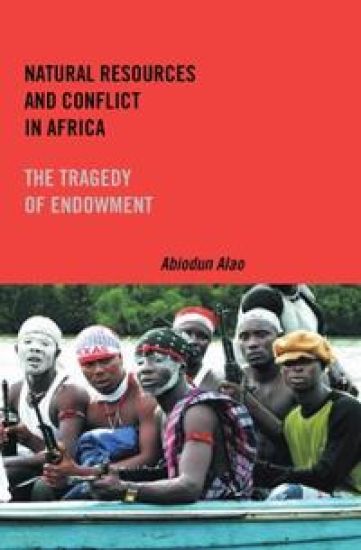
Natural Resources and Conflict in Africa

Natural Resources and Conflict in Africa

Abiodun Alao

University of Rochester Press
2015
pokkari
The first comprehensive account of the linkage between natural resources and political and social conflict in Africa. Conflict over natural resources has made Africa the focus of international attention, particularly during the last decade. From oil in Nigeria and diamonds in the Democratic Republic of Congo, to land in Zimbabwe and water in theHorn of Africa, the politics surrounding ownership, management, and control of natural resources has disrupted communities and increased external intervention in these countries. Such conflict has the potential to impact natural resource supply globally, with both local and wide-reaching consequences. The United States, for example, estimates that a quarter of its oil supply will come from Africa by 2015. Natural Resources and Conflict in Africa is the first book to offer a detailed look at conflict over various natural resources in several African countries. Abiodun Alao undertakes this broad survey by categorizing natural resources into four groups: land [including agricultural practices and animal stock], solid minerals, oil, and water. Themes linking these resources to governance and conflict are then identified and examined with numerous examples drawn from specific African countries. Alao's approach offers considered conclusions based on comparative discussions and analysis, thus providing the first comprehensive account of the linkage between natural resources and political and social conflict in Africa. Abiodun Alao is professor of African studies at King's College London.
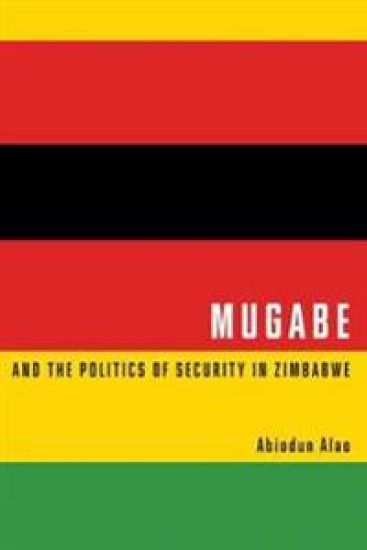
Mugabe and the Politics of Security in Zimbabwe

Mugabe and the Politics of Security in Zimbabwe

Abiodun Alao

McGill-Queen's University Press
2012
sidottu
In 1980, the newly independent and democratic Zimbabwe was a beacon of hope in a troubled region. Three decades later, Zimbabwe became the focus of international attention for very different reasons: acrimonious racial relations, controversial elections, economic hardship, and military intervention in the Democratic Republic of the Congo. Mugabe and the Politics of Security in Zimbabwe argues that this unfortunate transition is intrinsically linked to the ways in which President Robert Mugabe used the politics of domestic and external security for his own gain. Abiodun Alao presents a comprehensive study of defense institutions, domestic security policy, and external use of military force during Mugabe's decades of rule. He identifies the role of personality in security and explains how the machinations of a self-perpetuating ruler shaped the economic and political dynamics of the struggling nation. He also provides analytical perspectives on Mugabe's transformations from a freedom fighter to a stable president of a relatively economically strong, independent country, and finally to an imprudent autocrat and international pariah. Nuanced, impassioned, and timely, Mugabe and the Politics of Security in Zimbabwe sheds new light on the effects of national security policy and develops a clear picture of the country's past, present, and future.
Mugabe and the Politics of Security in Zimbabwe

Mugabe and the Politics of Security in Zimbabwe

Abiodun Alao

McGill-Queen's University Press
2012
nidottu
In 1980, the newly independent and democratic Zimbabwe was a beacon of hope in a troubled region. Three decades later, Zimbabwe became the focus of international attention for very different reasons: acrimonious racial relations, controversial elections, economic hardship, and military intervention in the Democratic Republic of the Congo. Mugabe and the Politics of Security in Zimbabwe argues that this unfortunate transition is intrinsically linked to the ways in which President Robert Mugabe used the politics of domestic and external security for his own gain. Abiodun Alao presents a comprehensive study of defense institutions, domestic security policy, and external use of military force during Mugabe's decades of rule. He identifies the role of personality in security and explains how the machinations of a self-perpetuating ruler shaped the economic and political dynamics of the struggling nation. He also provides analytical perspectives on Mugabe's transformations from a freedom fighter to a stable president of a relatively economically strong, independent country, and finally to an imprudent autocrat and international pariah. Nuanced, impassioned, and timely, Mugabe and the Politics of Security in Zimbabwe sheds new light on the effects of national security policy and develops a clear picture of the country's past, present, and future.
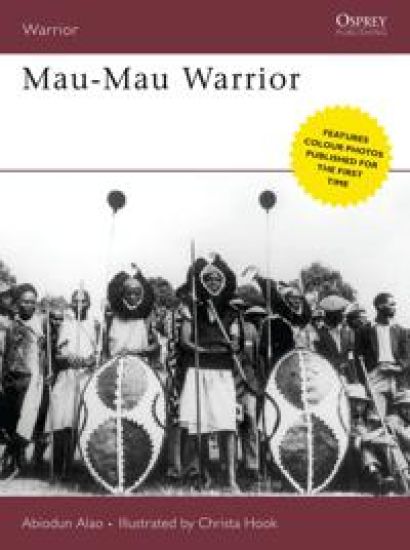
Mau-Mau Warrior

Mau-Mau Warrior

Abiodun Alao

Osprey Publishing
2006
nidottu
The Mau Mau Freedom Fighters waged a guerrilla war for eight years (1952-1960) against their British colonial rulers, to win back their land and independence. This underground militia was an extremely powerful force employing tactics, which included the assassination of British settlers and the Africans who collaborated with the British, as well as raiding colonial prisons for weapons and staging daring ambushes in the Kenyan forests and mountains. The conflict saw these untrained warriors, deemed by many to be terrorists employ an innovative mix of traditional African warfare tactics, counterinsurgency methods and European firepower. The uprising ended in failure but set the stage for Kenyan independence in 1963. This book will explore their unique motivations, training and tactics, as well as their battle experience.
The Burden of Collective Goodwill

The Burden of Collective Goodwill

Abiodun Alao

Ashgate Publishing Limited
1998
sidottu
The book is the first to discuss in detail the extensive external involvement in the Liberian civil war, a war that claimed up to 200,000 lives, created a massive refuge crisis and brought West Africa to the tribunal of international attention. The book is conceived against the background that the international response to the conflict has features that are unprecedented in the management of civil conflicts in the post-cold war era. For example, the regional peacekeeping mission was the first after the end of the cold war, while the dispatch of UN Observer mission was the first ever joint peacekeeping mission between the UN and a regional organisation. The extensive involvement of international organisations in the conflict has not been witnessed in the region since the Biafran war of 1967-1970.