

Kirjailija
Abu l-?Ala? al-Ma?arri
Kirjat ja teokset yhdessä paikassa: 5 kirjaa, julkaisuja vuosilta 2013–2022, suosituimpiin kuuluu Rets d'éternité. Vertaile teosten hintoja ja tarkista saatavuus suomalaisista kirjakaupoista.
Nimi esiintyy myös muodoissa: Abu'l Ala Al-Ma'arri, Abu'l- 'ala Al-Ma'arri
5 kirjaa
Kirjojen julkaisuvuodet: 2013–2022.
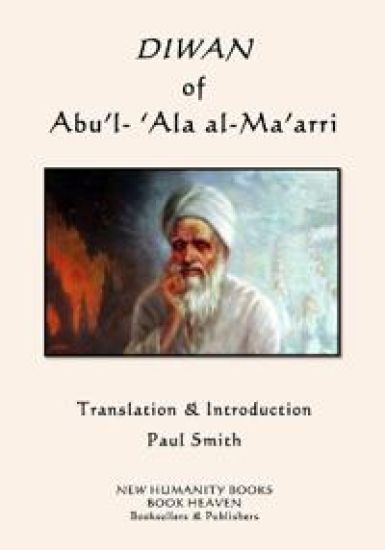
DIWAN of Abu'l- 'Ala al-Ma'arri
Abu'l- 'ala Al-Ma'arri
Createspace Independent Publishing Platform
2018
pokkari
DIWAN OF ABU'L- 'ALA AL-MA'ARR Translation & Introduction Paul Smith CONTENTS: The Life and Works of al Ma'arri, The Ruba'i & Qit'a, Ghazal & Qasida: Form, Use, History. Abu'l- 'Ala al-Ma'arri was born in Ma'arra, south of Aleppo in Syria in 973 A. D. He achieved fame as one of greatest of Arab poets. Al-Ma'arri was stricken with smallpox when four and became blind. His early poems in ruba'i form gained great popularity as did his other poems. As he grew older, he was able to travel to Aleppo, Antioch and other Syrian cities. Al-Ma'arri spent 18 months at Baghdad, then the centre of learning and poetry, leaving to return to his native town. There he created the Luzumiyyat, a famous collection of 1592 poems. On return, his presence in al-Ma'arri drew many people who came to hear him lecture on poetry and rhetoric. In his passionate hatred of the vile world and all the material manifestations of life, he was like a dervish dancing in sheer bewilderment; a holy man, indeed, melting in tears before the distorted image of Divinity. In his aloofness, as in the purity of his spirit, the ecstatic negations of Abu'l-Ala can only be translated in terms of the Sufi's creed. In his raptures, shathat, he was as distant as Ibn al-'Arabi; and in his bewilderment, heirat, he was as deeply intoxicated as Ibn al-Farid. If others have symbolized the Divinity in wine, he symbolized it in Reason, which is the living oracle of the Soul; he has, in a word, embraced Divinity under the cover of a philosophy of extinction. Here is a large selection of poems in all the forms he composed in the correct rhyme and meaning. Selected Bibliography. Appendix: Luzumiyat of Abu'l-Ala'l-Ma'arri, Rendered Into English By Ameen Rihani Large Format Paperback 7" x 10". 224 pages . Paul Smith (b. 1945) is a poet, author and translator of many books of Sufi poets of the Persian, Arabic, Urdu, Turkish, Pashtu and other languages... including Hafiz, Sadi, Nizami, Rumi, 'Attar, Sana'i, Jahan Khatun, Obeyd Zakani, Nesimi, Kabir, Anvari, Ansari, Jami, Baba Farid, Rahman Baba, Lalla Ded, Omar Khayyam, Rudaki, Yunus Emre, Bulleh Shah and many others, as well as poetry, fiction, plays, biographies, children's books and 12 screenplays. amazon.com/author/smithpa
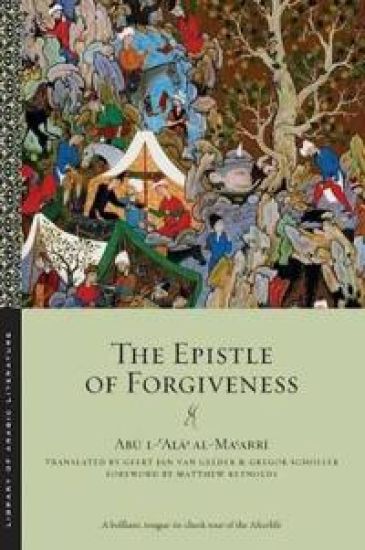
The Epistle of Forgiveness
Abu l-?Ala? al-Ma?arri; Matthew Reynolds
New York University Press
2016
pokkari
Halvin toimitettuna 27,70 €
Known as "one of the most complex and unusual texts in Arabic literature" (Banipal Magazine), The Epistle of Forgiveness is the lengthy reply by the prolific Syrian poet and prose writer, Abu l-'Ala' al-Ma'arri (d. 449/1057), to a letter by an obscure grammarian, Ibn al-Qari. With biting irony, The Epistle of Forgiveness mocks Ibn al-Qari's hypocrisy and sycophancy by imagining he has died and arrived with some difficulty in Heaven, where he meets famous poets and philologists from the past. In al-Ma'arri's imaginative telling, Ibn al-Qari also glimpses Hell and converses with the Devil and various heretics. Al-Ma'arri—a maverick, a vegan, and often branded a heretic himself—seems to mock popular ideas about the Hereafter. Among other things, he introduces us to hypocrites, poets, princes, rebels, mystics, and apostates, with asides on piety, superstition, wine-drinking, old age, and other topics. This remarkable book is the first complete translation of this masterpiece into any language, all the more impressive because of Al-Ma'arri's highly ornate and difficult style, his use of rhymed prose, and his numerous obscure words and expressions. Replete with erudite commentary, amusing anecdotes, and sardonic wit, The Epistle of Forgiveness is an imaginative tour-de-force by one of the most pre-eminent figures in classical Arabic literature. An English-only edition.
One of the most unusual books in classical Arabic literature, The Epistle of Forgiveness is the lengthy reply by the prolific Syrian poet and prose writer, Abu l-'Ala' al-Ma'arri (d. 449/1057), to a letter by an obscure grammarian, Ibn al-Qarih. With biting irony, The Epistle of Forgiveness mocks Ibn al-Qarih's hypocrisy and sycophancy by imagining he has died and arrived with some difficulty in Heaven, where he meets famous poets and philologists from the past. He also glimpses Hell, and converses with the Devil and various heretics. Al-Ma'arri—a maverick, a vegan, and often branded a heretic himself—seems to mock popular ideas about the Hereafter. This second volume is a point-by-point reply to Ibn al-Qarih's letter using al-Ma'arri's characteristic mixture of erudition, irony, and admonition, enlivened with anecdotes and poems. Among other things, he writes about hypocrites; heretical poets, princes, rebels, and mystics; apostates; piety; superstition; the plight of men of letters; collaborative authorship; wine-drinking; old age; repentance; pre-Islamic pilgrimage customs; and money. This remarkable book is the first complete translation in any language, all the more impressive because of al-Ma'arri's highly ornate and difficult style, his use of rhymed prose, and numerous obscure words and expressions. A bilingual Arabic-English edition.
One of the most unusual books in classical Arabic literature, The Epistle of Forgiveness is the lengthy reply by the prolific Syrian poet and prose writer Abu l-'Ala' al-Ma'arri (d. 449/1057), to a letter written by an obscure grammarian, Ibn al-Qarih. With biting irony, The Epistle of Forgiveness mocks Ibn al-Qarih's hypocrisy and sycophancy by imagining he has died and arrived with some difficulty in Heaven, where he meets famous poets and philologists from the past. He also glimpses Hell, and converses with the Devil and various heretics. Al-Ma'arri—a maverick, a vegan, and often branded a heretic himself—seems to mock popular ideas about the Hereafter. This book, the first of two volumes, includes Ibn al-Qarih's initial letter to al-Ma'arri, as well as the first half of The Epistle of Forgiveness. This translation is the first complete translation in any language and retains the many digressions, difficult passages, and convoluted grammatical discussions of the original typically omitted in other translations. It is accompanied by a comprehensive introduction and detailed annotation. Replete with erudite commentary, amusing anecdotes, and sardonic wit, The Epistle of Forgiveness is an imaginative tour-de-force by one of the most pre-eminent figures in classical Arabic literature. A bilingual Arabic-English edition.