

Kirjailija
Adam Abraham
Kirjat ja teokset yhdessä paikassa: 8 kirjaa, julkaisuja vuosilta 2007–2025, suosituimpiin kuuluu Healthy Stomach for Healthy Brain. Vertaile teosten hintoja ja tarkista saatavuus suomalaisista kirjakaupoista.
8 kirjaa
Kirjojen julkaisuvuodet: 2007–2025.
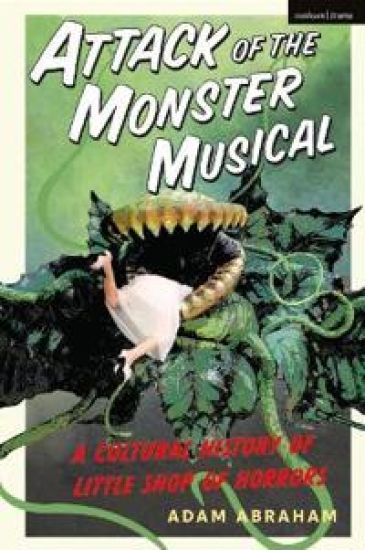
How many hit musicals are based on films that were shot in two days at a budget of $30,000? The answer is one: Little Shop of Horrors. Roger Corman's monster movie opened in 1960, played the midnight circuit, and then disappeared from view. Two decades later, Little Shop of Horrors opened Off-Broadway and became a surprise success. Attack of the Monster Musical: A Cultural History of Little Shop of Horrors chronicles this unlikely phenomenon. The Faustian tale of Seymour and his man-eating plant transcended its humble origins to become a global phenomenon, launching a popular film adaptation and productions all around the world. This timely and authoritative book looks at the creation of the musical and its place in the contemporary musical theatre canon. Examining its afterlives and wider cultural context, the book asks the question why this unlikely combination of blood, annihilation, and catchy tunes has resonated with audiences from the 1980s to the present. At the core of this in-depth study is the collaboration between the show’s creators, Howard Ashman and Alan Menken. Told through archival research and eyewitness accounts, this is the first book to make extensive use of Ashman's personal papers, offering a unique and inspiring study of one of musical theatre's greatest talents.
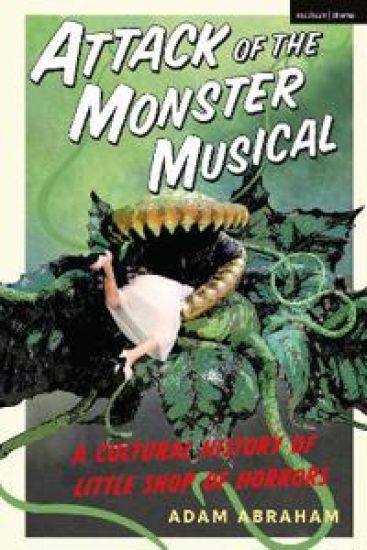
How many hit musicals are based on films that were shot in two days at a budget of $30,000? The answer is one: Little Shop of Horrors. Roger Corman's monster movie opened in 1960, played the midnight circuit, and then disappeared from view. Two decades later, Little Shop of Horrors opened Off-Broadway and became a surprise success. Attack of the Monster Musical: A Cultural History of Little Shop of Horrors chronicles this unlikely phenomenon. The Faustian tale of Seymour and his man-eating plant transcended its humble origins to become a global phenomenon, launching a popular film adaptation and productions all around the world. This timely and authoritative book looks at the creation of the musical and its place in the contemporary musical theatre canon. Examining its afterlives and wider cultural context, the book asks the question why this unlikely combination of blood, annihilation, and catchy tunes has resonated with audiences from the 1980s to the present. At the core of this in-depth study is the collaboration between the show’s creators, Howard Ashman and Alan Menken. Told through archival research and eyewitness accounts, this is the first book to make extensive use of Ashman's personal papers, offering a unique and inspiring study of one of musical theatre's greatest talents.
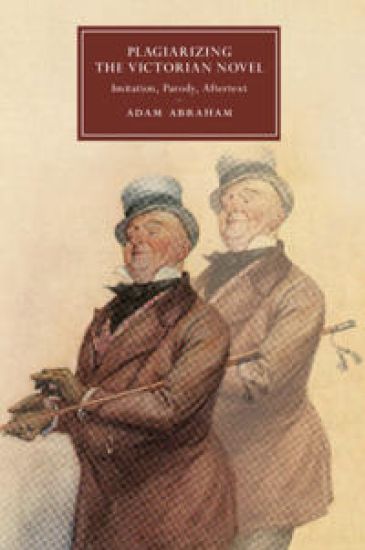
How can we tell plagiarism from an allusion? How does imitation differ from parody? Where is the line between copyright infringement and homage? Questions of intellectual property have been vexed long before our own age of online piracy. In Victorian Britain, enterprising authors tested the limits of literary ownership by generating plagiaristic publications based on leading writers of the day. Adam Abraham illuminates these issues by examining imitations of three novelists: Charles Dickens, Edward Bulwer Lytton, and George Eliot. Readers of Oliver Twist may be surprised to learn about Oliver Twiss, a penny serial that usurped Dickens's characters. Such imitative publications capture the essence of their sources; the caricature, although crude, is necessarily clear. By reading works that emulate three nineteenth-century writers, this innovative study enlarges our sense of what literary knowledge looks like: to know a particular author means to know the sometimes bad imitations that the author inspired.
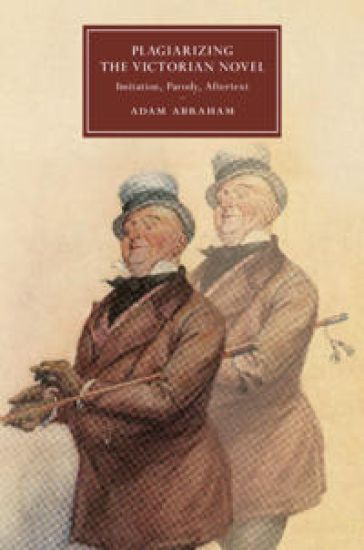
How can we tell plagiarism from an allusion? How does imitation differ from parody? Where is the line between copyright infringement and homage? Questions of intellectual property have been vexed long before our own age of online piracy. In Victorian Britain, enterprising authors tested the limits of literary ownership by generating plagiaristic publications based on leading writers of the day. Adam Abraham illuminates these issues by examining imitations of three novelists: Charles Dickens, Edward Bulwer Lytton, and George Eliot. Readers of Oliver Twist may be surprised to learn about Oliver Twiss, a penny serial that usurped Dickens's characters. Such imitative publications capture the essence of their sources; the caricature, although crude, is necessarily clear. By reading works that emulate three nineteenth-century writers, this innovative study enlarges our sense of what literary knowledge looks like: to know a particular author means to know the sometimes bad imitations that the author inspired.
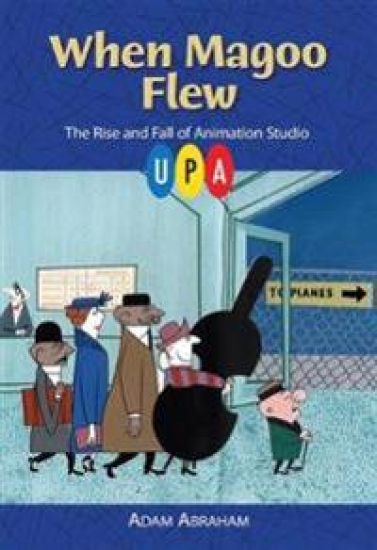
What do Franklin Roosevelt, Dr. Seuss, the U. S. Navy, and Mr. Magoo have in common? They are all part of the surprising story of the pioneering cartoon studio UPA (United Productions of America). Throughout the 1950s, a group of artists ran a business that broke all the rules, pushing animated films beyond the fluffy fantasy of the Walt Disney Studio and the crash-bang anarchy of Warner Bros. Instead, UPA's films were innovative and graphically bold-the cartoon equivalent to modern art. When Magoo Flew is the first book-length study to chronicle the complete story of this unique American enterprise. The book features cameo appearances by Aldous Huxley, James Thurber, Orson Welles, Judy Garland, Robert Goulet, Jim Backus, Eddie Albert, and Woody Allen, as well as a select filmography of the best of UPA.
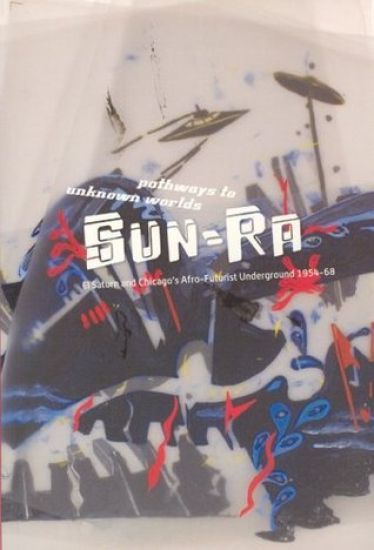
Pathways to Unknown Worlds – Sun Ra, El Saturn and Chicago`s Afro–Futurist Underground, 1954–68
Anthony Elms; John Corbett; Terri Kapsalis; Glenn Ligon; Adam Abraham
WhiteWalls, Inc
2007
nidottu
Philosopher, Afro-futurist, and jazz legend Sun Ra (1914-93) constructed much of his complicated public persona during his sojourn in Chicago in the mid-1950s. Working with a still-shadowy underground fraternal organization, Ra amassed a library of books on the occult, Egyptology, race studies, Theosophy, and religion - all in service of drawing elliptical connections between these disparate bodies of knowledge. This work became the foundation of the personal mythology Ra employed in the 1960s when he began fronting his Myth-Science Arkestra and started drawing attention from more mainstream jazz fans. "Pathways to Unknown Worlds" presents a kaleidoscopic range of materials from those years, including original record cover designs and production materials, paper ephemera, and photographs. These materials - most previously unseen - dramatically flesh out the story of Sun Ra's mystical journey of discovery and his lofty goals for the dissemination of his new knowledge; they are certain to fascinate and delight Ra's legion of fans.