Kirjojen hintavertailu – 12 903 725 kirjaa ja 27 kauppaa

Kirjailija

Adam Copenhaver

Kirjat ja teokset yhdessä paikassa: 3 kirjaa, julkaisuja vuosilta 2018–2022, suosituimpiin kuuluu Reconstructing the Historical Background of Paul’s Rhetoric in the Letter to the Colossians. Vertaile teosten hintoja ja tarkista saatavuus suomalaisista kirjakaupoista.

3 kirjaa

Kirjojen julkaisuvuodet: 2018–2022.

Colossians and Philemon – A Commentary for Biblical Preaching and Teaching

Colossians and Philemon – A Commentary for Biblical Preaching and Teaching

Jeffrey Arthurs; Adam Copenhaver

KREGEL PUBLICATIONS,U.S.
2022
sidottu
Colossians and Philemon were penned at roughly the same time to an overlapping set of recipients. Paul, writing out of great concern, urges his fellow believers to make Jesus Christ the foundation of their lives. By expounding on the divine person, finished work, and exalted position of Christ, the apostle entreats his readers to stand against false teaching, pursue reconciliation, and be united with Christ. In Colossians and Philemon, Copenhaver and Arthurs combine exegetical precision with homiletical care, helping preachers and Bible teachers take Paul's message--a plea for walking together in a manner worthy of Christ--to the church today.
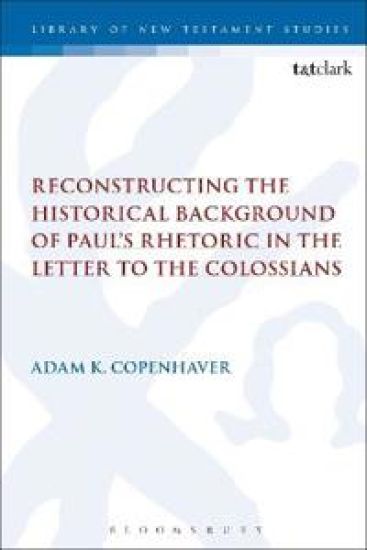
Reconstructing the Historical Background of Paul’s Rhetoric in the Letter to the Colossians
In approaching the debate surrounding the opponents in Colossians from a methodological standpoint, Copenhaver contends that Paul was not actually confronting active opponents when he wrote the letter. Rather, Copenhaver takes the view that Paul’s letter was written to the churches in the Lycus Valley, in a desire to develop their identity as a new people in Christ and to appeal to them to live a new kind of life. His warnings in Colossians 2 function as oppositional rhetoric, contrasting the religious practices of the Lycus Valley with this new belief. Paul’s warnings are therefore broadly representative of the ancient world, while at the same time focused especially on two threads of historical referents, Judaism and pagan religions. Development of the above argument demonstrates that the challenge of reconstructing a singular opponent arises not only from the limitations of textual and historical evidence, but also from the assumptions and methodologies inherent in historical approaches to the text. By modifying these assumptions and adjusting the methodology, Copenhaver can show how Paul’s letter takes on a new relationship to its historical context.
Reconstructing the Historical Background of Paul’s Rhetoric in the Letter to the Colossians
In approaching the debate surrounding the opponents in Colossians from a methodological standpoint, Copenhaver contends that Paul was not actually confronting active opponents when he wrote the letter. Rather, Copenhaver takes the view that Paul’s letter was written to the churches in the Lycus Valley, in a desire to develop their identity as a new people in Christ and to appeal to them to live a new kind of life. His warnings in Colossians 2 function as oppositional rhetoric, contrasting the religious practices of the Lycus Valley with this new belief. Paul’s warnings are therefore broadly representative of the ancient world, while at the same time focused especially on two threads of historical referents, Judaism and pagan religions. Development of the above argument demonstrates that the challenge of reconstructing a singular opponent arises not only from the limitations of textual and historical evidence, but also from the assumptions and methodologies inherent in historical approaches to the text. By modifying these assumptions and adjusting the methodology, Copenhaver can show how Paul’s letter takes on a new relationship to its historical context.