
Kirjailija
Adam Geczy
Kirjat ja teokset yhdessä paikassa: 35 kirjaa, julkaisuja vuosilta 2001–2027, suosituimpiin kuuluu Contemporary Art and Other Obstructions. Vertaile teosten hintoja ja tarkista saatavuus suomalaisista kirjakaupoista.
35 kirjaa
Kirjojen julkaisuvuodet: 2001–2027.
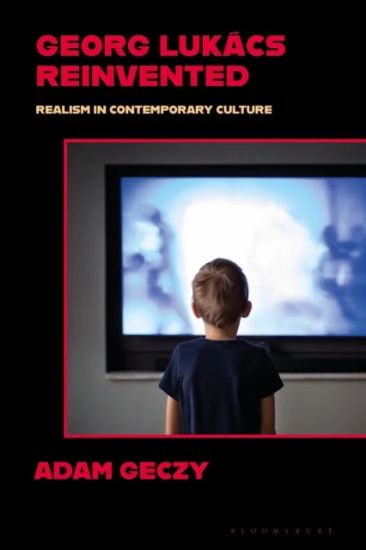
The first study to make use of Lukacsian realism theory to understand contemporary cultural phenomena more broadly and in the field of art in particular. Adam Geczy focuses on contemporary cultural trends and problems to demonstrate the relevance of Georg Lukacs’ philosophy today. The Marxist critic Lukács wrote in defence of realism in art, and especially in literature. Geczy shows why there is a growing need to return to realism in both theory and practice, given the predominance of cultural practices that rely on representative and narrative devices, ones that speak directly to the conditions of the present. Geczy applies Lukács’ philosophical aesthetics to examples in contemporary film, television and graphic literature. We see that realism for Lukács has a profoundly ethical caste. From it issues emerge such as the moral duty of the author, the aptness of the work of art, and its capacity for it to bring knowledge and insight to the life-world in which it is read or received. Approached from this aesthetic standpoint, Geczy presents the many cultural wars waged in the new millennium as betweeen what is real and authentic as opposed to what is inauthentic. In rethinking realism with Lukács, Geczy brings earlier theories up-to-date and provides compelling new way of looking at how and why we engage in today's cultural practices.
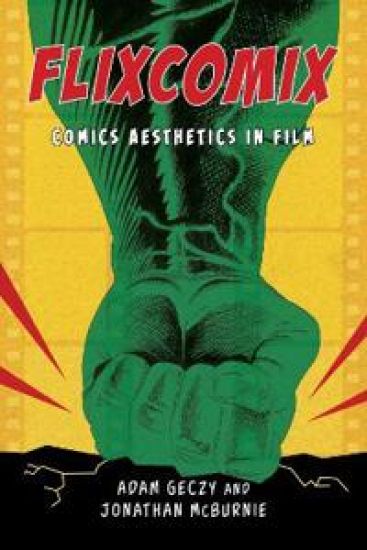
Flixcomix: Comics Aesthetics in Film reorients the longstanding conversation between comics and cinema by examining film through the lens of comics studies. Rather than relying on film theory to define comics, Adam Geczy and Jonathan McBurnie flip the script—showing how comics’ visual language, timing, and expression have shaped film aesthetics from the silent era to the blockbuster age. While comics and film share graphic and sequential qualities, they also share a common cultural and technological lineage. From early cinema to today’s highly stylized adaptations, Flixcomix explores how comics’ storytelling methods—once thought to "adulterate" the filmic experience—actually deepen psychological nuance, expand temporal structures, and transform visual expression. Organized in a lively, accessible format, Flixcomix draws connections across time and media, examining beloved and polarizing creators, characters, and styles from Aeon Flux to Zack Snyder. A must-read for scholars, fans, and critics alike, this book uncovers the hybrid visual language that continues to define how we see and feel moving images.
Flixcomix: Comics Aesthetics in Film reorients the longstanding conversation between comics and cinema by examining film through the lens of comics studies. Rather than relying on film theory to define comics, Adam Geczy and Jonathan McBurnie flip the script—showing how comics’ visual language, timing, and expression have shaped film aesthetics from the silent era to the blockbuster age. While comics and film share graphic and sequential qualities, they also share a common cultural and technological lineage. From early cinema to today’s highly stylized adaptations, Flixcomix explores how comics’ storytelling methods—once thought to "adulterate" the filmic experience—actually deepen psychological nuance, expand temporal structures, and transform visual expression. Organized in a lively, accessible format, Flixcomix draws connections across time and media, examining beloved and polarizing creators, characters, and styles from Aeon Flux to Zack Snyder. A must-read for scholars, fans, and critics alike, this book uncovers the hybrid visual language that continues to define how we see and feel moving images.

Object Lessons is a series of short, beautifully designed books about the hidden lives of ordinary things. Glasses are among the oldest and most commonplace prosthetics we have invented. But what does it mean to wear glasses? There is more to the answer than correcting vision. Glasses alter, enhance, and shield the way that we view the world, and the way the world sees us. Everyone has encounters with glasses, passively or actively, from reading glasses to sunglasses. At times they are the main identifiers in a face (think John Lennon), and they signify extremes from nerdy and brainy to cool and sleazy. They are alternately the most mundane of things on our bodies and potentially the most glamorous. Adam Geczy explores this most pervasive and accessible accessory and shows that it is both a conduit to and a barrier between ourselves and the world outside.
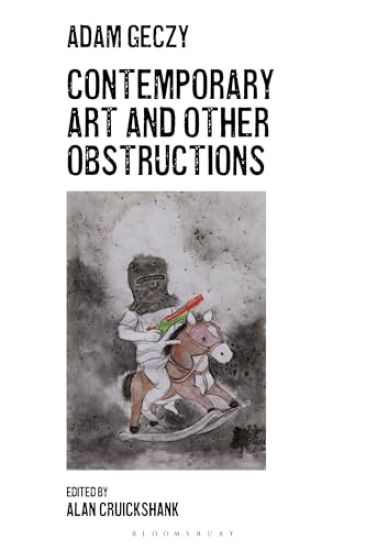
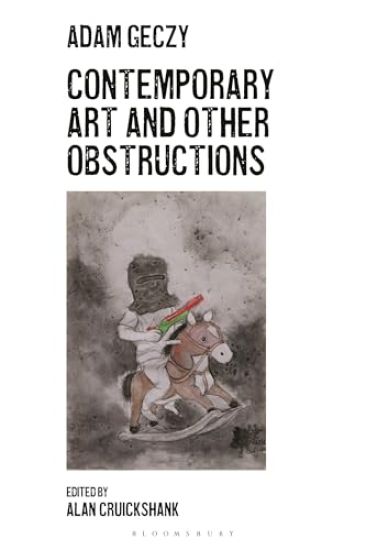
What is the position of art in contemporary culture, where it is threatened by an ever-greater diversity of media, discourses, practices, genres and forms? Contemporary Art and Other Obstructions sets out to answer this through exploring art and social agency, communication, the problem of Biennales and other major events, and the shadow of postcolonialism as it hangs over art and indigeneity. Produced over the last two decades, the material gathered together here, and previously published only to a largely Australasian and Southeast Asian audience, is the product of a close collaboration between author Adam Geczy and editor Alan Cruickshank. With a new preface by the author and introduction by the editor, they have been adapted for an international audience, and re-edited for a critical engagement in the uneven and elusive notion that is contemporary art.
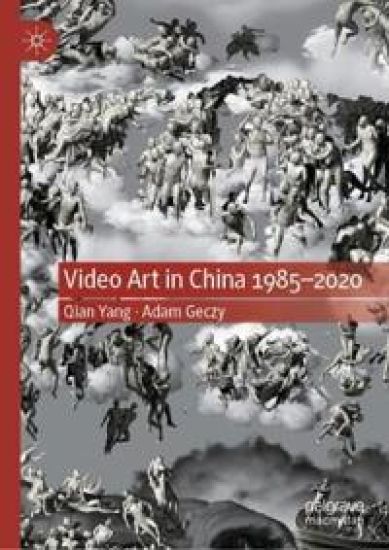
Video Art in China 1985-2020
Qian Yang; Adam Geczy
Springer International Publishing AG
2025
sidottu
This is the first book that offers a comprehensive account of video art after the Cultural Revolution in China with a special emphasis on the way it progressed together with phenomenal socio-economic transformations that began in the 1980s. It examines its development against social changes and pressures, looking at such aspects as the growth of artistic and cultural groups, exhibition spaces and art schools. Charting these changes, it prizes out the many zones of influence by the dominant United States while also marking out the many independent features of Chinese video art and the conditions that shaped them.
The enduring influence of Saint Laurent’s designs in modern fashion is undeniable. Concepts introduced by Saint Laurent, like the tuxedo jacket for women and the sheer blouse and dress, have become staples in contemporary fashion, transcending their origins to become symbols of power, elegance and sexuality. His ability to anticipate and articulate the needs and desires of the modern woman has left a lasting blueprint for how fashion interacts with social change and individual identity. Moreover, even after his death at 71 in 2008, Saint Laurent’s integration of art and fashion continues to inspire current designers, seen in the ongoing collaborations between high fashion and contemporary artists. Saint Laurent was above all an artist of synthesis, of agglomeration and reshaping, of conglomeration and adaptation. His work is a fusion of the tactile and aesthetic with fancy and supposition – for his interiors are not what were but could have been, a projection of imagination and personality. It is a straddling of two separate worlds, which is crucial to fashion. His significance is in making this explicit.
The enduring influence of Saint Laurent’s designs in modern fashion is undeniable. Concepts introduced by Saint Laurent, like the tuxedo jacket for women and the sheer blouse and dress, have become staples in contemporary fashion, transcending their origins to become symbols of power, elegance and sexuality. His ability to anticipate and articulate the needs and desires of the modern woman has left a lasting blueprint for how fashion interacts with social change and individual identity. Moreover, even after his death at 71 in 2008, Saint Laurent’s integration of art and fashion continues to inspire current designers, seen in the ongoing collaborations between high fashion and contemporary artists. Saint Laurent was above all an artist of synthesis, of agglomeration and reshaping, of conglomeration and adaptation. His work is a fusion of the tactile and aesthetic with fancy and supposition – for his interiors are not what were but could have been, a projection of imagination and personality. It is a straddling of two separate worlds, which is crucial to fashion. His significance is in making this explicit.
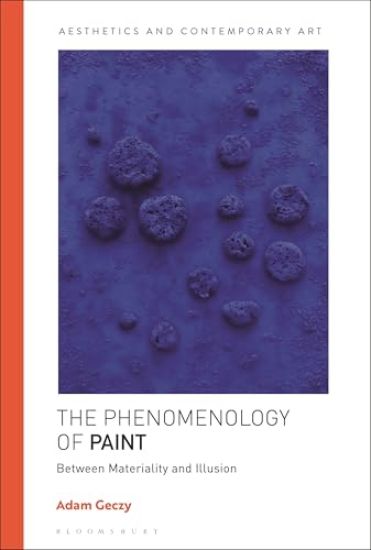
Analyzing the different modes of appearance and application of the most ubiquitous medium in art and ritual, this book examines the aesthetics, anthropology, ethnography and history of paint. The result is a clearly articulated account of both the materiality and phenomenology of paint, as substance and idea. Beginning with paint as ritual in prehistoric and ancient times, it discusses the provenance, politics and chemistry of pigments, the role of concealment and beautification as paint is applied to bodies, the stories and practices of hiding paint by artists, and efforts to isolate paint as an essential quantity, ending on the philosophical question as to whether paint is separable from colour. A phenomenology of paint is in many respects an ontology of the ways we seek to represent and mediate our existence: it is the medium for both covering (house paint, make-up) to revealing (art). By exploring paint in a multitude of roles, from bodily substances to chemical engineering, this study provides a fresh understanding of ritual and representation through this medium that reveals through covering.
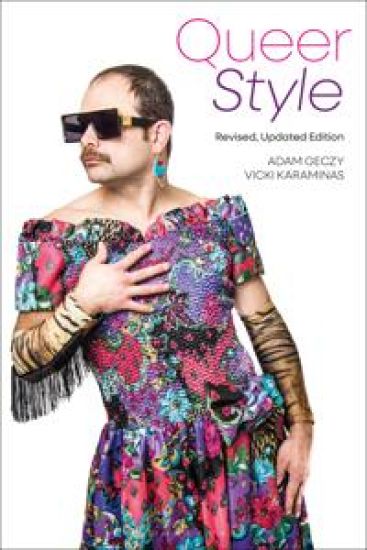
First published in 2013, Queer Style was ahead of its time. It was the first book to address the cultural, political, and material histories of clothes as signs and markers of gender and sexual identity, and remains key reading for scholars and students across fashion studies and the humanities more broadly. Now, 10 years later, the authors have revisited their classic work and updated it to examine the function of subcultural dress within queer communities and the mannerisms and messages that are used as signifiers of identity.
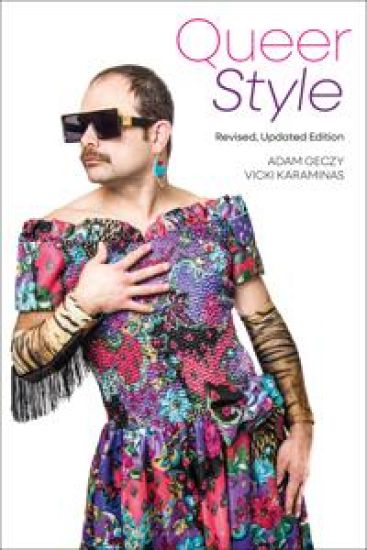
First published in 2013, Queer Style was ahead of its time. It was the first book to address the cultural, political, and material histories of clothes as signs and markers of gender and sexual identity, and remains key reading for scholars and students across fashion studies and the humanities more broadly. Now, 10 years later, the authors have revisited their classic work and updated it to examine the function of subcultural dress within queer communities and the mannerisms and messages that are used as signifiers of identity.
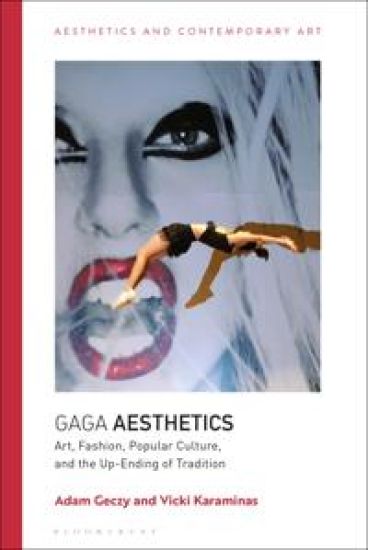
Pop art has traditionally been the most visible visual art within popular culture because its main transgression is easy to understand: the infiltration of the “low” into the “high”. The same cannot be said of contemporary art of the 21st century, where the term “Gaga Aesthetics” characterizes the condition of popular culture being extensively imbricated in high culture, and vice-versa. Taking Adorno and Horkheimer’s "The Culture Industry" and Adorno’s Aesthetic Theory as key touchstones, this book explores the dialectic of high and low that forms the foundation of Adornian aesthetics and the extent to which it still applied, and the extent to which it has radically shifted, thereby ‘upending tradition’. In the tradition of philosophical aesthetics that Adorno began with Lukács, this explores the ever-urgent notion that high culture has become deeply enmeshed with popular culture. This is “Gaga Aesthetics”: aesthetics that no longer follows clear fields of activity, where “fine art” is but one area of critical activity. Indeed, Adorno’s concepts of alienation and the tragic, which inform his reading of the modernist experiment, are now no longer confined to art. Rather, stirring examples can be found in phenomena such as fashion and music video. In addition to dealing with Lady Gaga herself, this book traverses examples ranging from Madonna’s Madam X to Moschino and Vetements, to deliberate on the strategies of subversion in the culture industry.
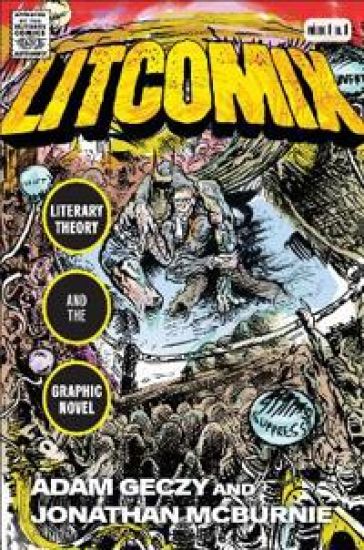
Critical studies of the graphic novel have often employed methodologies taken from film theory and art criticism. Yet, as graphic novels from Maus to Watchmen have entered the literary canon, perhaps the time has come to develop theories for interpreting and evaluating graphic novels that are drawn from classic models of literary theory and criticism. Using the methodology of Georg Lukács and his detailed defense of literary realism as a socially embedded practice, Litcomix tackles difficult questions about reading graphic novels as literature. What critical standards should we use to measure the quality of a graphic novel? How does the genre contribute to our understanding of ourselves and the world? What qualities distinguish it from other forms of literature? LitComix hones its theoretical approach through case studies taken from across the diverse world of comics, from Yoshihiro Tatsumi’s groundbreaking manga to the Hernandez Brothers’ influential alt-comix. Whether looking at graphic novel adaptations of Proust or considering how Jack Kirby’s use of intertextuality makes him the Balzac of comics, this study offers fresh perspectives on how we might appreciate graphic novels as literature.
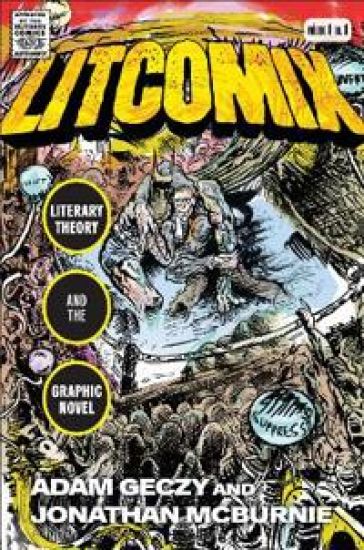
Critical studies of the graphic novel have often employed methodologies taken from film theory and art criticism. Yet, as graphic novels from Maus to Watchmen have entered the literary canon, perhaps the time has come to develop theories for interpreting and evaluating graphic novels that are drawn from classic models of literary theory and criticism. Using the methodology of Georg Lukács and his detailed defense of literary realism as a socially embedded practice, Litcomix tackles difficult questions about reading graphic novels as literature. What critical standards should we use to measure the quality of a graphic novel? How does the genre contribute to our understanding of ourselves and the world? What qualities distinguish it from other forms of literature? LitComix hones its theoretical approach through case studies taken from across the diverse world of comics, from Yoshihiro Tatsumi’s groundbreaking manga to the Hernandez Brothers’ influential alt-comix. Whether looking at graphic novel adaptations of Proust or considering how Jack Kirby’s use of intertextuality makes him the Balzac of comics, this study offers fresh perspectives on how we might appreciate graphic novels as literature.
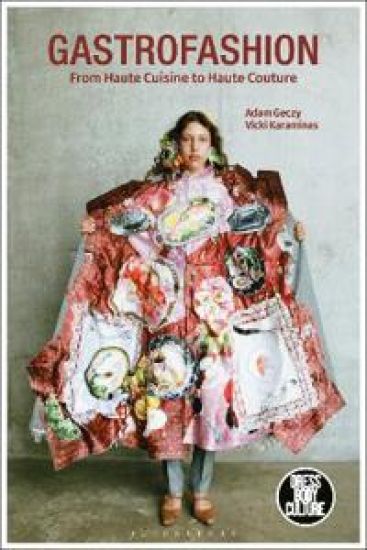
Gastrofashion from Haute Cuisine to Haute Couture
Adam Geczy; Vicki Karaminas
BLOOMSBURY PUBLISHING PLC
2022
nidottu
For hundreds of years consumers and scholars have acknowledged that food is affected by the same rapid shifts in taste and consumption as clothing. Trends in fashion and in food are increasingly being marketed in tandem and sold as fashionable commodities to reinforce capitalist power. Yet despite this, the reciprocal relationship between fashion and food has not been fully explored – until now. Gastrofashion from Haute Cuisine to Haute Couture examines the relationship between food and fashion in clothing, style, and dress in all its manifestations, from the restaurant to the catwalk, to cookbooks, diet fads, slow food, fast fashion, celebrity chefs, artists, and musical performers. It traces the relationship between food and fashion back to the Middle Ages, to the rise of social refinements in manners, speech, clothing, and taste, when behaviours and appearances reflected social status and propriety and where the social display of wealth and privilege were inseparable from food and clothing. Nowadays, designer eateries such as Pasticceria Prada and Armani Ristorante and the display of food on fashion catwalks are the precursors of the restaurants of pre-Revolutionary France and the spectacles of world fairs and exhibitions. This much-needed book offers a substantive and incisive discussion for all those interested in the complex interrelationship between food and fashion – scholars, students, and general readers alike.
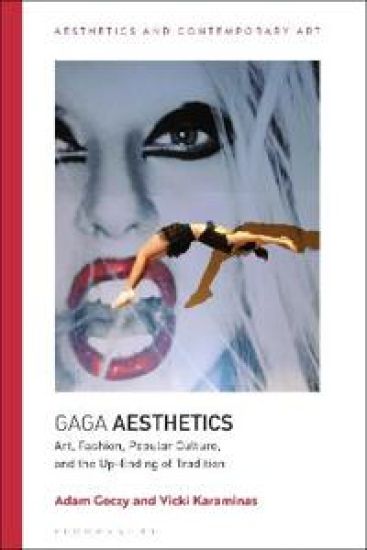
Pop art has traditionally been the most visible visual art within popular culture because its main transgression is easy to understand: the infiltration of the “low” into the “high”. The same cannot be said of contemporary art of the 21st century, where the term “Gaga Aesthetics” characterizes the condition of popular culture being extensively imbricated in high culture, and vice-versa. Taking Adorno and Horkheimer’s "The Culture Industry" and Adorno’s Aesthetic Theory as key touchstones, this book explores the dialectic of high and low that forms the foundation of Adornian aesthetics and the extent to which it still applied, and the extent to which it has radically shifted, thereby ‘upending tradition’. In the tradition of philosophical aesthetics that Adorno began with Lukács, this explores the ever-urgent notion that high culture has become deeply enmeshed with popular culture. This is “Gaga Aesthetics”: aesthetics that no longer follows clear fields of activity, where “fine art” is but one area of critical activity. Indeed, Adorno’s concepts of alienation and the tragic, which inform his reading of the modernist experiment, are now no longer confined to art. Rather, stirring examples can be found in phenomena such as fashion and music video. In addition to dealing with Lady Gaga herself, this book traverses examples ranging from Madonna’s Madam X to Moschino and Vetements, to deliberate on the strategies of subversion in the culture industry.
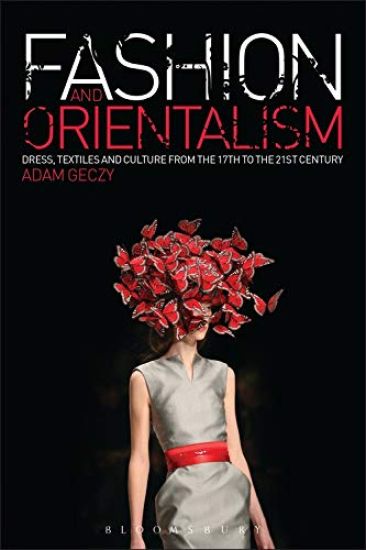
Orientalism is a central factor within the fashion system, both subtle and overt. In this groundbreaking book, the author shows the extent of the influence that the Orient had, and continues to have, on fashion. Our concept of Western fashion is unthinkable without it, whether in terms of the growth of the cotton industry or of garments we take for granted, such as the dressing gown. From pre-modern to contemporary times, this book demonstrates that, in the realms of fashion, the Orient is not simply a construction or a fascination of the imperial West with its eastern other. Rather, it reveals the extent of cross-pollination, exchange and multiple translation that has taken place between East and West for the last 500 years. Exploring topics including Chinoiserie, masquerade, bohemianism, Japonisme, the "de-Orientalization" of the Orient, perfume and the birth of couture, Fashion and Orientalism is an essential read for students and scholars of fashion, cultural studies and history.
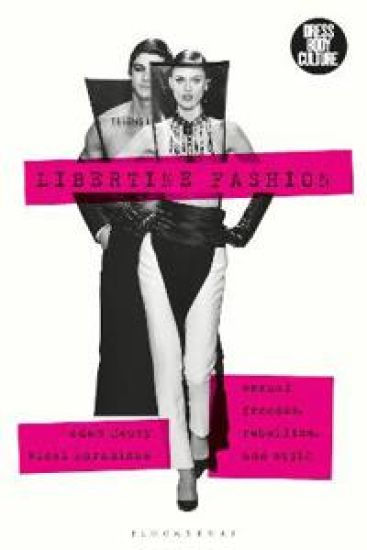
Shortlisted for the Association of Dress Historians Book of the Year Award, 2021Libertine practices have long been associated with transgression and social deviance. This innovative book is the first to focus fully on the relationship between libertinism as a social phenomenon and as a form of fashion. Taking the reader from early modernity to the present day, Adam Geczy and Vicki Karaminas reveal how the connection between clothing and the taboo, the erotic, and the forbidden is at the heart of "libertine fashion". Moving from the decadent courts of Charles II and Louis XV to the catwalks of the 21st century, Libertine Fashion examines literary and sartorial figures ranging from the Marquis de Sade and Lord Byron to Oscar Wilde, Josephine Baker, Colette, and Madonna. Focusing on libertinism as a sartorial practice and identity, this book traces the genealogy of the concept through the proto feminists of the English Reformation, the hedonistic decadents of the fin de siècle, and the Flappers of the Roaring 20s. The historical arc traverses the 1970s era of punk and glam, the shapeshifting personae of David Bowie, and the “disciplinary regimes” of Jean-Paul Gaultier. Looking at libertine practices and appearances with fresh eyes, this bracing and original book affords many new insights into transgressive style, and of the relationship between sexuality and clothing. Accessible and thoroughly researched, Libertine Fashion uses a multidisciplinary approach that draws on historical literature, film, fashion, philosophy, and popular culture. Offering a historical and philosophical grounding in contemporary forms of identity and dress, it is essential reading for students and scholars of fashion, gender, sexuality, and cultural studies.
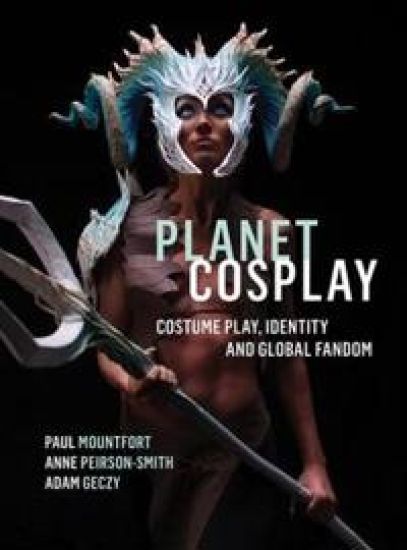
This book examines cosplay from a set of groundbreaking disciplinary approaches, highlighting the latest and emerging discourses around this popular cultural practice. Planet Cosplay is authored by widely published scholars in this field, examining the central aspects of cosplay ranging from sources and sites to performance and play, from sex and gender to production and consumption. Topics discussed include the rise of cosplay as a cultural phenomenon and its role in personal, cultural and global identities. Planet Cosplay provides a unique, multifaceted examination of the practice from theoretical bases including popular cultural studies, performance studies, gender studies and transmedia studies. As the title suggests, the book’s purview is global, encompassing some of the main centres of cosplay throughout the United States, Asia, Europe and Australasia. Each of the chapters offers not only a set of entry points into its subject matter, but also a narrative of the development of cosplay and scholarly approaches to it.