Kirjojen hintavertailu – 12 903 725 kirjaa ja 27 kauppaa

Kirjailija

Adam Henschke

Kirjat ja teokset yhdessä paikassa: 6 kirjaa, julkaisuja vuosilta 2017–2025, suosituimpiin kuuluu Cognitive Warfare. Vertaile teosten hintoja ja tarkista saatavuus suomalaisista kirjakaupoista.

6 kirjaa

Kirjojen julkaisuvuodet: 2017–2025.

Cognitive Warfare

Cognitive Warfare

Adam Henschke

TAYLOR FRANCIS LTD
2025
nidottu
This book explores the conceptual, historical, and ethical issues of information conflict to present a detailed analysis of cognitive warfare. Is it possible for liberal democracies to deliberately use information on civilian populations to impact political and social institutions? While information conflict has been a part of political conflict, warfare, and international relations for as long as there has been political competition, given that our modern political and social lives are saturated by information, we are now faced with a pressing set of reasons to understand cognitive warfare, and to place it in a wider historical and technological context. This book identifies a series of conceptual and ethical challenges facing liberal democracies around modern information conflict. Drawing from historical practices, it suggests that two values – human dignity and political autonomy – can explain why some acts of cognitive warfare might be judged to be good while other acts are judged to be bad. This book will be of much interest to students and researchers of intelligence studies, ethics, security studies, and International Relations. Chapters 7 and 9 of this book are freely available as a downloadable Open Access PDF at http://www.taylorfrancis.com under a Creative Commons Attribution (CC-BY) 4.0 license.
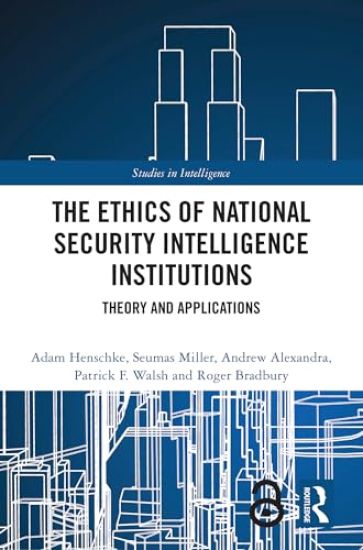
The Ethics of National Security Intelligence Institutions

The Ethics of National Security Intelligence Institutions

Adam Henschke; Seumas Miller; Andrew Alexandra; Patrick F. Walsh; Roger Bradbury

TAYLOR FRANCIS LTD
2025
nidottu
This book explores the ethics of national security intelligence institutions operating in contemporary liberal democracies. Intelligence collection by agencies such as the CIA, MI6, and Mossad involves practices that are apparently inconsistent with the principles of ordinary morality – practices such as lying, spying, manipulation, and covert action. However, in the defence of national security, such practices may not only be morally permissible, but may also under some circumstances be morally obligatory. One approach to the ethics of national security intelligence activity has been to draw from the just war tradition (so-called ‘just intelligence theory’). This book identifies significant limitations of this approach and offers a new, institutionally based, teleological normative framework. In doing so, it revises some familiar principles designed for application to kinetic wars, such as necessity and proportionality, and invokes some additional ones, such as reciprocity and trust. It goes on to explore the applications of this framework and a revised set of principles for national security intelligence institutions and practices in contemporary and emerging political and technological settings. This book will be of much interest to students of intelligence studies, ethics, security studies and International Relations.
Cognitive Warfare

Cognitive Warfare

Adam Henschke

TAYLOR FRANCIS LTD
2024
sidottu

Halvin toimitettuna 228,60 €

This book explores the conceptual, historical, and ethical issues of information conflict to present a detailed analysis of cognitive warfare. Is it possible for liberal democracies to deliberately use information on civilian populations to impact political and social institutions? While information conflict has been a part of political conflict, warfare, and international relations for as long as there has been political competition, given that our modern political and social lives are saturated by information, we are now faced with a pressing set of reasons to understand cognitive warfare, and to place it in a wider historical and technological context. This book identifies a series of conceptual and ethical challenges facing liberal democracies around modern information conflict. Drawing from historical practices, it suggests that two values – human dignity and political autonomy – can explain why some acts of cognitive warfare might be judged to be good while other acts are judged to be bad. This book will be of much interest to students and researchers of intelligence studies, ethics, security studies, and International Relations. Chapters 7 and 9 of this book are freely available as a downloadable Open Access PDF at http://www.taylorfrancis.com under a Creative Commons Attribution (CC-BY) 4.0 license.

The Ethics of National Security Intelligence Institutions

The Ethics of National Security Intelligence Institutions

Adam Henschke; Seumas Miller; Andrew Alexandra; Patrick F. Walsh; Roger Bradbury

TAYLOR FRANCIS LTD
2024
sidottu
This book explores the ethics of national security intelligence institutions operating in contemporary liberal democracies. Intelligence collection by agencies such as the CIA, MI6, and Mossad involves practices that are apparently inconsistent with the principles of ordinary morality – practices such as lying, spying, manipulation, and covert action. However, in the defence of national security, such practices may not only be morally permissible, but may also under some circumstances be morally obligatory. One approach to the ethics of national security intelligence activity has been to draw from the just war tradition (so-called ‘just intelligence theory’). This book identifies significant limitations of this approach and offers a new, institutionally based, teleological normative framework. In doing so, it revises some familiar principles designed for application to kinetic wars, such as necessity and proportionality, and invokes some additional ones, such as reciprocity and trust. It goes on to explore the applications of this framework and a revised set of principles for national security intelligence institutions and practices in contemporary and emerging political and technological settings. This book will be of much interest to students of intelligence studies, ethics, security studies and International Relations.
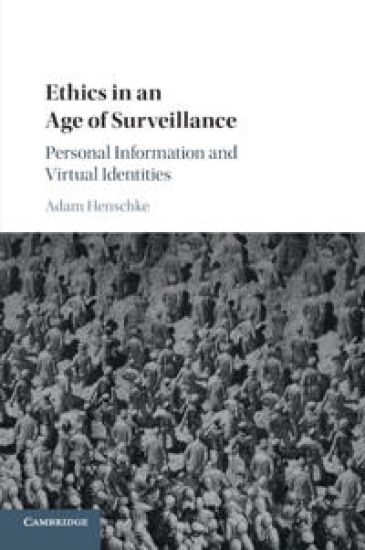
Ethics in an Age of Surveillance

Ethics in an Age of Surveillance

Adam Henschke

Cambridge University Press
2018
pokkari
People increasingly live online, sharing publicly what might have once seemed private, but at the same time are enraged by extremes of government surveillance and the corresponding invasion into our private lives. In this enlightening work, Adam Henschke re-examines privacy and property in the age of surveillance in order to understand not only the importance of these social conventions, but also their moral relevance. By analyzing identity and information, and presenting a case for a relation between the two, he explains the moral importance of virtual identities and offers an ethically robust solution to designing surveillance technologies. This book should be read by anyone interested in surveillance technology, new information technology more generally, and social concepts like privacy and property.
Ethics in an Age of Surveillance

Ethics in an Age of Surveillance

Adam Henschke

Cambridge University Press
2017
sidottu
People increasingly live online, sharing publicly what might have once seemed private, but at the same time are enraged by extremes of government surveillance and the corresponding invasion into our private lives. In this enlightening work, Adam Henschke re-examines privacy and property in the age of surveillance in order to understand not only the importance of these social conventions, but also their moral relevance. By analyzing identity and information, and presenting a case for a relation between the two, he explains the moral importance of virtual identities and offers an ethically robust solution to designing surveillance technologies. This book should be read by anyone interested in surveillance technology, new information technology more generally, and social concepts like privacy and property.