Kirjailija
Adam Nicolson
Kirjat ja teokset yhdessä paikassa: 37 kirjaa, julkaisuja vuosilta 2002–2027, suosituimpiin kuuluu Sea Roads. Vertaile teosten hintoja ja tarkista saatavuus suomalaisista kirjakaupoista.
37 kirjaa
Kirjojen julkaisuvuodet: 2002–2027.
Bird School: A Beginner in the Wood
Adam Nicolson
Farrar, Straus and Giroux
2025
sidottu
Halvin toimitettuna 29,40 €
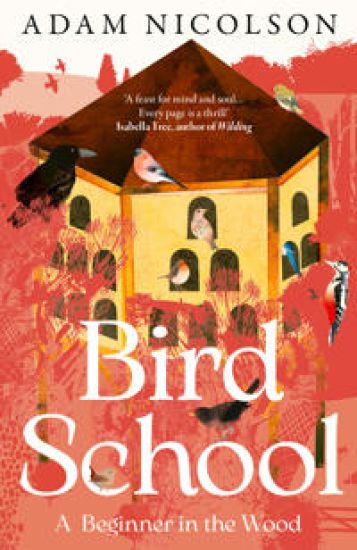
An intimate exploration of the lives of birds and their interactions with man, by a preeminent naturalist. Poets and scientists, saints and naturalists, stalk through these pages. Neighboring cock robins duel almost to the death. Tawny owl widows are seen looking for tawny owl widowers to set up shop with. Blackbirds are found singing phrases from late Beethoven quartets, both in a garden in southern England (where they have been listening to records played through the open window of a drawing room) and in Bonn, where Beethoven himself first heard them and where they are still singing to the same rhythms two hundred fifty years later. Bird School describes and follows Adam Nicolson's progress over two or three years in trying to learn about, and eventually to create an environment friendly to, the birds of the farm where he lives in Sussex. In simple language that evinces his careful observational prowess, Nicolson aims to cross the boundary between the scientific and the prescientific understanding of birds, looking into why and how they sing, how they fly and breed, how they survive and migrate, how they have suffered at our hands, how we have loved them and damaged them, and how we might create, or re-create, a refuge for them. Here is a set of lessons for someone who knows little but cares a lot about the living world that is in such dire crisis. Here is life in the "rough grounds," on the edge of culture and nature.
An intimate, quirky, and soulful portrait of the many lives that swirl and teem in that microcosm of the universe, the ocean rock pool. In this standalone extract from Adam Nicolson's Life Between the Tides, the reader gets a close-up view of some of the ocean's most intriguing characters. The sea is not made of water. Creatures are its genes. Look down as you crouch over the shallows and you will find a periwinkle or a prawn, a claw-displaying crab or a cluster of anemones ready to meet you. No need for binoculars or special stalking skills: go to the rocks and the living will say hello. In this distilled version of the powerful, revelatory Life Between the Tides, Adam Nicolson takes the reader on a wonder-filled tour of some of the animal residents of the rock pools that are the stage for so much of the life and poetry of the ocean. We visit with the sandhopper, prawn, winkle, crab, and anemone, and each episode reenacts the book's idea of the inner drama of life in this cloistered and vibrant space. Nicolson writes "with scientific rigor and a poet's sense of wonder" (The American Scholar). He animates the world of the rock pool and provides an essential perspective on a marine world as intricate and infinite as our own and not much further off than the tips of our noses. The Living Will Say Hello is part of the Picador Shorts series "Oceans, Rivers, and Streams," in which excerpts from beloved classics speak to our relationship with our water bodies, great and small.
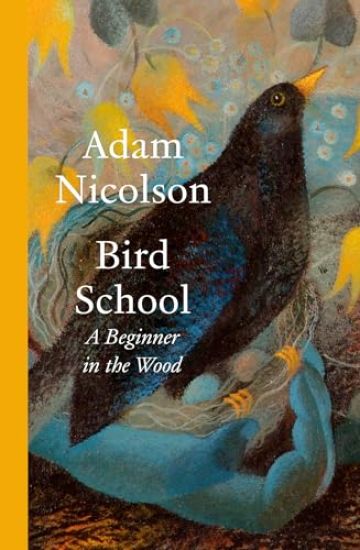
'This is some of the best English prose of our time' SPECTATOR ‘A feast for mind and soul' ISABELLA TREE 'A marvellous and revelatory guide to our native bird-life' DAILY MAIL Step into the hide for a glorious new encounter with the British wild Close to Adam Nicolson’s home in Sussex, there is a forgotten field overrun by bracken and thicketed by brambles. It is the haunt of deer and many birds – nightingales, the occasional cuckoo, ravens, robins, owls and in summer the sweet-singing warblers that come north from Africa to breed in English woods. This gorgeous book charts his attempt to encounter birds, to engage with a marvellous layer of life he had previously almost ignored. He wanted to look and listen, to return to ‘bird school’ and see what it might teach him. He built a small shed amongst the trees with nesting boxes and bird feeders. Cocooned inside, season after season, he got to know the birds: where they nest, how they sing, how they mate and fight, what preys on them, what they are like as living things. Beautifully written and woven through with philosophy, literature, science and a sense of wonder, always conscious that that this is an age in which the natural world is under siege, Bird School pulls back the curtain on seemingly ordinary birds, taking a long, careful and concerned look at our relationship with the wild. 'Golden threads of literary, philosophical and scientific insight run through Nicolson’s book, along with a sense that we are embarking on an adventure with him into a realm that we cannot hope to fully understand' THE TIMES 'A worthy addition to a literary lineage that stretches back to the 18th-century writer and naturalist Gilbert White…Bird School, then, is a fitting title: we should learn to rekindle our enduring love affair with birds, before they vanish from our sight' DAILY TELEGRAPH
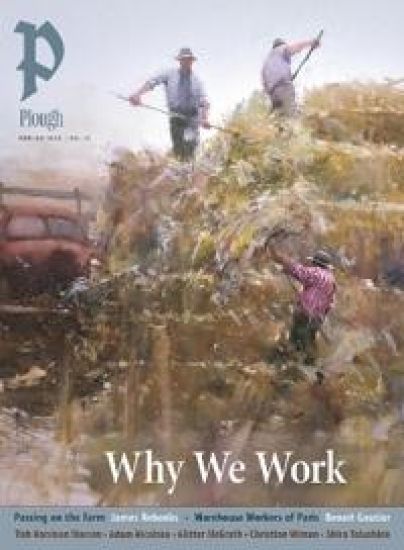
Plough Quarterly No. 43 – Why We Work
James Rebanks; Benoit Gautier; Tish Harrison Warren; Adam Nicolson; Alister McGrath; Cristian Wiman; Shira Telushkin; Alastiar Roberts; Norann Voll; Bobbie Jamieson; Brian D. Miller; Ben Wray; William P. Hyland
PLOUGH PUBLISHING HOUSE
2025
nidottu
Is our work merely a way to put food on the table, or does it have inherent value? Should our work define us? Does it play too large a role in our lives? Does it make us feel more human, or less so? This issue explores the realities of work for people with various jobs, but also probes the reasons people work and what they hope to gain from their labor. From warehouse workers to poets, food delivery specialists to cloistered nuns, farmers to police officers, this issue considers personal, spiritual, and social aspects of one of the most basic human activities. On this theme: James Rebanks prepares to pass on the farm to his children. Benoit Gautier rides a shuttlebus with dislocated French warehouse workers. Shira Telushkin asks why young women today are becoming cloistered nuns. Ben Wray talks to food-delivery riders in three countries about their attempts to organize. John Clair, a police chief, wants policing to be about relationships, not statistics. Norann Voll tells how her father taught her to embrace her blue-collar roots. Maureen Swinger honors the unpaid and unheralded work of caring for an aging loved one. Alastair Roberts recommends the divine rhythm of work and Sabbath rest God established in Genesis. Also in this issue: Adam Nicolson finds a different sort of freedom sailing a sixteen-foot wooden boat. Alister McGrath explores the connection between detective fiction and the spiritual quest. Tish Harrison Warren introduces Stanley Hauerwas to new audiences. Christian Wiman shares a new poem about a glass-eyed monk. Plough Quarterly features stories, ideas, and culture for people eager to apply their faith to the challenges we face. Each issue includes in-depth articles, interviews, poetry, book reviews, and art.
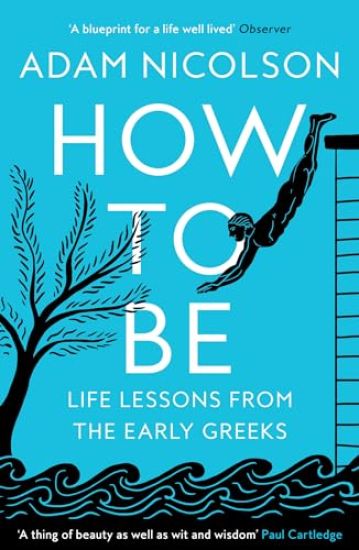
A TIMES BOOK OF THE YEAR What is the nature of things? Must I think my own way through the world? What is justice? How can I be me? How should we treat each other? Before the Greeks, the idea of the world was dominated by god-kings and their priests, in a life ruled by imagined metaphysical monsters. 2,500 years ago, in a succession of small eastern Mediterranean harbour-cities, that way of thinking began to change. Men (and some women) decided to cast off mental subservience and apply their own worrying and thinking minds to the conundrums of life. These great innovators shaped the beginnings of philosophy. Through the questioning voyager Odysseus, Homer explored how we might navigate our way through the world. Heraclitus in Ephesus was the first to consider the interrelatedness of things. Xenophanes of Colophon was the first champion of civility. In Lesbos, the Aegean island of Sappho and Alcaeus, the early lyric poets asked themselves ‘How can I be true to myself?’ In Samos, Pythagoras imagined an everlasting soul and took his ideas to Italy where they flowered again in surprising and radical forms. Prize-winning and bestselling writer Adam Nicolson travels through this transforming world and asks what light these ancient thinkers can throw on our deepest preconceptions. Sparkling with maps, photographs and artwork, How to Be is a journey into the origins of Western thought. Hugely formative ideas emerged in these harbour-cities: fluidity of mind, the search for coherence, a need for the just city, a recognition of the mutability of things, a belief in the reality of the ideal — all became the Greeks’ legacy to the world. Born out of a rough, dynamic—and often cruel— moment in human history, it was the dawn of enquiry, where these fundamental questions about self, city and cosmos, asked for the first time, became, as they remain, the unlikely bedrock of understanding.
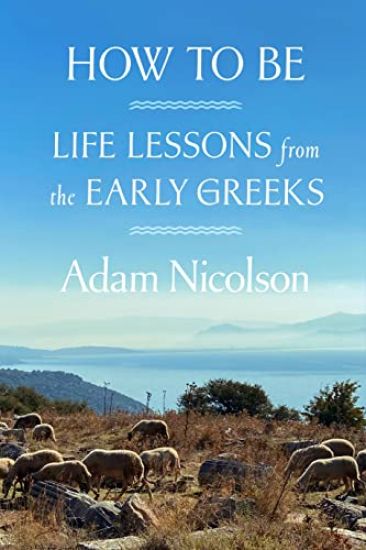
Nicolson crafts a geography of the ancient world and a brilliant exploration of our connections to the past. What is the nature of things? What is justice? How can I be myself? How should we treat each other? Before the Greeks, the idea of the world was dominated by god-kings and their priests. Twenty-five hundred years ago, in a succession of small eastern Mediterranean harbor cities, a few heroic men and women decided to cast off mental subservience and apply their own thinking minds to the conundrums of life. These great innovators shaped the beginnings of western philosophy. Through the questioning voyager Odysseus, Homer explored how we might navigate our way through the world. Heraclitus, in Ephesus, was the first to consider the interrelatedness of things. Xenophanes of Colophon was the first champion of civility. On the Aegean island of Lesbos, the early lyric poets Sappho and Alcaeus asked themselves, "How can I be true to myself?" On Samos, Pythagoras imagined an everlasting soul and took his ideas to Italy, where they flowered again in surprising and radical forms. The award-winning writer Adam Nicolson travels with us through this transforming world and asks what light these ancient thinkers can throw on our deepest preconceptions. Enhanced with maps, photographs, and artwork, How to Be is an expedition into early ideas. Nicolson takes us to the dawn of investigative thought and makes the fundamental questions of the ancient philosophers new again. What are the principles of the physical world? How can we be good in it? And why do we continue to ask these questions? It is an enthralling, exhilarating journey.
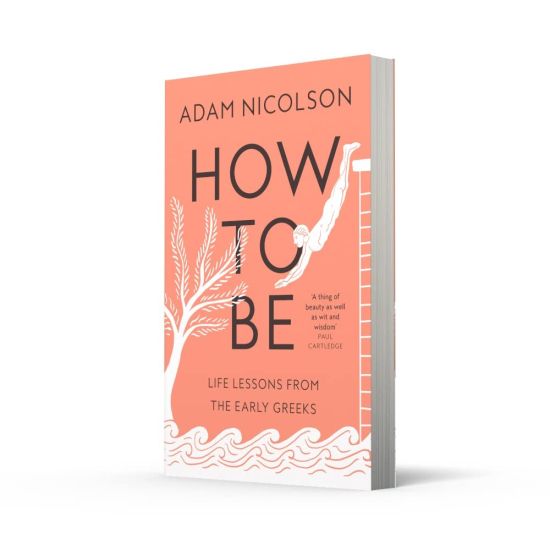
A TIMES BOOK OF THE YEARWhat is the nature of things? Must I think my own way through the world? What is justice? How can I be me? How should we treat each other?
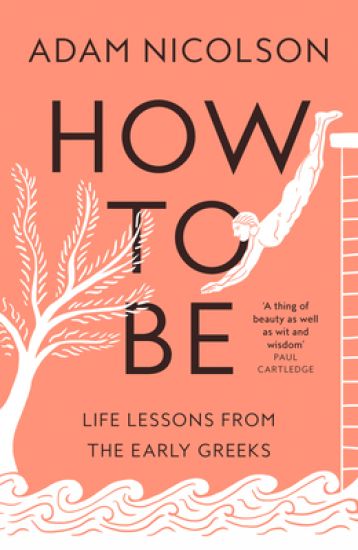
A TIMES BOOK OF THE YEAR What is the nature of things? Must I think my own way through the world? What is justice? How can I be me? How should we treat each other?
Adam Nicolson explores the marine life inhabiting seashore rock pools with a scientist's curiosity and a poet's wonder in this beautifully illustrated book. The sea is not made of water. Creatures are its genes. Look down as you crouch over the shallows and you will find a periwinkle or a prawn, a claw-displaying crab or a cluster of anemones ready to meet you. No need for binoculars or special stalking skills: go to the rocks and the living will say hello. Inside each rock pool tucked into one of the infinite crevices of the tidal coastline lies a rippling, silent, unknowable universe. Below the stillness of the surface course different currents of endless motion--the ebb and flow of the tide, the steady forward propulsion of the passage of time, and the tiny lifetimes of the rock pool's creatures, all of which coalesce into the grand narrative of evolution. In Life Between the Tides, Adam Nicolson investigates one of the most revelatory habitats on earth. Under his microscope, we see a prawn's head become a medieval helmet and a group of "winkles" transform into a Dickensian social scene, with mollusks munching on Stilton and glancing at their pocket watches. Or, rather, is a winkle more like Achilles, an ancient hero, throwing himself toward death for the sake of glory? For Nicolson, who writes "with scientific rigor and a poet's sense of wonder" (The American Scholar), the world of the rock pools is infinite and as intricate as our own. As Nicolson journeys between the tides, both in the pools he builds along the coast of Scotland and through the timeline of scientific discovery, he is accompanied by great thinkers--no one can escape the pull of the sea. We meet Virginia Woolf and her Waves; a young T. S. Eliot peering into his own rock pool in Massachusetts; even Nicolson's father-in-law, a classical scholar who would hunt for amethysts along the shoreline, his mind on Heraclitus and the other philosophers of ancient Greece. And, of course, scientists populate the pages; not only their discoveries, but also their doubts and errors, their moments of quiet observation and their thrilling realizations. Everything is within the rock pools, where you can look beyond your own reflection and find the miraculous an inch beneath your nose. "The soul wants to be wet," Heraclitus said in Ephesus twenty-five hundred years ago. This marvelous book demonstrates why it is so. Includes Color and Black-and-White Photographs
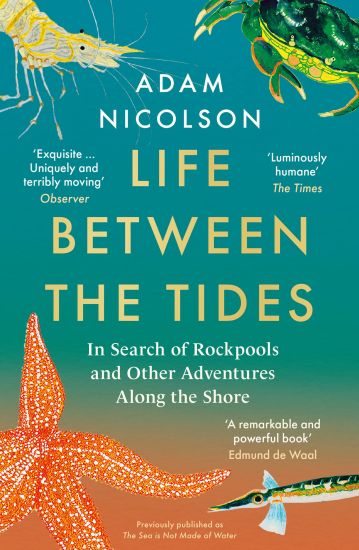
Life Between the Tides
Adam Nicolson
HARPERCOLLINS PUBLISHERS
2022
nidottu
Halvin toimitettuna 18,90 €
LONGLISTED FOR THE WAINWRIGHT PRIZE 2022 ‘A remarkable and powerful book, the rarest of things … Nicolson is unique as a writer … I loved it’ EDMUND DE WAAL Few places are as familiar as the shore – and few as full of mystery and surprise. How do sandhoppers inherit an inbuilt compass from their parents? How do crabs understand the tides? How can the death of one winkle guarantee the lives of its companions? What does a prawn know? In Life Between the Tides, Adam Nicolson explores the natural wonders of the shoreline, from the extraordinary biology of its curious animals to the flow of our human history. This is an invitation to the water, where marvellous things wait an inch below the surface. Previously published as The Sea is Not Made of Water
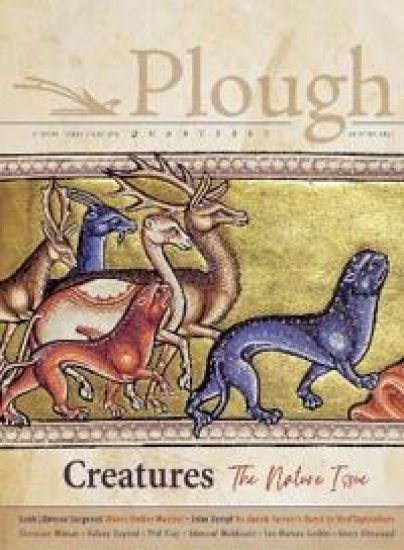
Plough Quarterly No. 28 – Creatures
Adam Nicolson; Gracy Olmstead; Christian Wiman; Kelsey Osgood; John Kempf; Leah Libresco Sargeant; Ian Marcus Corbin; Iván Bernal Marín; Phil Klay; Edmund Waldstein; Alfred Nicol
Plough Publishing House
2021
pokkari
When we read the book of nature, what do we read there? “All things bright and beautiful, all creatures great and small, all things wise and wonderful, the Lord God made them all,” says a well-known hymn. This issue of Plough celebrates the creatures of our planet – plant, animal, and human – and the implications of humankind’s relationship to nature. But if nature can be read as a book that reveals the wisdom of its Creator, it also reveals things less lovely than stars and singing birds – a world of desperate competition for survival, mass extinctions, and deadly viruses. Is such a world a convincing argument for the Creator’s goodness? Turns out Christians and skeptics alike have been asking such questions since long before Darwin added a twist. Are we moderns out of practice at reading the book of nature? And if we forget how, will we fail to read human nature as well – what rights or purposes our Creator may have endowed us with? What then is there to limit the bounds of technological manipulation of humankind? This issue of Plough explores these and other fascinating questions about the natural world and our place in it. In this issue: - Sussex farmer Adam Nicholson evokes centuries of handwork that shaped the landscape of the Weald. - Gracy Olmstead revisits the land her forebears farmed in Idaho. - Ian Marcus Corbin tries walking phoneless to better note the beauty of the natural world. - Amish farmer John Kempf, a leader in regenerative agriculture, foresees a healthier future for farming. - Leah Libresco Sargeant offers a feminist critique of society’s war on women’s bodies. - Iván Bernal Marín visits Panama City’s traditional fishermen. - Maureen Swinger recalls to triumphs of second grade in forest school. - Edmund Waldstein questions head transplants and the limits of medical science. - Kelsey Osgood says it’s natural to fear death, and to transcend that fear through faith. - Tim Maendel lifts the veil on urban beekeeping along the Manhattan skyline. You’ll also find: - An essay by Christian Wiman on the poetry of doubt and faith - New poems by Alfred Nicol - A profile of Amazon activist nun Dorothy Stang - An appreciation of Keith Green’s songs - Insights on creation from Blaise Pascal, Julian of Norwich, Francis of Assisi, Mechthild of Magdeburg, Christopher Smart, Augustine of Hippo, The Book of Job, and Sadhu Sundar Singh - Reviews of The Opening of the American Mind, and Kazuo Ishiguro’s Klara and the Sun Plough Quarterly features stories, ideas, and culture for people eager to put their faith into action. Each issue brings you in-depth articles, interviews, poetry, book reviews, and art to help you put Jesus’ message into practice and find common cause with others.

SHORTLISTED FOR THE COSTA BIOGRAPHY AWARD 2019 Wordsworth and Coleridge as you've never seen them before in this new book by Adam Nicolson, brimming with poetry, art and nature writing. Proof that poetry can change the world.
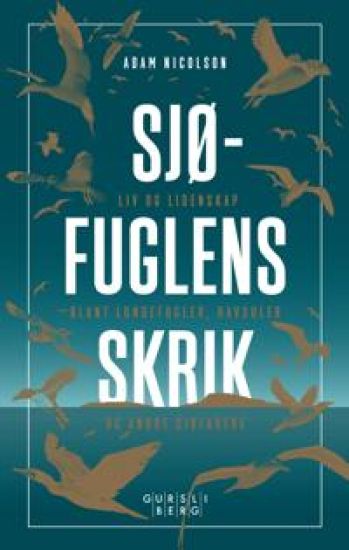
En engelsk baron og 300 000 hekkende fugler på Shiant-øyene i Indre Hebridene er utgangspunktet for denne odysseen i sjøfuglenes liv. Ti forskjellige sjøfugler eller grupper av sjøfugler, mer eller mindre vanlige, noen nesten utryddet, blir presentert i ti lett illustrerte kapitler: havhest, lundefugl, krykkje, måke, lomvi, skarv, havlire, havsule, geirfugl/alke og albatross. Samtlige av sjøfuglene som omtales, har relevans for Norge og norske forhold. Boken vil ha betydning innenfor ornitologiske fagkretser, men er også et viktig bidrag til miljøvern, artsbevaring, forvaltning av natur- og kulturlandskap. «Sjøfuglens skrik» er en populærvitenskapelig bok om sjøfugler. I tillegg til å være en ornitologisk fagbok, er boken et naturhistorisk verk. Den tar for seg hvordan folk har levd av og på sjøfugl i hundrevis av år og brukt dem som kilde til protein, fett og fjær, klær og isolasjon, lampeolje og gjødsel. Den redegjør for sjøfuglers trekkruter og hekkeplasser, hvor de vandrer og hvor de spiser. Den forteller hvordan sjøfugler navigerer og leser vind, vær og jetstrømmer, og hvordan de er en del av et naturlandskap, men er truet av menneskelig aktivitet og forurensing. Boken viser også hvordan sjøfugler har preget poesi og tenkning verden rundt, og inspirert til poesi og prosa, sanger og sagn. Med en mengde sitater og referanser skildrer den hvordan sjøfuglene har nedfelt seg i filosofi, teologi, mytologi og folketro, fra Kina og Europa til indianere på Newfoundland og evenker i Sibir.
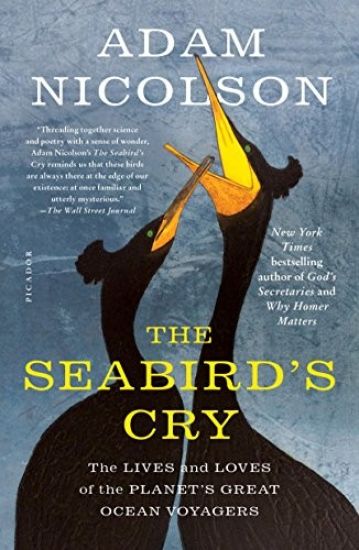
Enter ancient lands of wind and waves where the planet's greatest flyers battle for survival. As the only creatures at home on land, at sea, and in the air, seabirds have evolved to thrive in the most demanding environment on Earth. In The Seabird's Cry, Adam Nicolson travels ocean paths, fusing traditional knowledge with astonishing facts science has recently learned about these creatures: the way their bodies actually work, their dazzling navigational skills, their ability to smell their way to fish or home and to understand the discipline of the winds upon which they depend. This book is a paean to the beauty of life on the wing, but, even as we are coming to understand the seabirds, a global tragedy is unfolding. Their numbers are in freefall, dropping by nearly 70 percent in the last sixty years, a billion fewer now than in 1950. Extinction stalks the ocean, and there is a danger that the hundred-million-year-old cries of a seabird colony, rolling around in the bays and headlands of high latitudes, will this century become but a memory.