Kirjojen hintavertailu – 12 859 818 kirjaa ja 27 kauppaa

Kirjailija

Adam Phillips

Kirjat ja teokset yhdessä paikassa: 74 kirjaa, julkaisuja vuosilta 1989–2027, suosituimpiin kuuluu Houdini's Box: The Art of Escape. Vertaile teosten hintoja ja tarkista saatavuus suomalaisista kirjakaupoista.

74 kirjaa

Kirjojen julkaisuvuodet: 1989–2027.

Flash MX Most Wanted

Flash MX Most Wanted

David Doull; Chad Corbin; Adam Phillips; Maria Stone; Keith Peters; Sham Bhangal; Gerald YardFace

APress
2003
nidottu
Some friends of ED books concentrate on more serious aspects of Flash - this one concentrates on the fun. Flash can be used for many purposes, but making visually stunning effects to impress your boss, your friends, and anyone who looks at your site is one of the most rewarding. Friends of ED have scoured the web and the Flash community, discovering the most requested and popular Flash effects in action today. We have investigated the visual effects and actual design techniques that Flash beginners have been asking for. The visual inspiration and detailed explanations of how to recreate these effects are combined together in this book. The eight leading designers in this full color book take these effects apart, showing you how to adapt your basic Flash knowledge to achieve results exceeding anything you thought possible. The effects stay true to the tried and tested friends of ED design-centric approach, with full exercises and explanations for each effect. Topics include: ground-breaking site navigation; a dynamic MP3 jukebox; cartoon animation; and Flash math visual effects. All you need to use this book is a knowlegde of the Flash MX interface, and some imagination. So sit back, relax, and open up your mind to the visual potential of Flash MX. As with all books from friends of ED our support is fast, friendly and free. Your queries will be passed onto the editors and authors who put the book together.
Promises, Promises

Promises, Promises

Adam Phillips

Faber Faber
2002
pokkari
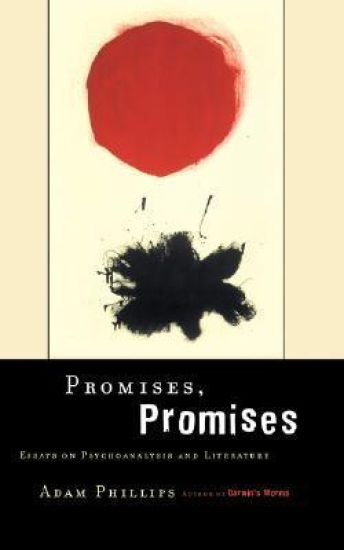
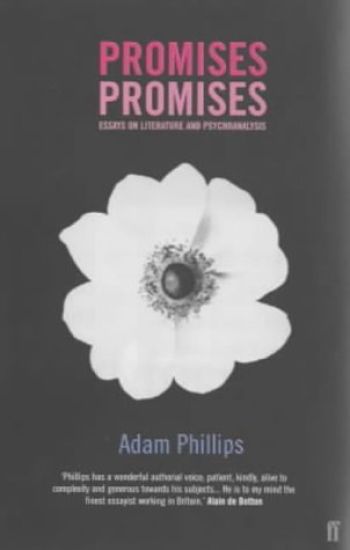
Has psychoanalysis failed to keep its promise? What are psychoanalysis and literature good for? And what, if anything, have they got to do with each other? Promises, Promises is a delightful new collection of essays which sets out to make and break the links between psychoanalysis and literature. It confirms Adam Phillips as a virtuoso performer able to reach far beyond the borders of psychoanalytic discourse into art, drama, poetry and history. This collection gives us insights into anorexia and cloning, the work of Tom Stoppard and A. E. Housman, the effect of the Blitz on Londoners, Nijinsky's diary and Martin Amis's Night Train, and provides a case history of clutter. In a final essay, the author turns to the question - why sign up for analysis when you could read a book? Promoting everywhere a refreshing version of a psychoanalysis that is more committed to happiness and inspiration than to self-knowledge or some absolute truth, Promises, Promises reaffirms Adam Phillips as a writer whose work, in the words of one reviewer, 'hovers in a strange and haunting borderland between rigour and delight.'
Promises, Promises

Promises, Promises

Adam Phillips

Basic Books
2002
pokkari
As an essayist, Adam Phillips combines the best of two worlds: the mastery of psychotherapy as a practitioner and a theorist-and a reputation as one of the best literary writers around. In this collection of essays, he brings the two gifts to bear upon each other, reaching far beyond the borders of psychoanalytic discourse into art, novels, poetry, and history to speculate on the relative merits of psychoanalysis and literature. In his quirky, epigrammatic style, Phillips shows us how psychoanalysis and literature at their best share the goal of shedding light on human character, the most fascinating of disorders.
Darwin's Worms

Darwin's Worms

Adam Phillips

Basic Books
2001
nidottu
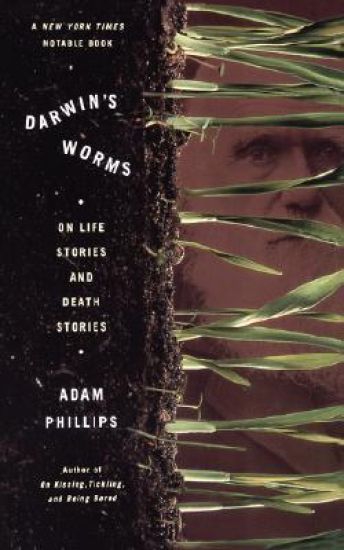
Adam Phillips has been called "the psychotherapist of the floating world" and "the closest thing we have to a philosopher of happiness." His style is epigrammatic; his intelligence, electric. His new book, Darwin's Worms, uses the biographical details of Darwin's and Freud's lives to examine endings-suffering, mortality, extinction, and death. Both Freud and Darwin were interested in how destruction conserves life. They took their inspiration from fossils or from half-remembered dreams. Each told a story that has altered our perception of our lives. For Darwin, Phillips explains, "the story to tell was how species can drift towards extinction; for Freud, the story was how the individual tended to, and tended towards his own death." In each case, it is a death story that uniquely illuminates the life story.
Truth Games

Truth Games

John Forrester; Adam Phillips

Harvard University Press
2000
nidottu
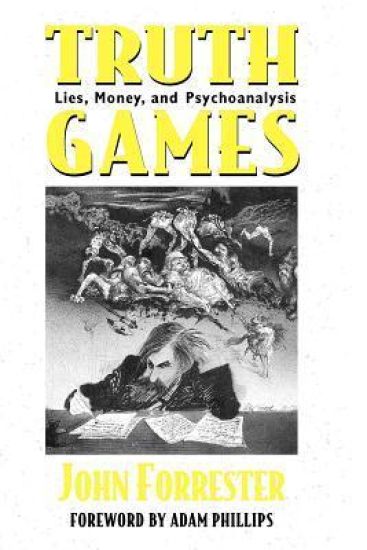
Lying on the couch, the patient must tell all. And yet, as the psychoanalyst well knows, the patient is endlessly unable--unwilling--to speak the truth. This perversity at the heart of psychoanalysis, a fine focus on intimate truths even as the lines between truth and lies are being redrawn, is also at the center of this book of essays by the renowned historian of psychoanalysis John Forrester. Continuing the work begun in Dispatches from the Freud Wars, Truth Games offers a rich philosophical and historical perspective on the mechanics, moral dilemmas, and rippling implications of psychoanalysis. Lacan observed that the psychoanalyst's patient is, even when lying, operating in the dimension of truth. Beginning with Lacan's reading of Freud's case history of the Rat Man, Forrester pursues the logic and consequences of this assertion through Freud's relationship with Lacan into the general realm of psychoanalysis and out into the larger questions of anthropology, economics, and metaphysics that underpin the practice. His search takes him into the parallels between money and speech through an exploration of the metaphors of circulation, exchange, indebtedness, and trust that so easily glide from one domain to the other. Original, witty, incisive, these essays provide a new understanding of the uses and abuses and the ultimate significance of truth telling and lying, trust and confidence as they operate in psychoanalysis--and in the intimate world of the self and society that it seeks to know.
The Beast in the Nursery: On Curiosity and Other Appetites
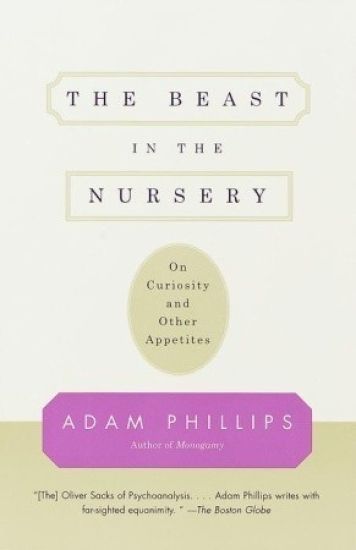
If you are disturbed by the idea that to grow up is to learn to live with disillusionment, if you are fascinated by the perplexity of child-rearing, or if you fear you were more creative as a child, The Beast in the Nursery offers an illuminating and possibly life-changing experience. In four interrelated essays, Adam Phillips arrives at startling new insights into issues that preoccupied Freud, showing in the process that far from having lost its relevance, psychoanalysis is still one of our most incisive tools for the exploration of the human psyche and its possibilities. Phillips transforms the genre of the essay into an instrument for intellectual investigation of the most absorbing kind.
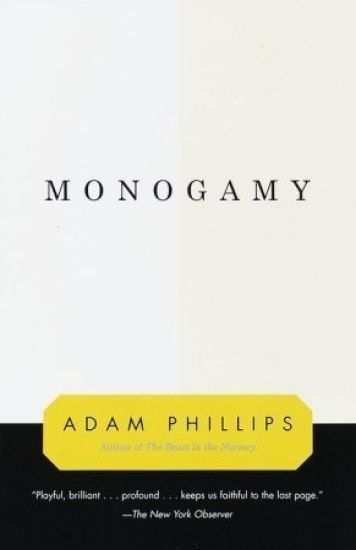
Monogamy

Monogamy

Adam Phillips

VINTAGE
1999
nidottu
A provocative collection of meditations on coupledom and its discontents that is "playful, brilliant ... profound ... keeps us faithful to the last page" (The New York Observer)--from the witty psychoanalyst and author of On Kissing, Tickling, and Being Bored. Adam Phillips manages to unsettle one of our most dearly held ideals, that of the monogamous couple, by speculating upon the impulses that most threaten it--boredom, desire, and the tempting idea that erotic fulfillment might lie elsewhere. With 121 brilliant aphorisms, the witty, erudite psychoanalyst who gave us On Kissing, Tickling, and Being Bored distills the urgent questions and knotty paradoxes behind our mating impulse, and reveals the centrality of monogamy to our notions of marriage, family, the self--in fact, to everything that matters. The only truly monogamous relationship is the one we have with ourselves. Every marriage is a blind date that makes you wonder what the alternatives are to a blind date. There's nothing more scandalous than a happy marriage.
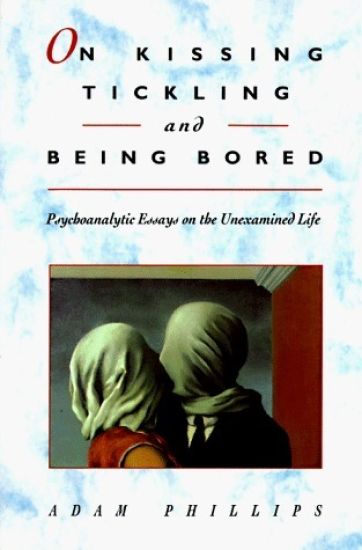
On Kissing, Tickling, and Being Bored

On Kissing, Tickling, and Being Bored

Adam Phillips

Harvard University Press
1998
nidottu
In a style that is writerly and audacious, Adam Phillips takes up a variety of seemingly ordinary subjects underinvestigated by psychoanalysis--kissing, worrying, risk, solitude, composure, even farting as it relates to worrying. He argues that psychoanalysis began as a virtuoso improvisation within the science of medicine, but that virtuosity has given way to the dream of science that only the examined life is worth living. Phillips goes on to show how the drive to omniscience has been unfortunate both for psychoanalysis and for life. He reveals how much one's psychic health depends on establishing a realm of life that successfully resists examination.
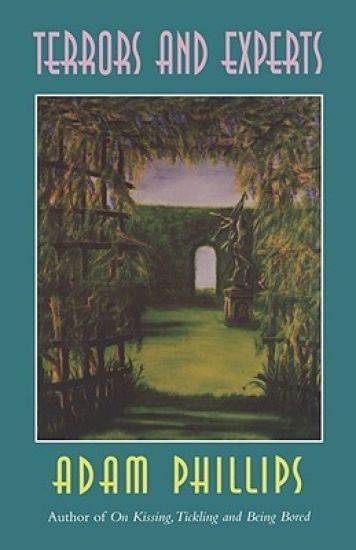
Terrors and Experts

Terrors and Experts

Adam Phillips

Harvard University Press
1997
nidottu
Iris Murdoch once suggested that to understand any philosopher's work we must ask what he or she is frightened of. To understand any psychoanalyst's work--both as a clinician and as a writer--we should ask what he or she loves, because psychoanalysis is about the unacceptable and about love, two things that we may prefer to keep apart, but that Freud found to be inextricable. If it is possible to talk about psychoanalysis as a scandal, without spuriously glamorizing it, then one way of doing it is simply to say that Freud discovered that love was compatible, though often furtively, with all that it was meant to exclude. There are, in other words--and most of literature is made up of these words--no experts on love. And love, whatever else it is, is terror. In a manner characteristically engaging and challenging, charming and maddening, Adam Phillips teases out the complicity between desire and the forbidden, longing and dread. His book is a chronicle of that all-too-human terror, and of how expertise, in the form of psychoanalysis, addresses our fears--in essence, turns our terror into meaning. It is terror, of course, that traditionally drives us into the arms of the experts. Phillips takes up those topics about which psychoanalysis claims expertise--childhood, sexuality, love, development, dreams, art, the unconscious, unhappiness--and explores what Freud's description of the unconscious does to the idea of expertise, in life and in psychoanalysis itself. If we are not, as Freud's ideas tell us, masters of our own houses, then what kind of claims can we make for ourselves? In what senses can we know what we are doing? These questions, so central to the human condition and to the state of psychoanalysis, resonate through this book as Phillips considers our notions of competence, of a professional self, of expertise in every realm of life from parenting to psychoanalysis. Terrors and Experts testifies to what makes psychoanalysis interesting, to that interest in psychoanalysis--which teaches us the meaning of our ignorance--that makes the terrors of life more bearable, even valuable.
Terrors and Experts

Terrors and Experts

Adam Phillips

Faber Faber
1997
nidottu
A discussion of ways in which we may be terrorized by experts, and of the idea of expertise itself. The author challenges the conventional idea of the "self" as something to be known, and sets out to show how self-knowledge is the problem rather than the solution.
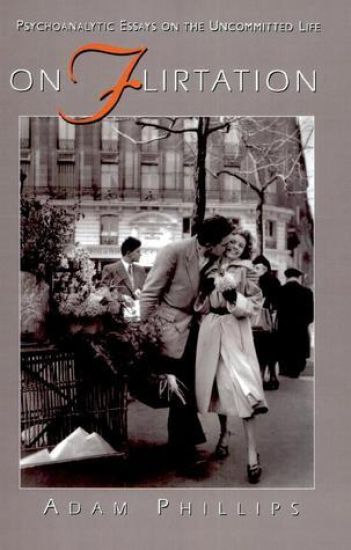
On Flirtation

On Flirtation

Adam Phillips

HARVARD UNIVERSITY PRESS
1996
nidottu

Halvin toimitettuna 37,20 €

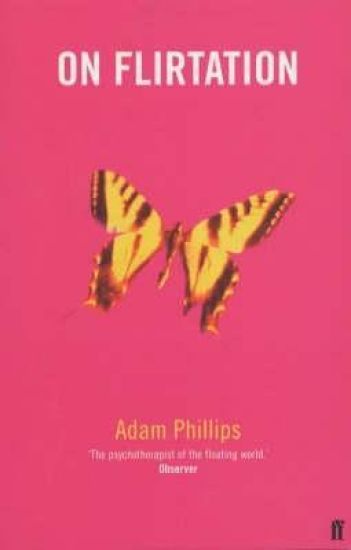
People tend to flirt only with serious things--madness, disaster, other people's affections. So is flirtation dangerous, exploiting the ambiguity of promises to sabotage our cherished notions of commitment? Or is it, as Adam Phillips suggests, a productive pleasure, keeping things in play, letting us get to know them in different ways, allowing us the fascination of what is unconvincing? This is a book about the possibilities of flirtation, its risks and instructive amusements--about the spaces flirtation opens in the stories we tell ourselves, particularly within the framework of psychoanalysis. Phillips looks at life as a tale to be told but rejects the idea of a master plot. Instead, he says, we should be open to the contingent, and flirtation shows us the way. His book observes children flirting with their parents, our various selves flirting with one another, and literature flirting with psychoanalysis. As Phillips explores the links between literature and psychoanalysis--ranging from Philip Roth to Isaac Rosenberg, Karl Kraus to John Clare--psychoanalysis emerges as a multi-authored autobiography. Its subjects are love, loss, and memory; its authors are the analyst and the analysand, as well as the several selves brought to life in the process. A passionate and delightfully playful defense of the virtues of being uncommitted, On Flirtation sets before us the virtue of a yet deeper commitment to the openendedness of our life stories.
On Flirtation

On Flirtation

Adam Phillips

Faber Faber
1995
pokkari

Halvin toimitettuna 20,90 €

Building on his collection of psychoanalytic essays, "On Kissing, Tickling and Being Bored", Phillips examines the subject of flirtation and explores the virtues of being uncommitted and the pleasures of uncertainty.
On Kissing, Tickling and Being Bored

On Kissing, Tickling and Being Bored

Adam Phillips

Faber Faber
1994
nidottu

Halvin toimitettuna 19,90 €

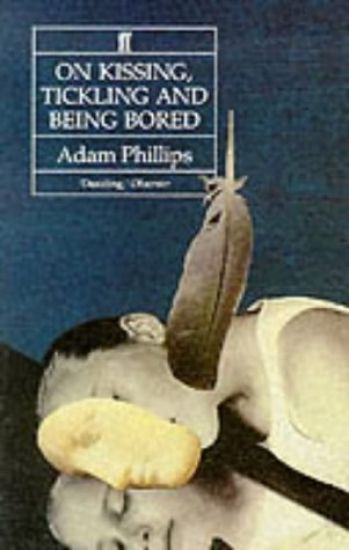
In this collection of psychoanalytic essays on a wide range of relatively unexplored subjects, the author evolves his own distinctive version of psychoanalysis as part of a wider cultural conversation. The essays combine literary and philosophical commentary with clinical vignettes.
Winnicott

Winnicott

Adam Phillips

HARVARD UNIVERSITY PRESS
1989
nidottu
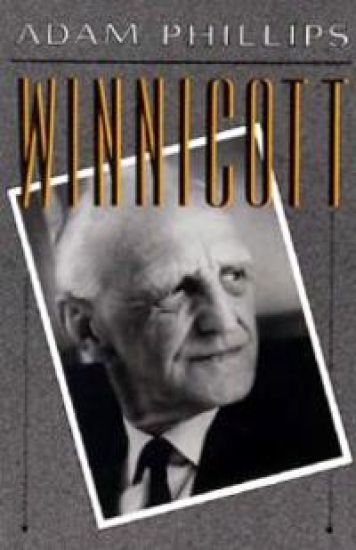
Although he founded no school of his own, D. W. Winnicott (1896-1971) is now regarded as one of the most influential contributors to psychoanalysis since Freud. In over forty years of clinical practice, he brought unprecedented skill and intuition to the psychoanalysis of children. This critical new work by Adam Phillips presents the best short introduction to the thought and practice of Winnicott that is currently available. Winnicott's work was devoted to the recognition and description of the good mother and the use of the mother-infant relationship as the model of psychoanalytic treatment. His belief in natural development became a covert critique of overinterpretative methods of psychoanalysis. He combined his idiosyncratic approach to psychoanalysis with a willingness to make his work available to nonspecialist audiences. In this book Winnicott takes his place with Melanie Klein and Jacques Lacan as one of the great innovators within the psychoanalytic tradition.