Kirjojen hintavertailu – 12 903 725 kirjaa ja 27 kauppaa

Kirjailija

Adam Possamai

Kirjat ja teokset yhdessä paikassa: 13 kirjaa, julkaisuja vuosilta 2005–2022, suosituimpiin kuuluu Religion and Popular Culture. Vertaile teosten hintoja ja tarkista saatavuus suomalaisista kirjakaupoista.

13 kirjaa

Kirjojen julkaisuvuodet: 2005–2022.

Religion and Change in Australia

Religion and Change in Australia

Adam Possamai; David Tittensor

Allen Unwin
2022
sidottu
This timely book offers a panoramic overview of the enduring significance of religion in Australia. Drawing on both foundational and contemporary studies of religion and society, it contests conventional assumptions around the extent of secularisation in Australia and instead argues that religious institutions, groups, and individuals have proved remarkably adaptable to social change and continue to play a major role in Australian life. After the Second World War, Australia, in common with other Western societies, appeared to have become increasingly secularised. Religious observance declined dramatically, and it was commonplace to speak of Australia in the post-war period as a secular society. However, Religion and Change in Australia challenges this view. The 2016 census revealed that over half of the population still identify as Christian, whilst in politics, the religious right has come to exert considerable influence on the Liberal-National Coalition, and has led to a normalisation of religion in political discourse. Further, new technologies, such as the internet and social media, have provided additional avenues for religious expression and proselytization, in conjunction with so-called ‘Mega-Churches’ that have been built to cater to their increasing congregations. The adoption of multiculturalism and immigration from Asia has also led to a religiously pluralist society, though this has often been controversial. In particular, the position of Islam in Australia has been the subject of fierce debate and Islamophobic attitudes still remain. Atheism, non-belief and alternative spiritualities have also become increasingly widespread, especially amongst the young. Given these developments, and firmly grounded in history, Religion and Change in Australia argues that if Australia is today a post-secular society, the processes of desecularisation are not uniform, and have manifested differently at the micro, meso and macro level. In doing so, it draws on sociological perspectives and explores how religion intersects with a wide range of other contemporary issues, including politics, race, migration, gender, and new media. This book is therefore a vital resource for students, academics and general readers seeking to understand contemporary debates surrounding religion and secularisation in Australia.
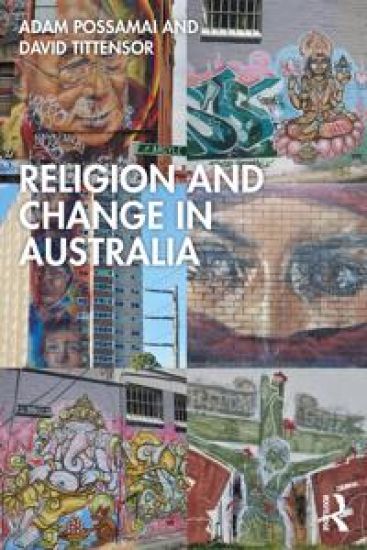
Religion and Change in Australia

Religion and Change in Australia

Adam Possamai; David Tittensor

TAYLOR FRANCIS LTD
2022
nidottu
This timely book offers a panoramic overview of the enduring significance of religion in modern Australian society. Applying sociological perspectives and contemporary theories of religion in society, it challenges conventional assumptions around the extent of secularisation in Australia and instead argues that religious institutions, groups, and individuals have proved remarkably adaptable to social change and continue to play a major role in Australian life. In doing so, it explores how religion intersects with a wide range of other contemporary issues, including politics, race, migration, gender, and new media. Religion and Change in Australia explores Australia’s unique history regarding religion. Christianity was originally imported as a tool of social control to keep convicts, settlers, and Australian Aboriginal peoples in check. This had a profound impact on the social memory of the nation, and lingering resentment towards the "excessive" presence of religion continues to be felt today. Freedom of religion was enshrined in Section 116 of the Australian Constitution in 1901. Nevertheless, the White Australia Policy effectively prevented adherents of non-Christian faiths from migrating to Australia and the nation remained overwhelmingly Christian. However, after WWII, Australia, in common with other western societies, appears to have become increasingly secularised, as religious observance declined dramatically. However, Religion and Change in Australia employs a range of social theories to challenge this securalist view and argues that Australia is a post-secular society. The 2016 census revealed that over half of the population still identify as Christian. In politics, the socially conservative religious right has come to exert considerable influence on the ruling Liberal-National Coalition, particularly under John Howard and Scott Morrison. New technologies, such as the Internet and social media, have provided new avenues for religious expression and proselytisation whilst so-called "megachurches" have been built to cater to their increasing congregations. The adoption of multiculturalism and increased immigration from Asia has led to a religiously pluralist society, though this has often been controversial. In particular, the position of Islam in Australia has been the subject of fierce debate, and Islamophobic attitudes remain common. Atheism, non-belief, and alternative spiritualities have also become increasingly widespread, especially amongst the young. Religion and Change in Australia analyses these developments to offer new perspectives on religion and its continued relevance within Australian society. This book is therefore a vital resource for students, academics, and general readers seeking to understand contemporary debates surrounding religion and secularisation in Australia.
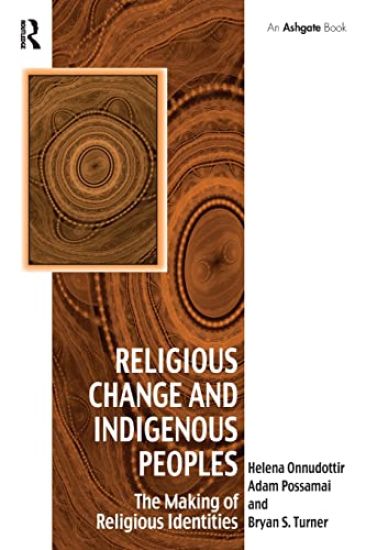
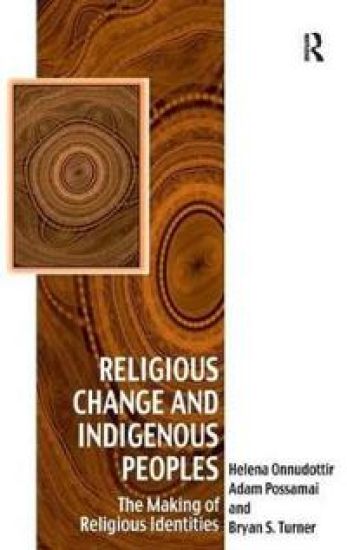
Religious Change and Indigenous Peoples

Religious Change and Indigenous Peoples

Helena Onnudottir; Adam Possamai

TAYLOR FRANCIS LTD
2021
nidottu
Exploring religious and spiritual changes which have been taking place among Indigenous populations in Australia and New Zealand, this book focuses on important changes in religious affiliation in census data over the last 15 years. Drawing on both local social and political debates, while contextualising the discussion in wider global debates about changing religious identities, especially the growth of Islam, the authors present a critical analysis of the persistent images and discourses on Aboriginal religions and spirituality. This book takes a comparative approach to other Indigenous and minority groups to explore contemporary changes in religious affiliation which have raised questions about resistance to modernity, challenges to the nation state and/or rejection of Christianity or Islam. Helena Onnudottir, Adam Posssamai and Bryan Turner offer a critical analysis to on-going public, political and sociological debates about religious conversion (especially to Islam) and changing religious affiliations (including an increase in the number of people who claim 'no religion') among Indigenous populations. This book also offers a major contribution to the growing debate about conversion to Islam among Australian Aborigines, Maoris and Pacific peoples.
In Search of New Age Spiritualities
The search for an adequate understanding of the New Age phenomenon is fraught with difficulties when examined within the perspectives of sociology of religion which have shed light on religion in modernity. New Agers cannot be located easily in the secularisation narrative; they move through fluid networks rather than settled collectivities; they assemble personal syncretisms of belief, myth and practice rather than subscribe to codified doctrines and prescribed rituals. New Age is quickly found to be a label that is unacceptable to many of those designated as New Agers. This book advances our understanding of the so-called New Age phenomenon by analysing accounts of insiders' religious experience and orientations. This approach is brought to bear not only on the study of written documents relating to New Age and its putative antecedents, but on the analysis of in-depth interviews with thirty-five spiritual actors.
Sociology of Exorcism in Late Modernity

Sociology of Exorcism in Late Modernity

Giuseppe Giordan; Adam Possamai

Springer International Publishing AG
2019
nidottu
This book provides a sociological understanding of the phenomenon of exorcism and an analysis of the reasons for its contemporary re-emergence and impact on various communities. It argues that exorcism has become a religious commodity with the potential to strengthen a religion’s attraction to adherents, whilst also ensuring its hold. It shows that due to intense competition between religious groups in our multi-faith societies, religious groups are now competing for authority over the supernatural by ‘branding’ their particular type of exorcism ritual in order to validate the strength of their own belief system. Sociology of Exorcism in Late Modernity features a detailed case-study of a Catholic exorcist in the south of Europe who dealt with more than 1,000 cases during a decade of work.
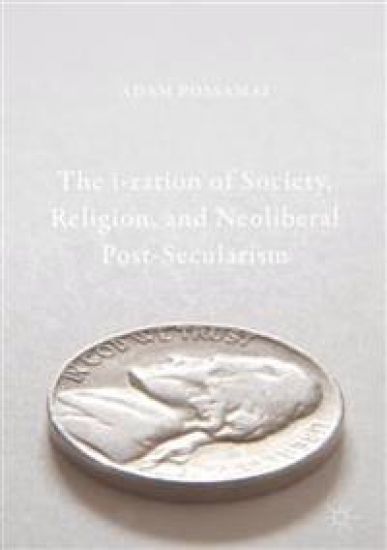
The i-zation of Society, Religion, and Neoliberal Post-Secularism
This book explores the elective affinity of religion and post-secularism with neoliberalism. With the help of digital capitalism, neoliberalism dominates, more and more, all aspects of life, and religion is not left unaffected. While some faith groups are embracing this hegemony, and others are simply following the signs of the times, changes have been so significant that religion is no longer what it used to be. Linking theories from Fredric Jameson and George Ritzer, this book presents the argument that our present society is going through a process of i-zation in which (1) capitalism dominates not only our outer, social lives (through, for example, global capitalism) but also our inner, personal lives, through its expansion in the digital world, facilitated by various i-technology applications; (2) the McDonaldization process has now been normalized; and (3) religiosity has been standardized. Reviewing the new inequalities present in this i-society, the book considers their impact on Jurgen Habermas’s project of post-secularism, and appraises the roles that various religions may have in supporting and/or countering this process. It concludes by arguing that Habermas’s post-secular project will occur but that, paradoxically, the religious message(s) will be instrumentalized for capitalist purposes.
Sociology of Exorcism in Late Modernity

Sociology of Exorcism in Late Modernity

Giuseppe Giordan; Adam Possamai

Springer International Publishing AG
2018
sidottu
This book provides a sociological understanding of the phenomenon of exorcism and an analysis of the reasons for its contemporary re-emergence and impact on various communities. It argues that exorcism has become a religious commodity with the potential to strengthen a religion’s attraction to adherents, whilst also ensuring its hold. It shows that due to intense competition between religious groups in our multi-faith societies, religious groups are now competing for authority over the supernatural by ‘branding’ their particular type of exorcism ritual in order to validate the strength of their own belief system. Sociology of Exorcism in Late Modernity features a detailed case-study of a Catholic exorcist in the south of Europe who dealt with more than 1,000 cases during a decade of work.
The i-zation of Society, Religion, and Neoliberal Post-Secularism
This book explores the elective affinity of religion and post-secularism with neoliberalism. With the help of digital capitalism, neoliberalism dominates, more and more, all aspects of life, and religion is not left unaffected. While some faith groups are embracing this hegemony, and others are simply following the signs of the times, changes have been so significant that religion is no longer what it used to be. Linking theories from Fredric Jameson and George Ritzer, this book presents the argument that our present society is going through a process of i-zation in which (1) capitalism dominates not only our outer, social lives (through, for example, global capitalism) but also our inner, personal lives, through its expansion in the digital world, facilitated by various i-technology applications; (2) the McDonaldization process has now been normalized; and (3) religiosity has been standardized. Reviewing the new inequalities present in this i-society, the book considers their impact on Jurgen Habermas’s project of post-secularism, and appraises the roles that various religions may have in supporting and/or countering this process. It concludes by arguing that Habermas’s post-secular project will occur but that, paradoxically, the religious message(s) will be instrumentalized for capitalist purposes.
Religious Change and Indigenous Peoples

Religious Change and Indigenous Peoples

Helena Onnudottir; Adam Possamai

Ashgate Publishing Limited
2013
sidottu
Exploring religious and spiritual changes which have been taking place among Indigenous populations in Australia and New Zealand, this book focuses on important changes in religious affiliation in census data over the last 15 years. Drawing on both local social and political debates, while contextualising the discussion in wider global debates about changing religious identities, especially the growth of Islam, the authors present a critical analysis of the persistent images and discourses on Aboriginal religions and spirituality. This book takes a comparative approach to other Indigenous and minority groups to explore contemporary changes in religious affiliation which have raised questions about resistance to modernity, challenges to the nation state and/or rejection of Christianity or Islam. Helena Onnudottir, Adam Posssamai and Bryan Turner offer a critical analysis to on-going public, political and sociological debates about religious conversion (especially to Islam) and changing religious affiliations (including an increase in the number of people who claim 'no religion') among Indigenous populations. This book also offers a major contribution to the growing debate about conversion to Islam among Australian Aborigines, Maoris and Pacific peoples.
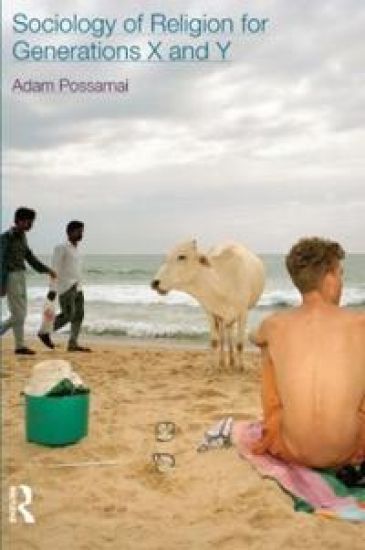
Sociology of Religion for Generations X and Y

Sociology of Religion for Generations X and Y

Adam Possamai

Acumen Publishing Ltd
2009
nidottu
Generations X and Y are plugged into the contemporary world of consumption, popular culture, and the internet. These generations treat knowledge and belief as a more flexible concept, often focusing on the practical rather than the theoretical and often drawing on conflicting sources in both popular and cyber culture. Their approach to religious belief and practice requires a new way of studying the sociology of religion. 'Sociology of Religion for Generations X and Y' examines key world religions - Buddhism, Christianity and Islam - as well as newer religious groups, such as Scientology, New Age, Witchcraft and online communities such as Jediism and Matrixism. The book covers a range of key concepts: secularisation and modernisation, re-enchantment, the 'McDonaldisation' of society, and the easternisation of the west. Each chapter opens with a case study from popular culture or the internet which takes the reader to the heart of the topic being discussed. Employing both classical sociological theory and contemporary critical theory, 'Sociology of Religion for Generations X and Y' explains where contemporary religion and spirituality are coming from, where they are now, and where they are going.
Sociology of Religion for Generations X and Y

Sociology of Religion for Generations X and Y

Adam Possamai

Equinox Publishing Ltd
2009
sidottu
Generations X and Y are plugged into the contemporary world of consumption, popular culture, and the internet. These generations treat knowledge and belief as a more flexible concept, often focusing on the practical rather than the theoretical and often drawing on conflicting sources in both popular and cyber culture. Their approach to religious belief and practice requires a new way of studying the sociology of religion. 'Sociology of Religion for Generations X and Y' examines key world religions - Buddhism, Christianity and Islam - as well as newer religious groups, such as Scientology, New Age, Witchcraft and online communities such as Jediism and Matrixism. The book covers a range of key concepts: secularisation and modernisation, re-enchantment, the 'McDonaldisation' of society, and the easternisation of the west. Each chapter opens with a case study from popular culture or the internet which takes the reader to the heart of the topic being discussed. Employing both classical sociological theory and contemporary critical theory, 'Sociology of Religion for Generations X and Y' explains where contemporary religion and spirituality are coming from, where they are now, and where they are going.
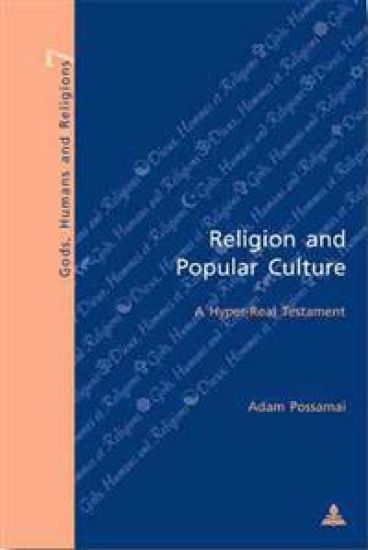
Religion and Popular Culture

Religion and Popular Culture

Adam Possamai

European Interuniversity Press
2007
nidottu
Popular culture can no longer be exclusively seen as a source of escapism. It can amuse, entertain, instruct, and relax people, but what if it provides inspiration for religion? The Church of All Worlds, the Church of Satan and Jediism from the Star Wars series are but three examples of new religious groups that have been greatly inspired by popular culture to (re)create a religious message. These are hyper-real religions, that is a simulacrum of a religion partly created out of popular culture which provides inspiration for believers/consumers. These postmodern expressions of religion are likely to be consumed and individualised, and thus have more relevance to the self than to a community and/or congregation. On the other hand, religious fundamentalist groups tend, at times, to resist this synergy between popular culture and religion, and at other times, re-appropriate popular culture to promote their own religion. Examples of this re-appropriation are Christian super-hero comics and role playing games, Bible-based PC games, and 'White Metal' music. To explore these new phenomena, this book views itself as the 'hyper-real testament' of these new religious phenomena by addressing the theories, among many others, of Baudrillard, Jameson and Lipovetsky, and by exploring the use of fictions such as those from Harry Potter, The Matrix, Star Trek, Buffy and The Lord of the Rings.
In Search of New Age Spiritualities

In Search of New Age Spiritualities

Adam Possamai

Ashgate Publishing Limited
2005
sidottu
The search for an adequate understanding of the New Age phenomenon is fraught with difficulties when examined within the perspectives of sociology of religion which have shed light on religion in modernity. New Agers cannot be located easily in the secularisation narrative; they move through fluid networks rather than settled collectivities; they assemble personal syncretisms of belief, myth and practice rather than subscribe to codified doctrines and prescribed rituals. New Age is quickly found to be a label that is unacceptable to many of those designated as New Agers. This book advances our understanding of the so-called New Age phenomenon by analysing accounts of insiders' religious experience and orientations. This approach is brought to bear not only on the study of written documents relating to New Age and its putative antecedents, but on the analysis of in-depth interviews with thirty-five spiritual actors.