Kirjojen hintavertailu – 12 859 818 kirjaa ja 27 kauppaa

Kirjailija

Adam Roberts

Kirjat ja teokset yhdessä paikassa: 72 kirjaa, julkaisuja vuosilta 1993–2027, suosituimpiin kuuluu Resurrection Engines. Vertaile teosten hintoja ja tarkista saatavuus suomalaisista kirjakaupoista.

72 kirjaa

Kirjojen julkaisuvuodet: 1993–2027.

The History of Science Fiction

The History of Science Fiction

Adam Roberts

Palgrave Macmillan
2016
sidottu
This book is the definitive critical history of science fiction. The 2006 first edition of this work traced the development of the genre from Ancient Greece and the European Reformation through to the end of the 20th century. This new 2nd edition has been revised thoroughly and very significantly expanded. An all-new final chapter discusses 21st-century science fiction, and there is new material in every chapter: a wealth of new readings and original research. The author’s groundbreaking thesis that science fiction is born out of the 17th-century Reformation is here bolstered with a wide range of new supporting material and many hundreds of 17th- and 18th-century science fiction texts, some of which have never been discussed before. The account of 19th-century science fiction has been expanded, and the various chapters tracing the twentieth-century bring in more writing by women, and science fiction in other media including cinema, TV, comics, fan-culture and other modes.

The History of Science Fiction

The History of Science Fiction

Adam Roberts

Palgrave Macmillan
2016
nidottu

Halvin toimitettuna 32,10 €

This book is the definitive critical history of science fiction. The 2006 first edition of this work traced the development of the genre from Ancient Greece and the European Reformation through to the end of the 20th century. This new 2nd edition has been revised thoroughly and very significantly expanded. An all-new final chapter discusses 21st-century science fiction, and there is new material in every chapter: a wealth of new readings and original research. The author’s groundbreaking thesis that science fiction is born out of the 17th-century Reformation is here bolstered with a wide range of new supporting material and many hundreds of 17th- and 18th-century science fiction texts, some of which have never been discussed before. The account of 19th-century science fiction has been expanded, and the various chapters tracing the twentieth-century bring in more writing by women, and science fiction in other media including cinema, TV, comics, fan-culture and other modes.
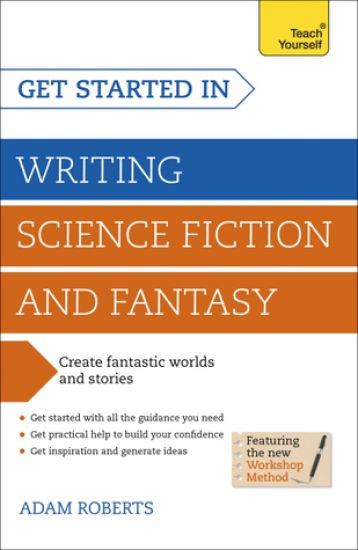
Get Started in Writing Science Fiction and Fantasy
YOUR COMPLETE GUIDE TO WRITING AWESOME AND AMAZING FICTION FROM ANOTHER DIMENSION. This is an authoritative and engaging introduction to writing science fiction and fantasy for the complete beginner. This book provides all the information, guidance, and advice you need to write great science fiction to captivate your readers. It will help you understand how the genre works, the big dos and don'ts - as well as giving you the inspiration and motivation you actually need to write. Written by a leading science fiction novelist and a Professor in Creative Writing at the University of London - you'll discover how to let your creativity flow, create incredible worlds, and get your novel finished. ABOUT THE SERIESThe Teach Yourself Creative Writing series helps aspiring authors tell their story. Covering a range of genres from science fiction and romantic novels, to illustrated children's books and comedy, this series is packed with advice, exercises and tips for unlocking creativity and improving your writing. And because we know how daunting the blank page can be, we set up the Just Write online community at tyjustwrite, for budding authors and successful writers to connect and share.
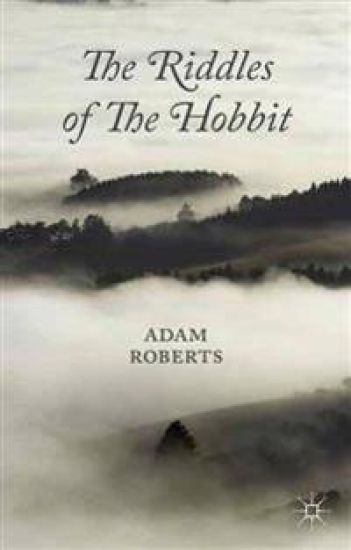
The Riddles of The Hobbit

The Riddles of The Hobbit

Adam Roberts

Palgrave Macmillan
2013
sidottu
Riddles are threaded through The Hobbit , and are key to Tolkien's creative imagination. The Riddles of The Hobbit situates this novel and the rest of Tolkien's writing in the context of Old English riddling culture, and more modern day examples; it sets out to solve the many riddles of the novel in original and often surprising ways.
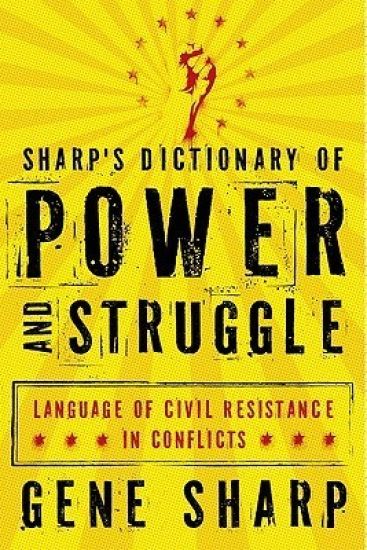
Sharp's Dictionary of Power and Struggle

Sharp's Dictionary of Power and Struggle

Gene Sharp; Adam Roberts

Oxford University Press Inc
2011
sidottu
From the 494 B. C. plebeians' march out of Rome to gain improved status, to Gandhi's nonviolent campaigns in India, to the liberation of Poland and the Baltic nations, and the revolutions in North Africa, nonviolent struggles have played pivotal roles in world events for centuries. Sharp's Dictionary of Power and Struggle is a groundbreaking reference work on this topic by the "godfather of nonviolent resistance." In nearly 1,000 entries, the Dictionary defines those ideologies, political systems, strategies, methods, and concepts that form the core of nonviolent action as it has occurred throughout history and across the globe, providing much-needed clarification of language that is often mired in confusion. Entries discuss everything from militarization to censorship, guerrilla theater, pacifism, secret agents, and protest songs. In addition, the dictionary features a foreword by Sir Adam Roberts, President of the British Academy; an introduction by Gene Sharp; an essay on power and realism; case studies of conflicts in Serbia and Tunisia; and a guide for further reading. Sharp's Dictionary of Power and Struggle is an invaluable resource for activists, educators and anyone else curious about nonviolent alternatives to both passivity and violent conflict. "Gene Sharp is perhaps the most influential proponent of nonviolent action alive."--The Progressive "Sharp has had broad influence on international events over the past two decades, helping to advance a global democratic awakening."--The Wall Street Journal "[Sharp's] work has served as the template for taking on authoritarian regimes from Burma to Belgrade."--The Christian Science Monitor
Sharp's Dictionary of Power and Struggle

Sharp's Dictionary of Power and Struggle

Gene Sharp; Adam Roberts

Oxford University Press Inc
2011
nidottu

Halvin toimitettuna 30,40 €

From the 494 B. C. plebeians' march out of Rome to gain improved status, to Gandhi's nonviolent campaigns in India, to the liberation of Poland and the Baltic nations, and the revolutions in North Africa, nonviolent struggles have played pivotal roles in world events for centuries. Sharp's Dictionary of Power and Struggle is a groundbreaking reference work on this topic by the "godfather of nonviolent resistance." In nearly 1,000 entries, the Dictionary defines those ideologies, political systems, strategies, methods, and concepts that form the core of nonviolent action as it has occurred throughout history and across the globe, providing much-needed clarification of language that is often mired in confusion. Entries discuss everything from militarization to censorship, guerrilla theater, pacifism, secret agents, and protest songs. In addition, the dictionary features a foreword by Sir Adam Roberts, President of the British Academy; an introduction by Gene Sharp; an essay on power and realism; case studies of conflicts in Serbia and Tunisia; and a guide for further reading. Sharp's Dictionary of Power and Struggle is an invaluable resource for activists, educators and anyone else curious about nonviolent alternatives to both passivity and violent conflict. "Gene Sharp is perhaps the most influential proponent of nonviolent action alive."--The Progressive "Sharp has had broad influence on international events over the past two decades, helping to advance a global democratic awakening."--The Wall Street Journal "[Sharp's] work has served as the template for taking on authoritarian regimes from Burma to Belgrade."--The Christian Science Monitor
Selective Security

Selective Security

Adam Roberts; Dominik Zaum

Routledge
2008
nidottu
In contrast to the common perception that the United Nations is, or should become, a system of collective security, this paper advances the proposition that the UN Security Council embodies a necessarily selective approach. Analysis of its record since 1945 suggests that the Council cannot address all security threats effectively. The reasons for this include not only the veto power of the five permanent members, but also the selectivity of all UN member states: their unwillingness to provide forces for peacekeeping or other purposes except on a case-by-case basis, and their reluctance to involve the Council in certain conflicts to which they are parties, or which they perceive as distant, complex and resistant to outside involvement. The Council’s selectivity is generally seen as a problem, even a threat to its legitimacy. Yet selectivity, which is rooted in prudence and in the UN Charter itself, has some virtues. Acknowledging the necessary limitations within which the Security Council operates, this paper evaluates the Council’s achievements in tackling the problem of war since 1945. In doing so, it sheds light on the division of labour among the Council, regional security bodies and states, and offers a pioneering contribution to public and governmental understanding of the UN’s past, present and future roles.
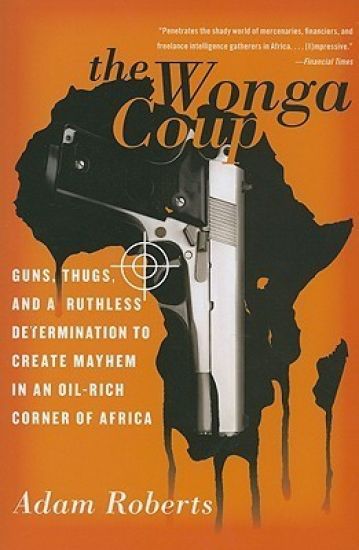
The Wonga Coup

The Wonga Coup

Adam Roberts

PublicAffairs,U.S.
2007
pokkari
Equatorial Guinea is a tiny country roughly the size of the state of Maryland. Humid, jungle covered, and rife with unpleasant diseases, natives call it Devil Island. Its president in 2004, Obiang Nguema, had been accused of cannibalism, belief in witchcraft, mass murder, billiondollar corruption, and general rule by terror. With so little to recommend it, why in March 2004 was Equatorial Guinea the target of a group of salty British, South African and Zimbabwean mercenaries, travelling on an American-registered ex-National Guard plane specially adapted for military purposes, that was originally flown to Africa by American pilots? The real motive lay deep below the ocean floor: oil. In The Dogs of War , Frederick Forsyth effectively described an attempt by mercenaries to overthrow the government of Equatorial Guinea , in 1972. And the chain of events surrounding the night of March 7, 2004, is a rare case of life imitating art,or, at least, life imitating a 1970s thriller,in almost uncanny detail. With a cast of characters worthy of a remake of Wild Geese and a plot as mazy as it was unlikely, The Wonga Coup is a tale of venality, overarching vanity and greed whose example speaks to the problems of the entire African continent.
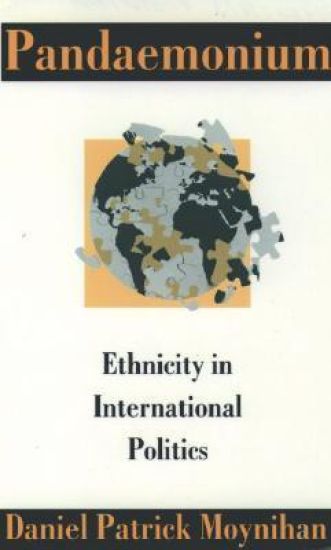
Pandaemonium

Pandaemonium

Daniel Patrick Moynihan; Adam Roberts

Oxford University Press
1993
sidottu
Responsible for the collapse of empires ranging from the Ottoman to the Soviet, self-determination has been one of the key factors in the history of the entire twentieth century. Surprisingly, scholars have been slow to appreciate the value of ethnicity as a way of understanding the key political developments of our times. In this challenging new book, Senator Daniel Patrick Moynihan draws on a rich and diverse fund of historical and contemporary examples to trace the history and illustrate the considerable predictive powers of ethnic studies. In particular, he shows how ethnicity confounded Marx's hopes for an international proletariat and reveals how an inability to grasp the importance of ethnic diversity left the West unprepared for the disintegration of the Communist bloc. About the author: Daniel Patrick Moynihan has been been the senior US Senator from New York since 1976 and is the only man in American history to have served in the cabinet or sub-cabinet of four successive presidents. He is also a highly distinguished academic, having taught at Harvard, Yale, Columbia, Syracuse, Cornell, and New York Universities and been lauded with an astonishing 55 honorary degrees.