
Kirjojen hintavertailu – 12 875 466 kirjaa ja 26 kauppaa

Kirjailija

Adam Rostis

Kirjat ja teokset yhdessä paikassa: 2 kirjaa, julkaisuja vuosilta 2016–2020, suosituimpiin kuuluu Organizing Disaster. Vertaile teosten hintoja ja tarkista saatavuus suomalaisista kirjakaupoista.

2 kirjaa

Kirjojen julkaisuvuodet: 2016–2020.

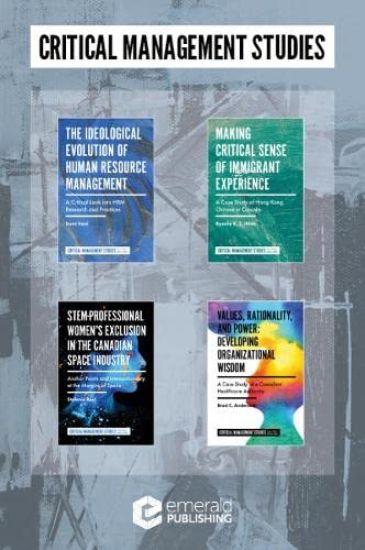
Critical Management Studies Book Set (2016-2019)

Critical Management Studies Book Set (2016-2019)

Adam Rostis; Tuomo Peltonen; Sami Itani; Rosalie K.S. Hilde; Stefanie Ruel; Brad C. Anderson

Emerald Publishing Limited
2020
muu
Management, from a critical perspective. Critical management Studies provide a assessment against prevailing social order and management and are designed to produce better managers and fairer organisations. This Series brings together informed critiques of management, business and organization, grounded originally in critical theory perspectives. Titles included in this set:Organizing Disaster:The Construction of Humanitarianism;Organization Theory:Critical and Philosophical Engagements;Contesting Institutional Hegemony in Today's Business Schools:Doctoral Students Speak Out;The Ideological Evolution of Human Resource Management:A Critical Look into HRM Research and Practices;Making Critical Sense of Immigrant Experience:A Case Study of Hong Kong Chinese in Canada;STEM-Professional Women's Exclusion in the Canadian Space Industry:Anchor Points and Intersectionality at the Margins of Space;Values, Rationality, and Power: Developing Organizational Wisdom:A Case Study of a Canadian Healthcare Authority;
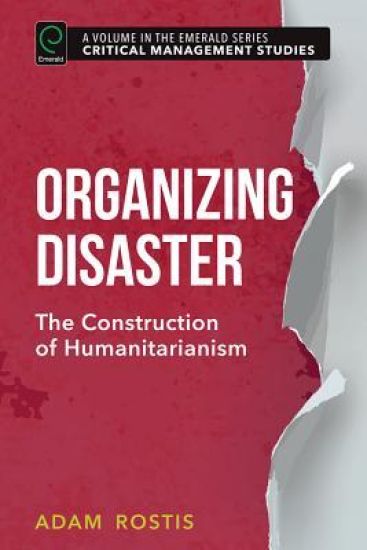
Organizing Disaster

Organizing Disaster

Adam Rostis

Emerald Publishing Limited
2016
sidottu
This book challenges the taken-for-granted status of organizations such as the Red Cross and Medecins Sans Frontieres by problematizing humanitarianism. In the experience of the Author working with such organizations, they are selective of the type of suffering that receives attention. Empirical studies of humanitarianism note that the suffering it purports to alleviate is increasing although aid is now highly organized, funded, and globalized. These observations inform the key question of the book: what purpose does the humanitarian organization serve? Rostis explores this question through a Foucauldian genealogy of humanitarianism focusing on the European colonial era and the Biafra War. The role of colonialism in the humanitarian organization is made apparent, and facilitates an interpretation of the results of his inquiry using postcolonial theory. This unique contribution to organization studies re-reads humanitarianism to show that humanitarian organizations essentially serve as global disciplinary institutions. It will be essential reading for scholars in political science, international sociology, organization studies and international affairs.