Kirjojen hintavertailu – 12 859 829 kirjaa ja 27 kauppaa

Kirjailija

Adel Helmy

Kirjat ja teokset yhdessä paikassa: 3 kirjaa, julkaisuja vuosilta 2019–2025, suosituimpiin kuuluu Life After a Rare Brain Tumour and Supplementary Motor Area Syndrome. Vertaile teosten hintoja ja tarkista saatavuus suomalaisista kirjakaupoista.

3 kirjaa

Kirjojen julkaisuvuodet: 2019–2025.

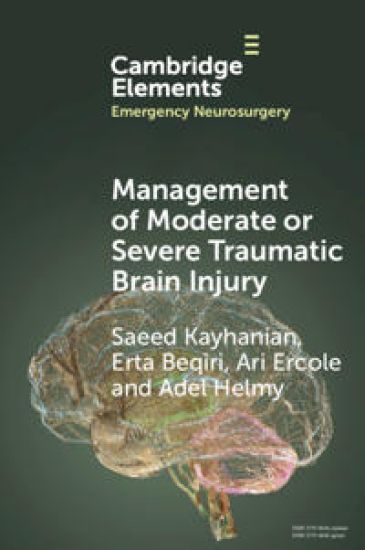
Management of Moderate or Severe Traumatic Brain Injury

Management of Moderate or Severe Traumatic Brain Injury

Saeed Kayhanian; Erta Beqiri; Ari Ercole; Adel Helmy

Cambridge University Press
2025
pokkari
The management of patients with moderate and severe traumatic brain injury (TBI) is centred on the intensive care management to limit the extent of secondary injury to the brain, following the primary trauma. This management aims to optimise the homeostatic environment of the brain after injury and can be guided by multi-modality monitoring, including intracranial pressure (ICP) monitoring. This management often follows a tiered approach to introducing more aggressive interventions to correct physiology, based on evidence for ongoing secondary injury, such as raised ICP. The balance between risk and benefit for these interventions for individual patients is difficult, particularly in the absence of high quality randomised trials for many interventions in this area. In this Element, the authors outline both the approach to intensive care management of moderate and severe TBI, as well as the evidence base available for the interventions discussed.
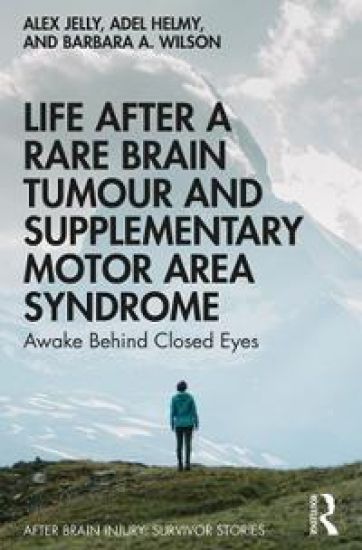
Life After a Rare Brain Tumour and Supplementary Motor Area Syndrome

Life After a Rare Brain Tumour and Supplementary Motor Area Syndrome

Alex Jelly; Adel Helmy; Barbara A. Wilson

Routledge
2019
nidottu
This book offers a personal insight into the experience of Alex Jelly, a professional fundraiser who developed a rare brain tumour, a papillary meningioma, which was successfully removed. She was left with Supplementary Motor Area Syndrome and associated problems including motor and speech impairments and a temporary psychosis. Discussing Alex’s struggles and triumphs throughout her rehabilitation, this book offers an honest account of her journey from diagnosis to recovery. Part I introduces Alex’s early life and employment, symptom onset and diagnosis, treatment and rehabilitation. Part II presents her neurosurgeon, Adel Helmy, and a clinical neuropsychologist, Barbara A. Wilson. Adel provides a medical context by explaining Alex’s successful surgery and her post-operative experience. Finally, Barbara concludes with a comprehensive view of Alex’s recovery and gives a voice to the therapists and psychologists who worked with Alex throughout her in and outpatient rehabilitation journey. This book provides support, understanding and hope for patients who have suffered a brain tumour, and their families. It is valuable reading for any professional involved in neurorehabilitation, studemts of clinical neuropsychology and those touched by brain injury.
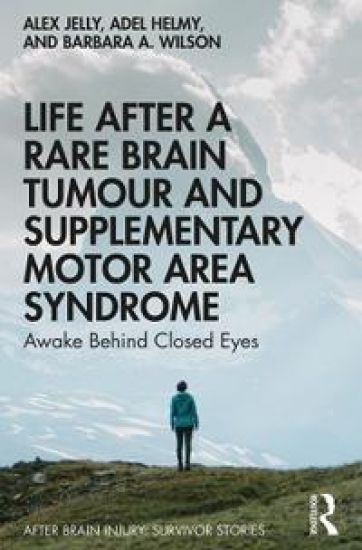
Life After a Rare Brain Tumour and Supplementary Motor Area Syndrome

Life After a Rare Brain Tumour and Supplementary Motor Area Syndrome

Alex Jelly; Adel Helmy; Barbara A. Wilson

Routledge
2019
sidottu
This book offers a personal insight into the experience of Alex Jelly, a professional fundraiser who developed a rare brain tumour, a papillary meningioma, which was successfully removed. She was left with Supplementary Motor Area Syndrome and associated problems including motor and speech impairments and a temporary psychosis. Discussing Alex’s struggles and triumphs throughout her rehabilitation, this book offers an honest account of her journey from diagnosis to recovery. Part I introduces Alex’s early life and employment, symptom onset and diagnosis, treatment and rehabilitation. Part II presents her neurosurgeon, Adel Helmy, and a clinical neuropsychologist, Barbara A. Wilson. Adel provides a medical context by explaining Alex’s successful surgery and her post-operative experience. Finally, Barbara concludes with a comprehensive view of Alex’s recovery and gives a voice to the therapists and psychologists who worked with Alex throughout her in and outpatient rehabilitation journey. This book provides support, understanding and hope for patients who have suffered a brain tumour, and their families. It is valuable reading for any professional involved in neurorehabilitation, studemts of clinical neuropsychology and those touched by brain injury.