Kirjojen hintavertailu – 12 903 725 kirjaa ja 27 kauppaa

Kirjailija

Adnan Naseemullah

Kirjat ja teokset yhdessä paikassa: 6 kirjaa, julkaisuja vuosilta 2016–2024, suosituimpiin kuuluu Patchwork States. Vertaile teosten hintoja ja tarkista saatavuus suomalaisista kirjakaupoista.

6 kirjaa

Kirjojen julkaisuvuodet: 2016–2024.

Righteous Demagogues

Righteous Demagogues

Adnan Naseemullah; Pradeep Chhibber

OXFORD UNIVERSITY PRESS INC
2024
nidottu
Righteous Demagogues explores the causes, dynamics, and consequences of populist politics in South Asia and beyond. It argues that populist mobilizations are rooted in crises of representation, and populism is a symptom not an underlying cause of democratic malaise. Populist leaders, in framing their appeals, evoke the moral contract--that states are obligated to redress certain types of inequality--and promise its restoration, in ways that resonate with voters across lines of partisanship and social divisions, leading party system change. Depending on how broadly populist appeals resonate, different types of populism emerge, with consequences ranging from the rejection of populists to varying forms of democratic backsliding. The book examines the dynamics of populist politics primarily through four cases in South Asia. In the late 1960s, Indira Gandhi in India and Zulfiqar Bhutto in Pakistan effected reordering populist mobilizations on the left, against the de facto oligarchic regimes of the Congress party and the Ayub Khan government, mobilizing workers, peasants, and the nascent middle classes against widespread exclusion and inequity. In the mid-2010s, Narendra Modi and Imran Khan effected additive populist mobilizations of the right, mobilizing diverse middle classes across India and Pakistan respectively against perceived corruption and inequity. The book applies the framework and typology to explain the causes, dynamics, and consequences of populism in Latin America, Europe and the United States.

Righteous Demagogues

Righteous Demagogues

Adnan Naseemullah; Pradeep Chhibber

OXFORD UNIVERSITY PRESS INC
2024
sidottu
Righteous Demagogues explores the causes, dynamics, and consequences of populist politics in South Asia and beyond. It argues that populist mobilizations are rooted in crises of representation, and populism is a symptom not an underlying cause of democratic malaise. Populist leaders, in framing their appeals, evoke the moral contract--that states are obligated to redress certain types of inequality--and promise its restoration, in ways that resonate with voters across lines of partisanship and social divisions, leading party system change. Depending on how broadly populist appeals resonate, different types of populism emerge, with consequences ranging from the rejection of populists to varying forms of democratic backsliding. The book examines the dynamics of populist politics primarily through four cases in South Asia. In the late 1960s, Indira Gandhi in India and Zulfiqar Bhutto in Pakistan effected reordering populist mobilizations on the left, against the de facto oligarchic regimes of the Congress party and the Ayub Khan government, mobilizing workers, peasants, and the nascent middle classes against widespread exclusion and inequity. In the mid-2010s, Narendra Modi and Imran Khan effected additive populist mobilizations of the right, mobilizing diverse middle classes across India and Pakistan respectively against perceived corruption and inequity. The book applies the framework and typology to explain the causes, dynamics, and consequences of populism in Latin America, Europe and the United States.

Patchwork States

Patchwork States

Adnan Naseemullah

Cambridge University Press
2022
sidottu
Patchwork States argues that the subnational politics of conflict and competition in South Asian countries have roots in the history of uneven state formation under colonial rule. Colonial India contained a complex landscape of different governance arrangements and state-society relations. After independence, postcolonial governments revised colonial governance institutions, but only with partial success. The book argues that contemporary India and Pakistan can be usefully understood as patchwork states, with enduring differences in state capacity and state-society relations within their national territories. The complex nature of territorial governance in these countries shapes patterns of political violence, including riots and rebellions, as well as variations in electoral competition and development across the political geography of the Indian subcontinent. By bridging past and present, this book can transform our understanding of both the legacies of colonial rule and the historical roots of violent politics, in South Asia and beyond.
Patchwork States

Patchwork States

Adnan Naseemullah

Cambridge University Press
2022
pokkari
Patchwork States argues that the subnational politics of conflict and competition in South Asian countries have roots in the history of uneven state formation under colonial rule. Colonial India contained a complex landscape of different governance arrangements and state-society relations. After independence, postcolonial governments revised colonial governance institutions, but only with partial success. The book argues that contemporary India and Pakistan can be usefully understood as patchwork states, with enduring differences in state capacity and state-society relations within their national territories. The complex nature of territorial governance in these countries shapes patterns of political violence, including riots and rebellions, as well as variations in electoral competition and development across the political geography of the Indian subcontinent. By bridging past and present, this book can transform our understanding of both the legacies of colonial rule and the historical roots of violent politics, in South Asia and beyond.
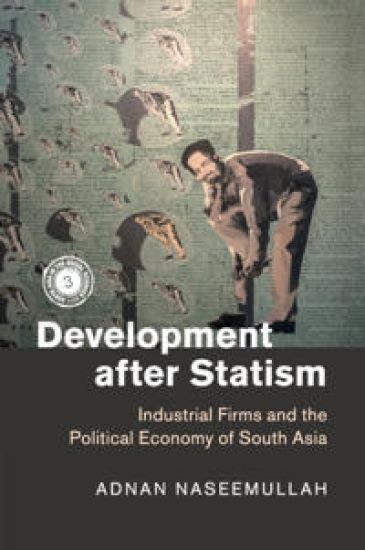
Development after Statism

Development after Statism

Adnan Naseemullah

Cambridge University Press
2019
pokkari
How can industrial production be managed without the guidance of the state? Adnan Naseemullah discusses industrial development in a new era of drastically constricted state capacity, from the perspective of the manufacturing firm. India's manufacturing economy has been growing after state promotion has receded. How, then, does Indian manufacturing develop in this context? Naseemullah argues that Indian firms must create production structures themselves, investing in networks of capital and labor without signals from above. Depending on manufacturers' backgrounds, these relationships are based either on formal rules or through personal ties, creating a patchwork of institutions that crosscut region and sector. As a result, many firms have been able to regain some certainty for investment, but at the cost of national coherence and the possibility of broader transformation. As a mirror case, this book also explores Pakistan's industrial trajectories, in which similar dynamics suggest the broader applicability of this framework.
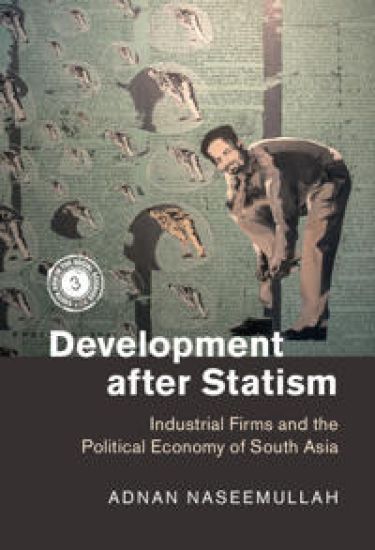
Development after Statism

Development after Statism

Adnan Naseemullah

Cambridge University Press
2016
sidottu
How can industrial production be managed without the guidance of the state? Adnan Naseemullah discusses industrial development in a new era of drastically constricted state capacity, from the perspective of the manufacturing firm. India's manufacturing economy has been growing after state promotion has receded. How, then, does Indian manufacturing develop in this context? Naseemullah argues that Indian firms must create production structures themselves, investing in networks of capital and labor without signals from above. Depending on manufacturers' backgrounds, these relationships are based either on formal rules or through personal ties, creating a patchwork of institutions that crosscut region and sector. As a result, many firms have been able to regain some certainty for investment, but at the cost of national coherence and the possibility of broader transformation. As a mirror case, this book also explores Pakistan's industrial trajectories, in which similar dynamics suggest the broader applicability of this framework.