Kirjojen hintavertailu – 12 859 828 kirjaa ja 27 kauppaa

Kirjailija

Adolph L. Reed

Kirjat ja teokset yhdessä paikassa: 7 kirjaa, julkaisuja vuosilta 1986–2025, suosituimpiin kuuluu The South. Vertaile teosten hintoja ja tarkista saatavuus suomalaisista kirjakaupoista.

7 kirjaa

Kirjojen julkaisuvuodet: 1986–2025.

The South

The South

Adolph L. Reed; Barbara J. Fields

Verso Books
2025
nidottu
The last generation of Americans with a living memory of Jim Crow will soon disappear. They leave behind a collective memory of segregation shaped increasingly by its horrors and heroic defeat but not a nuanced understanding of everyday life in Jim Crow America. In The South, Adolph L. Reed Jr. - New Orleanian, political scientist, and, according to Cornel West, "the greatest democratic theorist of his generation" - takes up the urgent task of recounting the granular realities of life in the last decades of the Jim Crow South. Reed illuminates the multifaceted structures of the segregationist order. Thanks to his personal history and political acumen, we see America's apartheid system from the ground up, not just its legal framework or systems of power, but the way these systems structured the day-to-day interactions, lives, and ambitions of ordinary working people. The South unravels the personal and political dimensions of the Jim Crow order, revealing the sources and objectives of this unstable regime, its contradictions and weakness, and the social order that would replace it. The South is more than a memoir or a history. Filled with analysis and fascinating firsthand accounts, this book is required reading for anyone seeking a deeper understanding of America's second peculiar institution and the future created in its wake.
The South

The South

Adolph L. Reed; Barbara J. Fields

Verso Books
2022
sidottu
The last generation of Americans with a living memory of Jim Crow will soon disappear. They leave behind a collective memory of segregation shaped increasingly by its horrors and heroic defeat but not a nuanced understanding of everyday life in Jim Crow America. In The South, Adolph L. Reed Jr. - New Orleanian, political scientist, and according to Cornel West, "the greatest democratic theorist of his generation" - takes up the urgent task of recounting the granular realities of life in the last decades of the Jim Crow South. Reed illuminates the multifaceted structures of the segregationist order. Through his personal history and political acumen, we see America's apartheid system from the ground up, not just its legal framework or systems of power, but the way these systems structured the day-to-day interactions, lives, and ambitions of ordinary working people. The South unravels the personal and political dimensions of the Jim Crow order, revealing the sources and objectives of this unstable regime, its contradictions and precarity, and the social order that would replace it. The South is more than a memoir or a history. Filled with analysis and fascinating firsthand accounts of the operation of the system that codified and enshrined racial inequality, this book is required reading for anyone seeking a deeper understanding of America's second peculiar institution the future created in its wake. With a foreword from Barbara Fields, co-author of the acclaimed Racecraft.
Crashing the Party

Crashing the Party

Heather Gautney; Adolph L. Reed

Verso Books
2018
nidottu
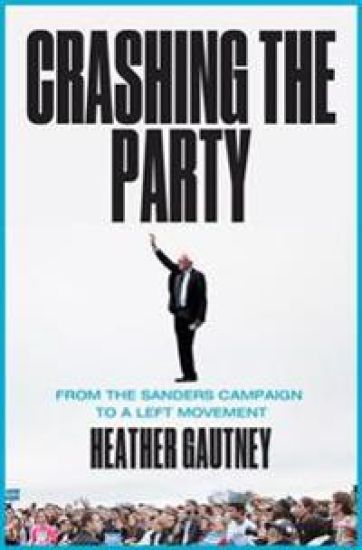
Senator Bernie Sanders won 13 million votes and a majority of young voters in the 2016 Democratic primary, giving a consensus unbeatable party favorite, Hillary Clinton, a shockingly close challenge. He emerged from the presidential election as the most popular politician in the US, despite being a 75-year-old self-professed "democratic socialist." What lessons can be drawn from this surprising but-in the end-losing campaign, and what to make of the direction the Sanders movement has gone since the election? Vermont native Heather Gautney is a senior policy advisor to Bernie Sanders in his Washington, DC office and was a senior researcher on his presidential campaign. The author and editor of several books on social movements and American politics, she brings her scholarly expertise and left politics to bear on the scenes and conflicts she witnessed from inside the campaign and inside the Beltway. This is both an insider's sympathetic view of the Sanders phenomenon and a skeptical left scholar's view of its limitations. In reviewing what enabled Sanders to reach out to an unprecedented number of people with a socialist message, she draws lessons about the prospects and perils of building a leftist movement in the United States. Gautney's reflections on the role that race and class played in this election cycle and analysis of the prospects and perils of the Democratic Party will advance the passionate debate over how to build a progressive opposition to Trump and a lasting left movement in America.
Class Notes: Posing as Politics and Other Thoughts on the American Scene
The classic and deeply prescient collection that explores the multifaceted nature of race, class, and identity in America, from one of our most insightful and iconoclastic intellectuals Hailed by Publishers Weekly for its "forceful" and "bracing opinions on race and politics," Class Notes is a collection of critic Adolph Reed Jr.'s clearest thinking on matters of race, class, and other American dilemmas. With barbed wit, Reed takes aim against the solipsistic, individualistic approaches of identity politics, and in favor of class-based political interpretation and action. Reed leaves no topic untouched, from the myth that there exists a particular kind of "Black Anti-Semitism," to the grift perpetuated by commentators who claim to speak for groups solely based on their identity categories. Adolph Reed Jr. remains one of our most controversial and necessary interpreters of American politics. These essays illustrate why Reed is "the smartest person of any race, class, or gender writing on race, class, and gender" (Katha Pollitt). Class Notes is a classic text that signposts a path for the Left-out of essentialist gridlock and into meaningful, goal-oriented mass politics.
W.E.B. DuBois and American Political Thought

W.E.B. DuBois and American Political Thought

Adolph L. Reed

Oxford University Press Inc
1999
nidottu
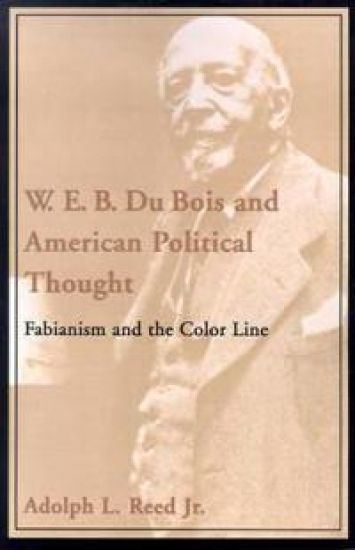
This groundbreaking study of W. E. B. DuBois simultaneously analyses the political thought of one of the leading black American intellectuals and activists of this century, provides a model for the study of the history of political thought, and by examining recent DuBois scholarship, offers a penetrating interpretation of contemporary black thought. The book departs from existing DuBois scholarship by locating the sources of DuBois's thinking in the cauldron of reform-oriented American intellectual life at the end of the nineteenth century, and follows through the course of his career the ways that his early commitments persisted in his basic views regarding such pivotal issues as the relation of science and progress, social stratification among black Americans and in general, and rational social organization. While DuBois's substantive political programmes changed over time, for example in his support for defensive organizing behind the walls of segregation during the 1930s and his rapprochement with the Communist left in his last two decades, Reed argues that those changes do not reflect fundamental shifts in the structure of his thinking but were pragmatic responses to concrete political circumstances. When situated within their own constitutive contexts, these changing responses reveal their compatibility, if not coherence, with DuBois's basic, essentially Fabian socialist world view as first elaborated in The Philadelphia Negro. W. E. B. DuBois and American Political Thought's interpretation of DuBois is also an argument about the fundamental connections between Afro-American political debate and broader patterns of political discourse. This argument is linked to a path-breaking critique of dominant tendencies in Afro-American intellectual historiography and their ideological foundations, as well as to a sophisticated argument in support of an alternative, historically generativist approach to the study of the history of political thought.
W.E.B. DuBois and American Political Thought

W.E.B. DuBois and American Political Thought

Adolph L. Reed

Oxford University Press Inc
1997
sidottu
This groundbreaking study of W. E. B. DuBois simultaneously analyses the political thought of one of the leading black American intellectuals and activists of this century, provides a model for the study of the history of political thought, and by examining recent DuBois scholarship, offers a penetrating interpretation of contemporary black thought. The book departs from existing DuBois scholarship by locating the sources of DuBois's thinking in the cauldron of reform-oriented American intellectual life at the end of the nineteenth century, and follows through the course of his career the ways that his early commitments persisted in his basic views regarding such pivotal issues as the relation of science and progress, social stratification among black Americans and in general, and rational social organization. While DuBois's substantive political programmes changed over time, for example in his support for defensive organizing behind the walls of segregation during the 1930s and his rapprochement with the Communist left in his last two decades, Reed argues that those changes do not reflect fundamental shifts in the structure of his thinking but were pragmatic responses to concrete political circumstances. When situated within their own constitutive contexts, these changing responses reveal their compatibility, if not coherence, with DuBois's basic, essentially Fabian socialist world view as first elaborated in The Philadelphia Negro. W. E. B. DuBois and American Political Thought's interpretation of DuBois is also an argument about the fundamental connections between Afro-American political debate and broader patterns of political discourse. This argument is linked to a path-breaking critique of dominant tendencies in Afro-American intellectual historiography and their ideological foundations, as well as to a sophisticated argument in support of an alternative, historically generativist approach to the study of the history of political thought.
The Jesse Jackson Phenomenon

The Jesse Jackson Phenomenon

Adolph L. Reed

Yale University Press
1986
pokkari
How did Jesse Jackson – who had never run in an election and had only recently registered to vote – become the black candidate for the 1984 Democratic presidential nomination? What does his campaign show about the dynamics that drive Afro-American political activity? In the first book to analyze the Jackson campaign, a black scholar who has worked extensively with local black political organizations argues that the Jackson Candidacy revealed tensions within Afro-American politics and hurt rather than helped the development of a viable black political movement. Reed demonstrates that issues such as the competition for top leadership roles among Afro-Americans, the deepening income and class stratification within the black community, and the disintegration of the Democratic coalition that has in the past supported black aspirations are all problems facing Afro-American politics today. He studies these areas of contention in several ways. First, he explores the rift between black elected politicians and black politicians who, like Jackson, come from the “protest politics” of the 1960s. Since the black church is the source for many of the protest politicians, Reed critically reconstructs the role of the church in black politics and suggests that, contrary to prevailing views, the church in general has not been associated with emancipatory or progressive interests in the black community. Reed then discusses the relationship between Afro-Americans and the other constituents of the Democratic coalition, particularly the labor movement and organized Jewry, and he comments insightfully on the controversies that attended the Jackson campaign’s relationship with each of those groups. He also examines reactions of the mass media and the left to Jackson’s campaign, discovering both to be reluctant to apply the same standards to black political activity that are used to evaluate white political efforts. Reed concludes by proposing strategies for black political action: these include constructing a political counteroffensive to the retrenchment associated with Reaganism and cultivating a more creative discourse about politics within the black community.