
Kirjailija
Adrian David Cheok
Kirjat ja teokset yhdessä paikassa: 31 kirjaa, julkaisuja vuosilta 2010–2025, suosituimpiin kuuluu Mechanical Equipment Mechanism Design. Vertaile teosten hintoja ja tarkista saatavuus suomalaisista kirjakaupoista.
31 kirjaa
Kirjojen julkaisuvuodet: 2010–2025.
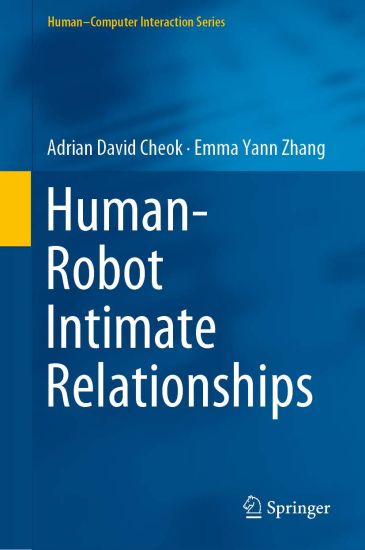
Human–Robot Intimate Relationships
Adrian David Cheok; Emma Yann Zhang
Springer International Publishing AG
2019
sidottu
The idea of humans falling in love with artificial beings is not a modern conception. Our relationship with artificial partners has come a long way since Pygmalion and his ivory lover. In recent years, there has been a strong upsurge of interest and discussions in the various aspects of intimate relationships between humans and artificial partners. This interest is evidenced by the increase in media coverage, TV documentaries and films on this topic, as well as the active research efforts within the academic community. This book provides a comprehensive collection and overview of the latest development in the field of intimate relationships between humans and artificial partners, in particular robots and virtual agents. It includes relevant research work undertaken by the authors, the latest advancements in technology and commercial products, and future predictions and insights from leading experts in the area. This book contains an in-depth discussion of the engineering, philosophical, psychological, ethical, and sociological implications of relationships with artificial companions. It also gives a glimpse of some future directions of artificial intelligence, human-computer love and sexual interaction, robotics engineering etc. It is a great resource for researchers and professionals working in these areas. The narrative style of the book also makes it an enjoyable and educational read for everyone.
Virtual Taste and Smell Technologies for Multisensory Internet and Virtual Reality
Adrian David Cheok; Kasun Karunanayaka
Springer Nature Switzerland AG
2019
nidottu
Currently, Internet and virtual reality communication is essentially audio-visual. The next important breakthrough of the Internet will be the communication and sharing of smell and taste experiences digitally. Audio-visual stimuli are frequency based, and they can be easily digitized and actuated. On the other hand, taste and smell stimuli are based on chemical molecules, therefore, they are not easy to digitize or actuate. To solve this problem, we are required to discover new digital actuation technologies for taste and smell. The authors of this book have experimented on developing digital actuation devices for several years. This book will provide a complete overview of the importance of digitizing taste and smell, prior works, proposed technologies by the authors, other state of the art research, advantages and limitations of the proposed methods, and future applications. We expect digital taste and smell technologies will revolutionize the field of multisensory augmented reality and open up new interaction possibilities in different disciplines such as Human Computer Interaction, Communication, and Augmented and Virtual Reality.

Decision support and strategic planning ontologies
Sasa Arsovski; Adrian David Cheok
Lap Lambert Academic Publishing
2018
nidottu
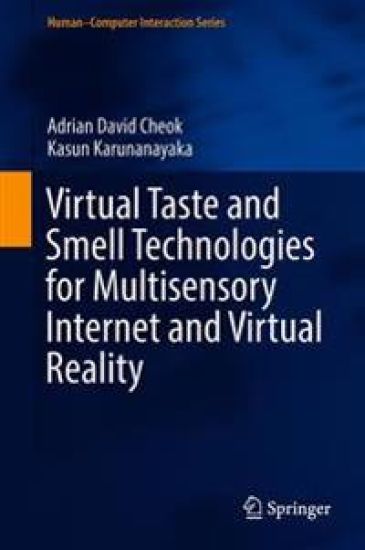
Virtual Taste and Smell Technologies for Multisensory Internet and Virtual Reality
Adrian David Cheok; Kasun Karunanayaka
Springer International Publishing AG
2018
sidottu
Currently, Internet and virtual reality communication is essentially audio-visual. The next important breakthrough of the Internet will be the communication and sharing of smell and taste experiences digitally. Audio-visual stimuli are frequency based, and they can be easily digitized and actuated. On the other hand, taste and smell stimuli are based on chemical molecules, therefore, they are not easy to digitize or actuate. To solve this problem, we are required to discover new digital actuation technologies for taste and smell. The authors of this book have experimented on developing digital actuation devices for several years. This book will provide a complete overview of the importance of digitizing taste and smell, prior works, proposed technologies by the authors, other state of the art research, advantages and limitations of the proposed methods, and future applications. We expect digital taste and smell technologies will revolutionize the field of multisensory augmented reality and open up new interaction possibilities in different disciplines such as Human Computer Interaction, Communication, and Augmented and Virtual Reality.
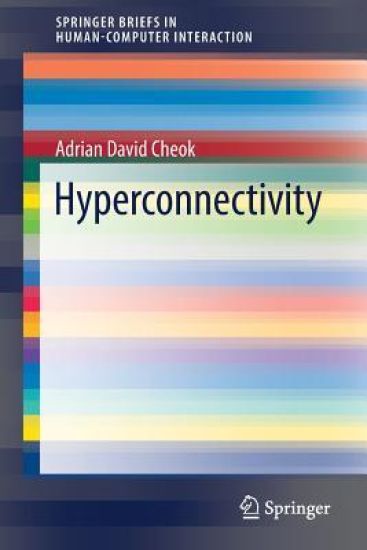
This book explores the emerging field of hyperconnectivity looking at technology and systems that allow person-to-person and person-to-machine communication in networked organizations and the social and economic impact of this society. The author begins by presenting literary culture and interaction, focusing on the development of the Poetry Mix-Up platform, before looking at electronic and magnetic user interfaces for multisensory experiences. He then offers insights into the controversial topic of human intimacy with robots, looking at recent developments like the Kissinger device amongst others. The author concludes by exploring the potential social impact of hyperconnectivity and its future applications. Hyperconnectivity is essential reading to anyone who wants to deepen their understanding of this emerging field especially researchers, designers and engineers who are interested in multi-platform communication, digital networks and HCI.
Art and Technology of Entertainment Computing and Communication
Adrian David Cheok
Springer London Ltd
2016
nidottu
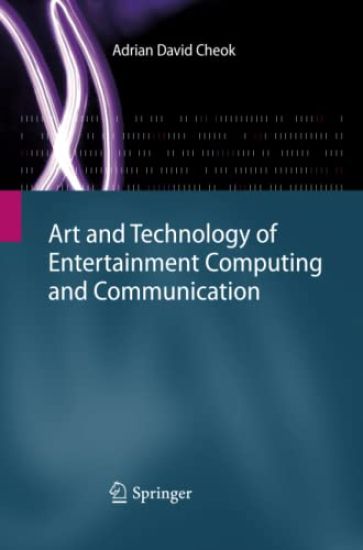
Art and Technology of Entertainment Computing and Communication takes a blue sky research perspective on the field of interactive media for entertainment computing. Adrian David Cheok argues that entertainment as an end-product is useful for interactive play, however it is also a powerful tool for learning and communication and it is also a key driver for the development of information technology. This book explores the future of entertainment technologies used for communication and describes quantum step research. It will inform and inspire readers to create their own radical inventions and innovations that are not incremental, but which break through ideas and non-obvious solutions. One of the main explorations is the examination of how new forms of computer interaction can lead to radical new forms of technology and art for entertainment computing. Art and Technology of Entertainment Computing and Communication is an informative and inspirational text for students and the next generation of researchers. It’s main aim is to provide information that will hopefully help change the world and society for the better, through new modes of entertainment and communication. Academics, researchers, engineers, game designers, and interaction designers, will find the content both interesting and valuable. Entertainment is the "engine" to inspire people and drive innovation in interactive digital media design. The pioneer of the field, Prof. Adrian David Cheok, takes you on an exciting tour of the future shaped by the Entertainment Technologies. Hiroshi ISHII, Muriel R. Cooper Professor of Media Arts and Sciences, MIT Media Laboratory.
Art and Technology of Entertainment Computing and Communication
Adrian David Cheok
Springer London Ltd
2010
sidottu
Art and Technology of Entertainment Computing and Communication takes a blue sky research perspective on the field of interactive media for entertainment computing. Adrian David Cheok argues that entertainment as an end-product is useful for interactive play, however it is also a powerful tool for learning and communication and it is also a key driver for the development of information technology. This book explores the future of entertainment technologies used for communication and describes quantum step research. It will inform and inspire readers to create their own radical inventions and innovations that are not incremental, but which break through ideas and non-obvious solutions. One of the main explorations is the examination of how new forms of computer interaction can lead to radical new forms of technology and art for entertainment computing. Art and Technology of Entertainment Computing and Communication is an informative and inspirational text for students and the next generation of researchers. It’s main aim is to provide information that will hopefully help change the world and society for the better, through new modes of entertainment and communication. Academics, researchers, engineers, game designers, and interaction designers, will find the content both interesting and valuable. Entertainment is the "engine" to inspire people and drive innovation in interactive digital media design. The pioneer of the field, Prof. Adrian David Cheok, takes you on an exciting tour of the future shaped by the Entertainment Technologies. Hiroshi ISHII, Muriel R. Cooper Professor of Media Arts and Sciences, MIT Media Laboratory.