Kirjailija
Adrian Furnham
Kirjat ja teokset yhdessä paikassa: 54 kirjaa, julkaisuja vuosilta 1981–2026, suosituimpiin kuuluu Psychology at Work. Vertaile teosten hintoja ja tarkista saatavuus suomalaisista kirjakaupoista.
54 kirjaa
Kirjojen julkaisuvuodet: 1981–2026.
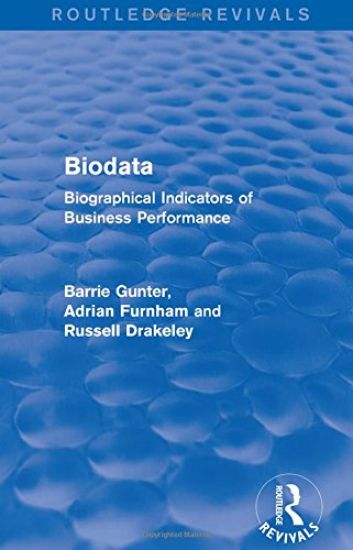
First published in 1993. This book is intended for managers and occupational psychologists involved in the selection and assessment of the workforce. It details the history and development of the use of biographical data for both recruitment and promotion of employees. Grounded in relevant research literature, it offers a comprehensive analysis of the advantages and disadvantages of biodata in different contexts. It also includes examples of applications and recommendations for use, as well as examples of questionnaires. Written by experts, it represents a wide-ranging review of the contemporary research in the field. This work will be of interest to students of business and psychology.

First published in 1991, this book represents the first wide-ranging review of young people’s understanding of the social world and the functioning of society. Taking a social cognitive view of adolescence, it focuses on the processes by which young people learn to understand other people’s thoughts, emotions, intentions and behaviour. Concentrating on the social world of politics, economics, work, gender and religion, the authors cover such issues as: politics and government; work and unemployment; law and legislative matters; religion; marriage and the family; social class; and racial and ethnic differences. This work will be of interest to students of sociology and psychology.
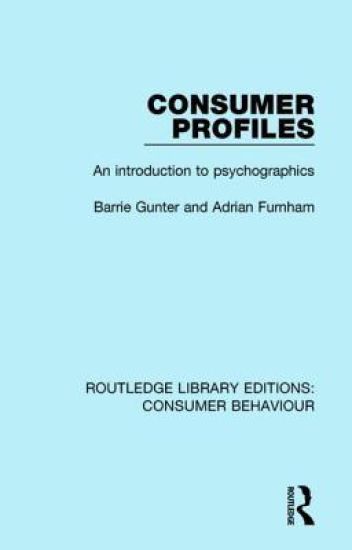
Psychographics have been developed in the field of market research as a way to relate consumer behaviour to market choice. This book, originally published in 1992, introduces the essential elements of psychographics. It shows how researchers go about defining consumer profiles and designing successful research programmes. It looks at the way they are applied in various consumer groups and uses case study material to focus on some specific products from cameras to pet food.
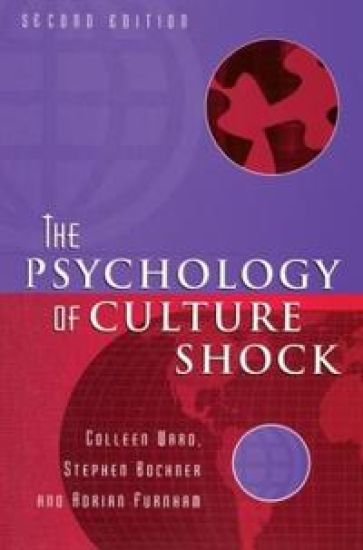
Crossing cultures can be a stimulating and rewarding adventure. It can also be a stressful and bewildering experience. This thoroughly revised and updated edition of Furnham and Bochner's classic Culture Shock (1986) examines the psychological and social processes involved in intercultural contact, including learning new culture-specific skills, managing stress and coping with an unfamiliar environment, changing cultural identities and enhancing intergroup relations. The book describes the ABCs of intercultural encounters, highlighting Affective, Behavioural and Cognitive components of cross-cultural experience. It incorporates both theoretical and applied perspectives on culture shock and a comprehensive review of empirical research on a variety of cross-cultural travellers, such as tourists, students, business travellers, immigrants and refugees. Minimising the adverse effects of culture shock, facilitating positive psychological outcomes and discussion of selection and training techniques for living and working abroad represent some of the practical issues covered. The Psychology of Culture Shock will prove an essential reference and textbook for courses within psychology, sociology and business training. It will also be a valuable resource for professionals working with culturally diverse populations and acculturating groups such as international students, immigrants or refugees.
Corporate Assessment, first published in 1993, looks at four types of company audit and provides a pragmatic, readable guide for managers. The authors show how assessment of a company in terms of its culture, climate, communications and customers can enhance management vision and lead to recommendations designed to improve employee satisfaction, motivation, loyalty and performance. Insight is provided into the kinds of measurement tools and assessment techniques that are available, and the authors offer recommendations for the use of these instruments, and how best to utilize the information they can produce. This book will not only be of interest to managers who need to assess their companies, but to students of business, organizational psychology, and human resource management.
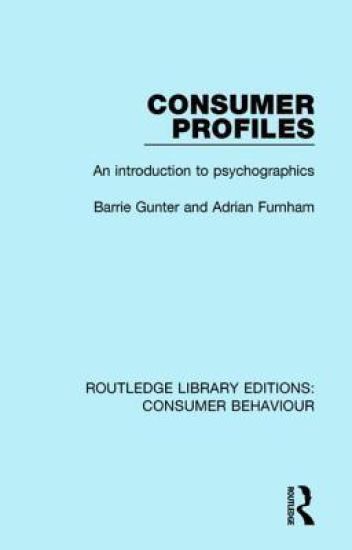
Psychographics have been developed in the field of market research as a way to relate consumer behaviour to market choice. This book, originally published in 1992, introduces the essential elements of psychographics. It shows how researchers go about defining consumer profiles and designing successful research programmes. It looks at the way they are applied in various consumer groups and uses case study material to focus on some specific products from cameras to pet food.
The Anatomy of Adolescence (Psychology Revivals)
Adrian Furnham; Barrie Gunter
Routledge
2014
nidottu
Originally published in 1989 this is a unique reference source to the social attitudes of British adolescents of the time. The authors, both experienced researchers, draw on a sample of over 2,000 adolescents from all over the British Isles, including Northern Ireland and the north of Scotland as well as the south of England and Wales. They provide one of the most comprehensive reviews of the 1980s, with the results summarized in tables supported by clear commentaries. The contents range widely over key issues of the time, covering attitudes to politics and government, crime and law enforcement, sex roles and race, religion and the paranormal, health and the environment, school, work and unemployment, and home entertainment media. Some of the book’s findings are unexpected: young people are surprisingly conservative about the role of men and women, for instance, yet they have radical ideas about certain institutions, like the monarchy. Altogether the book gives a clear and revealing snapshot of the attitudes of young Britons of the time.
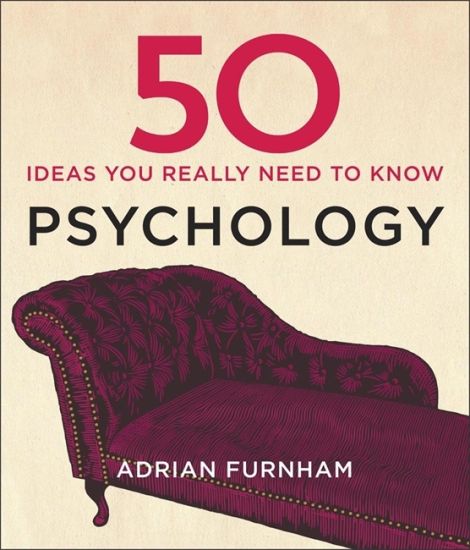
How different are men and women's brains? Does altruism really exist? Are our minds blank slates at birth? And do dreams reveal our unconscious desires? Psychology is everywhere in today's society. No crime fiction, documentary, chat show or medical consultation is complete without the introduction of a psychological angle. Psychology seeks to understand and explain thoughts, feelings and behaviour through a dizzying array of ideas and theories, shedding light on everything from memory, social mobility and attitude formation to delusions of grandeur, alcoholism and computer phobia, to name a few. In 50 Psychology Ideas You Really Need to Know, Professor Adrian Furnham explains the central ideas of psychology in 50 concise and accessible essays. Packed with the latest research, most important case studies and arguments of key thinkers, this book is the perfect introduction to psychological theory. Contents include: Placebo effect; Kicking the habit; Hallucinations; Positive psychology; Emotional intelligence; IQ and you; Multiple intelligences; The Rorschach inkblot test; Detecting lies; Obedience to authority; Self-sacrifice or selfishness; Gambler's fallacy; Remembrance of things past; Artificial intelligence; Tip-of-the-tongue phenomenon; Psychosexual stages; Tabula rasa; Phrenology; Dyslexia.
The New Psychology of Money is an accessible and engrossing analysis of our psychological relationship to money in all its forms. Comprehensive and insightful, Adrian Furnham explores the role that money plays in a range of contexts, from the family to the high street, and asks whether the relationship is always a healthy one. Discussing how money influences what we think, what we say, and how we behave in a range of situations, the book places the dynamics of high finance and credit card culture in context with traditional attitudes towards wealth across a range of cultures, as well as how the concept of money has developed historically. The book is split into four sections: Understanding Money. What are our attitudes to money, and how does nationality, history and religion mediate those attitudes? Money in the Home How do we grow up with money, and what role does it play within the family? What role does gender play, and can we lose control in dealing with money? Money at Work. Are we really motivated by money at work? And what methods do retailers use to persuade us to part with our money? Money in Everyday Life. How do we balance the need to create more money for ourselves through investments with the desire to make charitable contributions, or give money to friends and family? How has the e-revolution changed our relationship to money? Radically updated from its original publication in 1998, The New Psychology of Money is a timely and fascinating book on the psychological impact of an aspect of daily life we generally take for granted. It will be of interest to all students of psychology, economics and business and management, but also anyone who takes an interest in the world around them.
The Anatomy of Adolescence (Psychology Revivals)
Adrian Furnham; Barrie Gunter
Routledge
2013
sidottu
Originally published in 1989, this is a unique reference source to the social attitudes of British adolescents of the time. The authors, both experienced researchers, draw on a sample of over 2,000 adolescents from all over the British Isles, including Northern Ireland and the north of Scotland as well as the south of England and Wales. They provide one of the most comprehensive reviews of the 1980s, with the results summarized in tables supported by clear commentaries. The contents range widely over key issues of the time, covering attitudes to politics and government, crime and law enforcement, sex roles and race, religion and the paranormal, health and the environment, school, work and unemployment, and home entertainment media. Some of the book’s findings are unexpected: young people are surprisingly conservative about the role of men and women, for instance, yet they have radical ideas about certain institutions, like the monarchy. Altogether the book gives a clear and revealing snapshot of the attitudes of young Britons of the time.
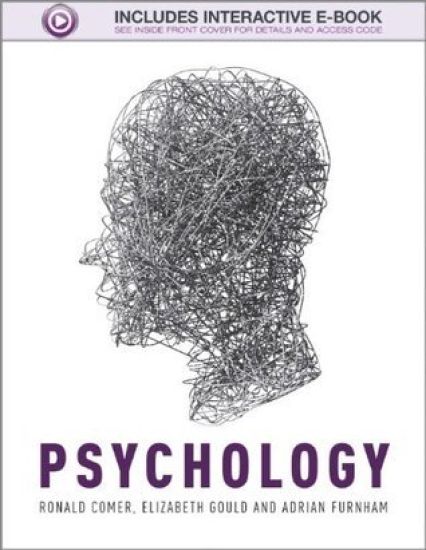
A Brand New European Text and Interactive E-Book for the Introductory Course! This exciting new textbook from Comer, Gould and Furnham, will help students to understand that psychology is around them every day and that its principles are relevant to a whole host of life questions. In addition to showing the relevance of psychology outside of the classroom, the text also allows students to see the big picture by stressing the interconnected nature of psychological science. Recurring sections throughout the chapters on human development, brain function, individual differences and abnormal psychology will help students see a more complete picture of psychology. These ‘Tying it Together’ themes highlight how the different fields of psychology are connected to each other and how they relate to everyday life. A strong focus on neuroscience is integrated throughout in an exciting and accessible way, including features that demonstrate what happens in the brain when people are performing common behaviours such as eating pizza, learning a second language and getting a good night’s sleep. Chapter summaries review the main concepts presented and provide students with the opportunity to review what they have learned and how the key topics fit together. An interactive e-book is included with every copy and uses media such as videos, quizzes and exercises to put the student in the driver’s seat to explore and understand key concepts in the course. All the media is embedded in the text right where the student needs it, enabling easy access to tools that will spark their interest. To view a demo, go to our showcase site and follow the link: www.wiley-comerpsychology.com The interactive e-book can be accessed using a code packaged with the print book. Please note that the inclusion of the accompanying interactive e-book with the print book requires the addition of VAT, and the final price, inclusive of VAT, will be shown at checkout.
Group Dynamics and Organizational Culture
Athena Xenikou; Adrian Furnham
Red Globe Press
2012
nidottu
Furnham and Xenikou provide an overview of the classic and contemporary theories debated within organizational culture, grounding debates within the context of group dynamics. This psychological focus ties in with OB modules, allowing students to develop their understanding of the psychological processes underpinning organizational life.
Leadership successes and failures are in the media every day. We are in a global political and financial crisis which is changing how we think about our lives and our futures. The authors present a leadership model for the future which creates the right conditions for people to thrive, individually and collectively, and achieve significant goals.
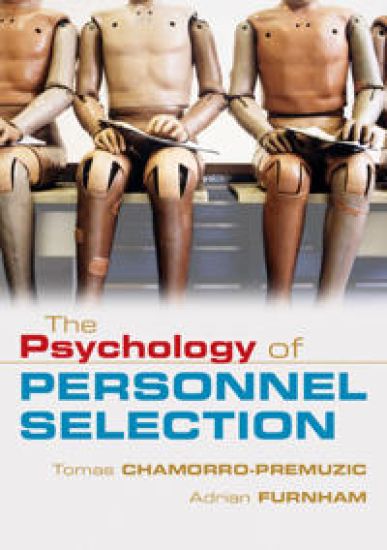
The Psychology of Personnel Selection
Tomas Chamorro-Premuzic; Adrian Furnham
Cambridge University Press
2010
sidottu
This engaging and thought-provoking text introduces the main techniques, theories, research and debates in personnel selection, helping students and practitioners to identify the major predictors of job performance as well as the most suitable methods for assessing them. Tomas Chamorro-Premuzic and Adrian Furnham provide a comprehensive, critical and up-to-date review of the constructs we use in assessing people – intelligence, personality, creativity, leadership and talent – and explore how these help us to predict differences in individuals' performance. Covering selection techniques such as interviews, references, biographical data, judgement tests and academic performance, The Psychology of Personnel Selection provides a lively discussion of both the theory behind the use of such techniques and the evidence for their usefulness and validity. The Psychology of Personnel Selection is essential reading for students of psychology, business studies, management and human resources, as well as for anyone involved in selection and assessment at work.
The Psychology of Personnel Selection
Chamorro-Premuzic Tomas; Adrian Furnham
Cambridge University Press
2010
pokkari
This engaging and thought-provoking text introduces the main techniques, theories, research and debates in personnel selection, helping students and practitioners to identify the major predictors of job performance as well as the most suitable methods for assessing them. Tomas Chamorro-Premuzic and Adrian Furnham provide a comprehensive, critical and up-to-date review of the constructs we use in assessing people – intelligence, personality, creativity, leadership and talent – and explore how these help us to predict differences in individuals' performance. Covering selection techniques such as interviews, references, biographical data, judgement tests and academic performance, The Psychology of Personnel Selection provides a lively discussion of both the theory behind the use of such techniques and the evidence for their usefulness and validity. The Psychology of Personnel Selection is essential reading for students of psychology, business studies, management and human resources, as well as for anyone involved in selection and assessment at work.
Personality and Intelligence at Work
Adrian Furnham
Routledge
2008
nidottu
Halvin toimitettuna 82,60 €
Personality and Intelligence at Work examines the increasingly controversial role of individual differences in predicting and determining behaviour at work. It combines approaches from organizational psychology and personality theory to critically examine the physical, psychological and psychoanalytic aspects of individual differences, and how they impact on the world of work. Topics covered include the role of IQ at work as the best predictor of success, but also the importance of increasingly recognized social intelligences such as emotional intelligence (EQ). The significance of personality traits and the impact of temperaments on work performance are also examined, and the methods used to assess work behaviour and potential are reviewed. Psychological tests, which measure personality traits, are questioned as accurate predictors of behaviour at work, alongside other factors such as job satisfaction, productivity, absenteeism and turnover. This thoroughly revised and updated edition of Personality at Work provides a comprehensive review of the relevant literature from psychology, sociology and management science. It will be of interest to students of organizational psychology and business and management studies, as well as HR professionals.
People have long been interested in the complexities of human beauty, but until recently the science of attractiveness was largely left to poets, playwrights, philosophers, and artists. This book begins the task of providing a scientific look at physical attraction, by offering an overview of scholarly work on physical beauty, culture, evolution and other aspects of human attractiveness. The Psychology of Physical Attraction begins by discussing the role of evolution in the development of what it means to be 'attractive' in contemporary society. It provides a general overview of evolutionary psychology and mate choice, as well as an in-depth focus on physical characteristics such as physical symmetry, body weight and ratios, and youthfulness. The book goes on to explore the role of societal and cultural ideals of beauty through a discussion of the social psychology of human beauty. Finally, the "morality" of physical attractiveness is examined, looking at issues such as discrimination on the basis of looks, body image and eating disorders and cosmetic surgery. Combining both evolutionary and social perspectives, this book offers a unique and comprehensive overview of the many debates involved in the science of physical attraction which ultimately allows for a better understanding of human beauty. It will be of interest to students and researchers in psychology, as well as anyone interested in the science of physical attractiveness.