Kirjojen hintavertailu – 12 903 724 kirjaa ja 27 kauppaa

Kirjailija

Adrian Wooldridge

Kirjat ja teokset yhdessä paikassa: 26 kirjaa, julkaisuja vuosilta 1994–2026, suosituimpiin kuuluu Kunskap och information : den mänskliga intelligensen potential och fara. Vertaile teosten hintoja ja tarkista saatavuus suomalaisista kirjakaupoista.

26 kirjaa

Kirjojen julkaisuvuodet: 1994–2026.

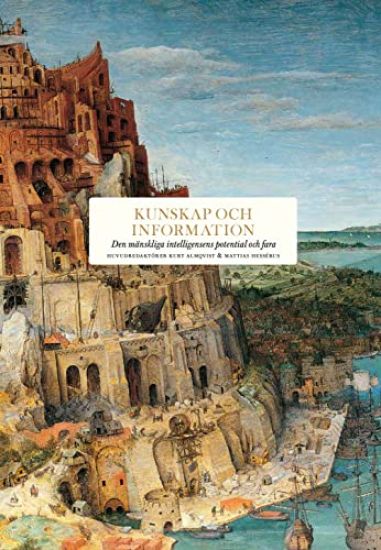
Kunskap och information : den mänskliga intelligensen potential och fara

Kunskap och information : den mänskliga intelligensen potential och fara

Mark Pagel; Mark Plotkin; John Hemming; Jessica Frazier; Richard Miles; Erica Benner; Peter Burke; Nathan Shachar; Suzana Herculano-Houzel; Mariano Sigman; Martin Ingvar; Michael Goodman; Gill Bennett; Simon Mayall; Maria Borelius; Andrew Keen; Nicholas Carr; Peter Frankopan; Christopher Coker; Janne Haaland Matláry; Elisabeth Kendall; Clarie Lehmann; David Goodhart; Brendan O´Neill; Fraser Nelson; Iain Martin; Adrian Wooldridge; S.J. M. Antoni J. Ucerler

Bokförlaget Stolpe
2021
sidottu
Vi har kommit långt från de religioner, myter och grundarberättelser som lade grunden till människans tidiga förståelse av världen och allting i den, och våra kunskaper har på senare tid ökat exponentiellt. I den här boken diskuterar ledande forskare inom konst och vetenskap hur kunskap och information har bevarats och förmedlats i historien, vilket leder oss fram till dagens digitala tidsålder och de många utmaningar som den ställer oss inför, inte minst beträffande våra persondata. Kommer vårt informationssamhälle, under växande spänning mellan en kunskapselit och dem som känner sig utestängda från offentlig diskussion och beslutsfattande, liksom under ökad friktion om tolkningsfrihet och yttrandefrihet i den akademiska världen, att bli en upplysningstid eller går vi in i en ny mörk tid för kunskapen? Texterna i den här illustrerade antologin härrör från det internationellt välrenommerade Engelsbergsseminariet 2018. Huvudredaktörer är Kurt Almqvist och Mattias Hessérus.
Samhälle i kris : vår förmåga till anpassning och omorientering

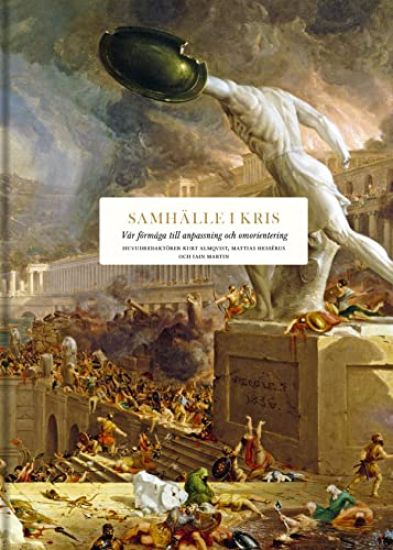
Samhälle i kris : vår förmåga till anpassning och omorientering

Clive Aslet; Philip Bobbitt; Peter Burke; Gillian Clark; Jonathan Fenby; Peter Frankopan; Jessica Frazier; Lawrence Freedman; Matthew Goodwin; Andrew Graham-Dixon; Johan Hakelius; Vanessa Harding; Tom Holland; Mark Honingsbaum; Alex Lee; Tim Marshall; Lincoln Paine; Iskander Rehman; Donald Sassoon; David Seedhouse; Graham Stewart; Hew Strachan; Helen Thompson; Richard Whatmore; Adrian Wooldridge

Bokförlaget Stolpe
2021
sidottu
Att lära sig hantera en kris är centralt i människans tillvaro. Krig, revolutioner och pandemier är återkommande företeelser i mänsklighetens historia. I denna antologi undersöker tjugofem världsledande forskare hur olika samhällen reagerar i sådana situationer. De belyser människans unika förmåga till anpassning och omorientering. En kris medför problem men också möjligheter. Antologin utges i en rikt illustrerad utgåva med vackert klotband. Huvudredaktörer är Mattias Hessérus och Iain Martin.
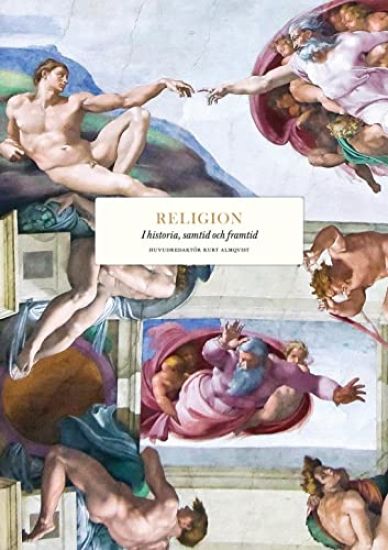
Religion : i historia, samtid och framtid

Religion : i historia, samtid och framtid

Janne Haaland Matlary; Daniel T. Potts; Julius J. Lipner; Robin Osborne; John Scheid; Martin Goodman; Diarmaid Macculloch; Elaine Pagels; Reza Aslan; Wouter J. Hanegraaff; Gary Lachman; Malise Ruthven; Marco Pasi; William O’Reilly; Ariel Glucklich; Wolfgang Palaver; Mona Siddiqui; Candida R. Moss; Esther Benbassa; Richard Miles; A.N. Wilson; Jessica Frazier; Simon May; Armin W. Geertz; Harvey Whitehouse; Pär Stenbäck; Benedetta Berti; Göran Rosenberg; Jayne Svenungsson; Adrian Wooldridge; Chakravarthi Ram-Prasad

Bokförlaget Stolpe
2020
sidottu
Tron på en styrande, övergripande, himmelsk princip har följt människan genom historien. Mer än 80 procent av världens befolkning har idag en religiös tillhörighet och även i sekulära stater fortsätter religionen att spela en viktig roll. Det går inte att förstå politik och internationella relationer idag utan att inkludera religionen som en aspekt av det kulturella sammanhanget. Essäerna i denna antologi, som härrör från Engelsbergsseminariet 2014, spänner över en mångfald ämnen i dagens såväl som gårdagens samhällen. De utforskar religionen i relation till människans villkor och skildrar hur den manifesterar sig i individens egna upplevelser. För att förstå oss själva behöver vi också förstå religionen.
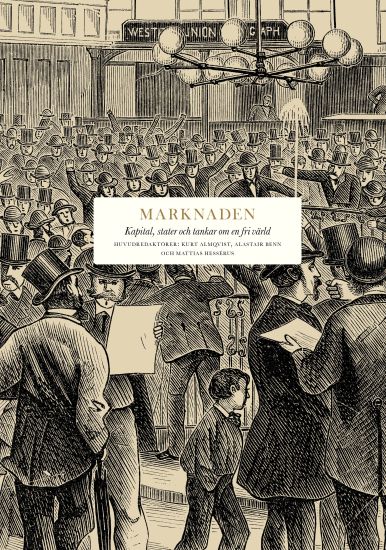
Marknaden : Kapital, stater och tankar om en fri värld

Marknaden : Kapital, stater och tankar om en fri värld

David Abulafia; Ali Ansari; Richard Bratby; Mary Bridges; Caroline Burt; David Butterfield; Edward Chancellor; Marie Kawthar Daouda; Eloise Davies; Ulrike Franke; Francis J. Gavin; Magnus Henrekson; William Inboden; Shashank Joshi; Knut N. Kjaer; Kwasi Kwarteng; Charlie Laderman; Ian Leslie; Nicklas Berild Lundblad; Iain Martin; Jade McGlynn; Mario Pisani; Alina Polyakova; Sergey Radchenko; Mick Ryan; Paul Tucker; Rikard Westerberg; Adrian Wooldridge; David Wootton; Linda Yueh

Bokförlaget Stolpe
2026
sidottu
Från det romerska torget till digitala valutor – hur har marknaden utvecklats under historiens gång och hur kan den komma att se ut i framtiden? Denna antologi gör en djupdykning i marknadsutvecklingen och tittar närmare på marknaders avgörande roll i att utforma samtiden men tar också upp den brännande frågan om hur vi ska navigera mot en hållbar framtid. I tankeväckande essäer skrivna av internationella forskare, politiker och andra sakkunniga utforskas marknadens dynamik. Med utgångspunkt i de antika torgen och i det medeltida Europas marknader undersöker författarna hur tekniska framsteg, konsumentbeteende och geopolitisk strategi – till exempel den politik som utövades under Reagan-eran – har format nutida marknader. Slutligen tar boken upp de utmaningar för stabiliteten på marknaden som utgörs av auktoritära stater och AI. Boken finns även i engelsk utgåva, The Market.
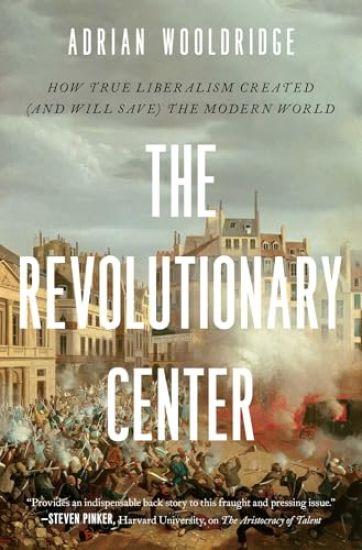
The Revolutionary Center: How True Liberalism Created (and Will Save) the Modern World
A cultural history of liberalism--one of our most widely used yet misunderstood terms--that reveals why the world urgently needs a more liberal mindset. So-called liberalism has been twisted out of shape by both the left- and right-wing who incorrectly conceive of it in ideological terms, without understanding what a liberal philosophy really entails. In untangling these misconceptions, Wooldridge reveals why the world desperately needs to adopt a proper liberal mindset. The cycles of history predict that without a return to liberalism, we face autocracy, fascism, and the societal stratification already visible in the world's structures of opposition: populists versus elitists, the ultra-woke versus the steadfastly traditional, and capitalist-triumphalists against capitalist-catastrophists. A call to arms amidst American economic stagnation and the global censorship of information, Adrian's new book guides us through liberalism's intellectual, cultural, and political histories to remind us of the true liberal's values: freedom through self-determinism, individual rights, healthy skepticism, thoughtful tolerance, and aversion to dogmatism. Adrian diagnoses areas of necessary improvement for today's passive liberals, who would do well to embody the flexible, moderate, and critical approaches of their Cold War predecessors. The West's success against Communist totalitarianism came from recognizing the need for a strong military defense while using open communication to explain what the West was defending. This energy must be applied to our understanding of overseas regimes and of Western capitalism at home. To avoid global catastrophe and uphold intellectual freedom and privacy, we must learn from the liberal past and look ahead, critiquing the structures we find ourselves in and those further afield
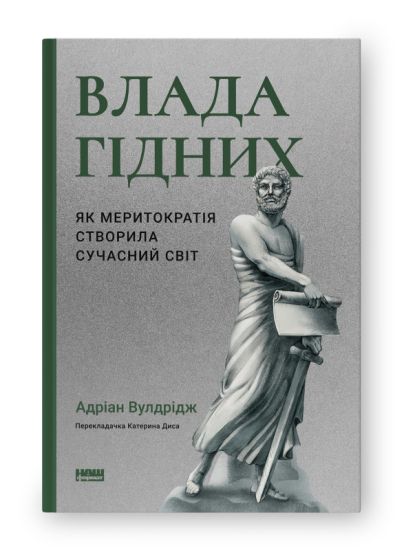
Vlada gidnikh. Jak meritokratija stvorila suchasnij svit
Scho daje zmogu najkrasche viznachiti, chi gidna ljudina obijmati vazhlivi posadi? Test na IQ, jak vvazhalo chimalo britanskikh i amerikanskikh naukovtsiv KHIKh i pochatku KHKh stolittja? Chi, mozhe, kilkadennij ispit, uchasniki jakogo mali podolati fizichni j rozumovi pereponi, jak uprodovzh stolit bulo v Kitaji? U riznij chas i v riznikh mistsjakh praviteli j tsili suspilstva vinakhodili ta viprobovuvali najriznomanitnishi varianti, schob doskonalo vtiliti printsipi meritokratiji - vladi najkraschikh, vladi gidnikh. Avtor prostezhuje istoriju meritokratiji vid chasiv vinajdennja v Starodavni chasi i do jiji sogodnishnoji krizi, schob vreshti postaviti kljuchovi pitannja - jake v neji majbutnje i chi je jij adekvatni alternativi?
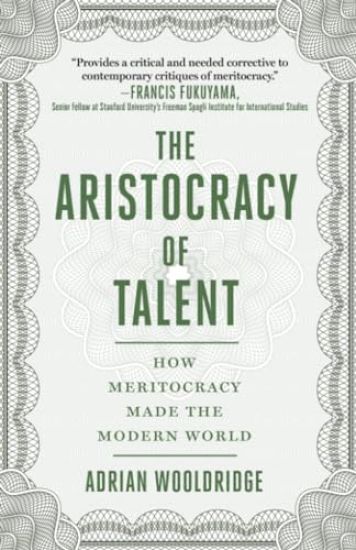
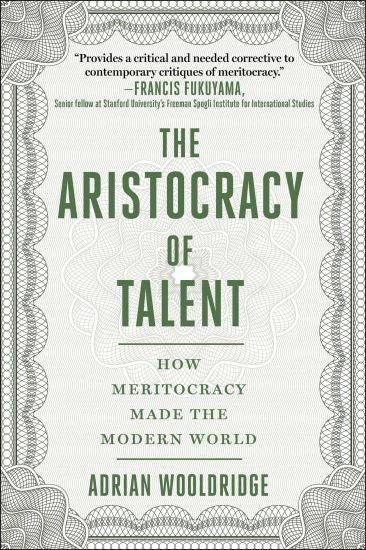
The Aristocracy of Talent: How Meritocracy Made the Modern World
The Times (UK) book of the year--now in paperback Meritocracy: the idea that people should be advanced according to their talents rather than their birth. While this initially seemed like a novel concept, by the end of the twentieth century it had become the world's ruling ideology. How did this happen, and why is meritocracy now under attack from both right and left? In The Aristocracy of Talent, esteemed journalist and historian Adrian Wooldridge traces the history of meritocracy forged by the politicians and officials who introduced the revolutionary principle of open competition, the psychologists who devised methods for measuring natural mental abilities, and the educationalists who built ladders of educational opportunity. He looks outside western cultures and shows what transformative effects it has had everywhere it has been adopted, especially once women were brought into the meritocratic system. Wooldridge also shows how meritocracy has now become corrupted and argues that the recent stalling of social mobility is the result of failure to complete the meritocratic revolution. Rather than abandoning meritocracy, he says, we should call for its renewal.
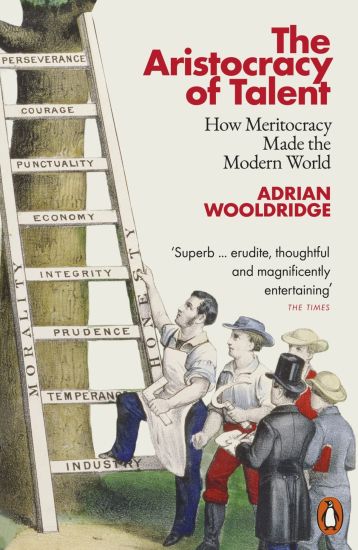
The Aristocracy of Talent

The Aristocracy of Talent

Adrian Wooldridge

PENGUIN BOOKS LTD
2023
pokkari

Halvin toimitettuna 11,60 €

THE TIMES BOOK OF THE YEAR*Shortlisted for the 2021 Financial Times and McKinsey & Company Business Book of the Year Award*'This unique and fascinating history explains why the blame now being piled upon meritocracy for many social ills is misplaced-and that assigning responsibilities to the people best able to discharge them really is better than the time-honoured customs of corruption, patronage, nepotism and hereditary castes' Steven PinkerMeritocracy: the idea that people should be advanced according to their talents rather than their status at birth. For much of history this was a revolutionary thought, but by the end of the twentieth century it had become the world's ruling ideology. How did this happen, and why is meritocracy now under attack from both right and left? Adrian Wooldridge traces the history of meritocracy forged by the politicians and officials who introduced the revolutionary principle of open competition, the psychologists who devised methods for measuring natural mental abilities and the educationalists who built ladders of educational opportunity. He looks outside western cultures and shows what transformative effects it has had everywhere it has been adopted, especially once women were brought into the meritocractic system. Wooldridge also shows how meritocracy has now become corrupted and argues that the recent stalling of social mobility is the result of failure to complete the meritocratic revolution. Rather than abandoning meritocracy, he says, we should call for its renewal.
Porträtt : människor som formade sin samtid men som historien glömde

Porträtt : människor som formade sin samtid men som historien glömde

Armand D'Angour; Peter Frankopan; Jessica Frazier; Lawrence Freedman; Matthew Goodwin; Rob Johnson; Paul Lay; Alexander Lee; Rana Mitter; Andrew Roberts; Graham Stewart; Andrew Wilton; Adrian Wooldridge

Bokförlaget Stolpe
2022
muu
Porträttserien från Engelsberg Ideas höjer upp och ger plats åt de sidofigurer som har satt historiens hjul i rullning. Här finns bland andra Churchills halvt bortglämda högra hand, en av La Belle Epoques parisiska ledstjärnor som försvunnit i historiens dunkel och en tidig rymdpionjär som är nästan helt okänd utanför sitt hemland Ryssland. Historien tillhör inte bara de allmänt kända, utan också de andra: de män och kvinnor som plötsligt fann sig framdrivande i en flod av händelser eller som gjorde unika inlägg i sin tids stora debatter. Genom den här serien visar oss ledande skribenter hur individer har format den värld vi känner till, och undersöker deras framgångar lika mycket som deras misslyckanden. Den engelsk­tyska romanförfattaren W. G. Sebald skrev vid det senaste sekelskiftet "allting faller ständigt i glömska med varje utsläckt liv". I Porträtt ur historien hittar vi de dunkla spåren av spännande liv som levts och rekonstruerar dem omsorgsfullt för att de återigen ska få glänsa, starkt och levande, här och nu.
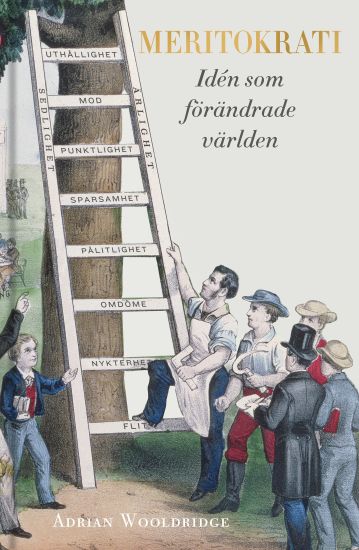
Meritokrati :idén som förändrade världen

Meritokrati :idén som förändrade världen

Adrian Wooldridge

Bokförlaget Stolpe
2022
sidottu
Är något mer självklart än att den bäste kandidaten ska ha jobbet? Tanken var en gång revolutionerande och revolutionär. I de börds- och skråsamhällen som präglat en stor del av mänsklighetens historia betydde härkomst, förbindelser, betalningsförmåga och grupptillhörighet mer än kompetens när ämbeten med makt skulle besättas. I dag ser vi med förvåning och förakt på det som tidigare generationer tog för givet. Adrian Wooldridge skildrar det skiftet, förebådat av filosofer som Platon och Konfucius, eftersträvat av huvudsakligen liberala och radikala reformatorer, och motarbetat av dem som betonade värdegemenskap och stabilitet i staters ledning. Wooldridge visar hur meritokratin ständigt riskerar att tappa udden, att försjunka till slutna elitvälden, där familj och förbindelser åter blir viktigare än intelligens och förmåga. Här synar han kritiken mot idén om meritokrati från såväl höger som vänster. Kan tanken på förmågans betydelse åter vinna den reformkraft den en gång hade? Adrian Wooldridge disputerade i Oxford och har under många år varit redaktör och kolumnist i The Economist. I denna långessä ger han en syntes av ett komplext skeende i en elegant framställning stundtals präglad av stilla ironi."en välskriven och omfattande framställning och analys av meritokratins utveckling och struktur" BTJ.
The Aristocracy of Talent: How Meritocracy Made the Modern World
The Times (UK) book of the year Meritocracy: the idea that people should be advanced according to their talents rather than their birth. While this initially seemed like a novel concept, by the end of the twentieth century it had become the world's ruling ideology. How did this happen, and why is meritocracy now under attack from both right and left? In The Aristocracy of Talent, esteemed journalist and historian Adrian Wooldridge traces the history of meritocracy forged by the politicians and officials who introduced the revolutionary principle of open competition, the psychologists who devised methods for measuring natural mental abilities, and the educationalists who built ladders of educational opportunity. He looks outside western cultures and shows what transformative effects it has had everywhere it has been adopted, especially once women were brought into the meritocratic system. Wooldridge also shows how meritocracy has now become corrupted and argues that the recent stalling of social mobility is the result of failure to complete the meritocratic revolution. Rather than abandoning meritocracy, he says, we should call for its renewal.
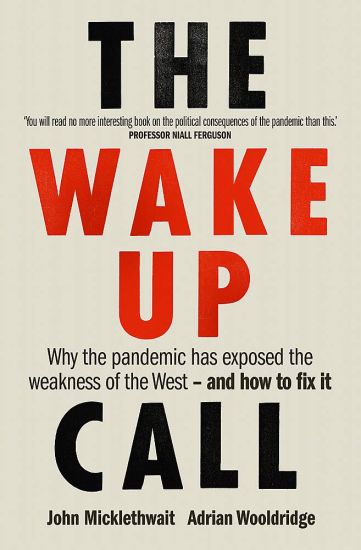
Wake-Up Call

Wake-Up Call

John Micklethwait; Adrian Wooldridge

Octopus Publishing Group
2020
pokkari

Halvin toimitettuna 18,50 €

This game-changing book originated in an article, written by two of Britain's greatest journalists, that became a viral sensation within hours of publication.
The Wake-Up Call: Why the Pandemic Has Exposed the Weakness of the West, and How to Fix It
An urgent and informed look at the challenges America and world governments will face in a post Covid-19 world. The Covid-19 pandemic has revealed that governments matter again, that competent leadership is the difference between living and dying. A few governments proved adept at handling the crisis while many others failed. Are Western governments healthy and strong enough to keep their citizens safe from another virulent virus--and protect their economies from collapse? Is global leadership passing from the United States to Asia--and particularly China? The Wake-Up Call addresses these urgent questions. Journalists and longtime collaborators John Micklethwait and Adrian Wooldridge identify the problems Western leaders face, and outline a detailed plan to help them become more vigilant, better prepared, and responsive to disruptive future events. The problems that face us are enormous; as The Wake-Up Call makes clear, governments around the world must re-engineer the way they operate to successfully meet the challenges ahead.
The Wake-Up Call Lib/E: Why the Pandemic Has Exposed the Weakness of the West, and How to Fix It
An urgent and informed look at the challenges America and world governments will face in a post Covid-19 world. The Covid-19 pandemic has revealed that governments matter again, that competent leadership is the difference between living and dying. A few governments proved adept at handling the crisis while many others failed. Are Western governments healthy and strong enough to keep their citizens safe from another virulent virus--and protect their economies from collapse? Is global leadership passing from the United States to Asia--and particularly China? The Wake-Up Call addresses these urgent questions. Journalists and longtime collaborators John Micklethwait and Adrian Wooldridge identify the problems Western leaders face, and outline a detailed plan to help them become more vigilant, better prepared, and responsive to disruptive future events. The problems that face us are enormous; as The Wake-Up Call makes clear, governments around the world must re-engineer the way they operate to successfully meet the challenges ahead.
Capitalism in America

Capitalism in America

Alan Greenspan; Adrian Wooldridge

Penguin Books Ltd.
2019
pokkari

Halvin toimitettuna 20,30 €

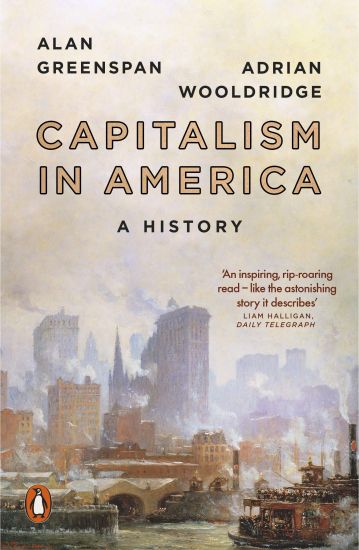
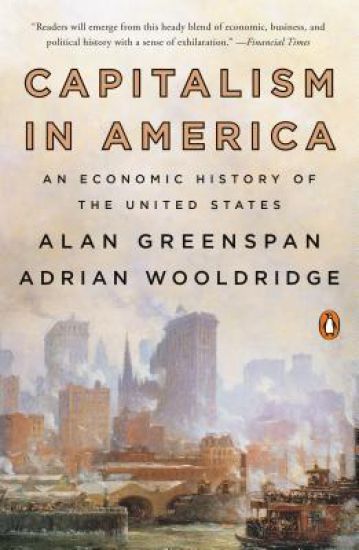
Where does prosperity come from, and how does it spread through a society? What role does innovation play in creating prosperity and why do some eras see the fruits of innovation spread more democratically, and others, including our own, find the opposite? In Capitalism in America, Alan Greenspan, legendary Chair of the Federal Reserve, distils a lifetime of grappling with these questions into a profound assessment of the decisive drivers of the US economy over the course of its history. In partnership with Economist journalist and historian Adrian Wooldridge, he unfolds a tale of vast landscapes, titanic figures and triumphant breakthroughs as well as terrible moral failings. Every crucial American economic debate is here - from the role of slavery in the antebellum Southern economy to America's violent swings in its openness to global trade. At heart, the authors argue, America's genius has been its enthusiasm for the effects of creative destruction, the ceaseless churn of the old giving way to the new. Although messy and painful, it has lifted the overwhelming majority of Americans to standards of living unimaginable even a few generations past. At a time when productivity has again stalled, stirring populist furies, and the continuing of American pre-eminence seems uncertain, Capitalism in America explains why America has worked so successfully in the past and been such a gigantic engine of economic growth.
The Fourth Revolution: The Global Race to Reinvent the State

The Fourth Revolution: The Global Race to Reinvent the State

John Micklethwait; Adrian Wooldridge

PENGUIN BOOKS
2015
nidottu
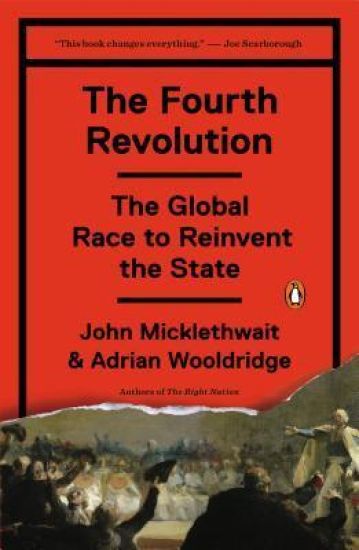
From the bestselling authors of The Right Nation, a visionary argument that our current crisis in government is nothing less than the fourth radical transition in the history of the nation-state Dysfunctional government: It's become a clich , and most of us are resigned to the fact that nothing is ever going to change. As John Micklethwait and Adrian Wooldridge show us, that is a seriously limited view of things. In fact, there have been three great revolutions in government in the history of the modern world. The West has led these revolutions, but now we are in the midst of a fourth revolution, and it is Western government that is in danger of being left behind. Now, things really are different. The West's debt load is unsustainable. The developing world has harvested the low-hanging fruits. Industrialization has transformed all the peasant economies it had left to transform, and the toxic side effects of rapid developing world growth are adding to the bill. From Washington to Detroit, from Brasilia to New Delhi, there is a dual crisis of political legitimacy and political effectiveness. The Fourth Revolution crystallizes the scope of the crisis and points forward to our future. The authors enjoy extraordinary access to influential figures and forces the world over, and the book is a global tour of the innovators in how power is to be wielded. The age of big government is over; the age of smart government has begun. Many of the ideas the authors discuss seem outlandish now, but the center of gravity is moving quickly. This tour drives home a powerful argument: that countries' success depends overwhelmingly on their ability to reinvent the state. And that much of the West--and particularly the United States--is failing badly in its task. China is making rapid progress with government reform at the same time as America is falling badly behind. Washington is gridlocked, and America is in danger of squandering its huge advantages from its powerful economy because of failing government. And flailing democracies like India look enviously at China's state-of-the-art airports and expanding universities. The race to get government right is not just a race of efficiency. It is a race to see which political values will triumph in the twenty-first century--the liberal values of democracy and liberty or the authoritarian values of command and control. The stakes could not be higher.
The Fourth Revolution

The Fourth Revolution

Adrian Wooldridge; John Micklethwait

Penguin Books Ltd
2015
pokkari

Halvin toimitettuna 23,90 €

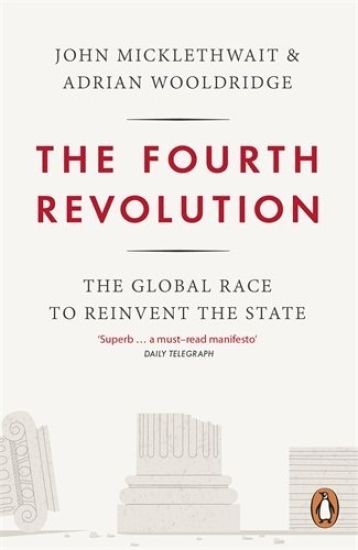
In The Fourth Revolution, John Micklethwait and Adrian Wooldridge ask: what is the state actually for? Their remarkable book describes the three great revolutions in its history, and the fourth which is happening nowIn most of the states of the West, disillusion with government has become endemic. Gridlock in America; anger in much of Europe; cynicism in Britain; decreasing legitimacy everywhere. Most of us are resigned to the fact that nothing is ever going to change. But as John Micklethwait and Adrian Wooldridge show us in this galvanizing book, this is a seriously limited view of things. In response to earlier crises in government, there have been three great revolutions, which have brought about in turn the nation-state, the liberal state and the welfare state. In each, Europe and America have set the example. We are now, they argue, in the midst of a fourth revolution in the history of the nation-state, but this time the Western way is in danger of being left behind. The Fourth Revolution brings the crisis into full view and points towards our future. The authors have enjoyed extraordinary access to influential figures and forces the world over, and the book is a global tour of the innovators. The front lines are in Chinese-oriented Asia, where experiments in state-directed capitalism and authoritarian modernization have ushered in an astonishing period of development. Other emerging nations are producing striking new ideas, from Brazil's conditional cash-transfer welfare system to India's application of mass-production techniques in hospitals. These governments have not by any means got everything right, but they have embraced the spirit of active reform and reinvention which in the past has provided so much of the West's comparative advantage. The race is not just one of efficiency, but one to see which political values will triumph in the twenty-first century: the liberal values of democracy and freedom or the authoritarian values of command and control. The centre of gravity is shifting quickly, and the stakes could not be higher.
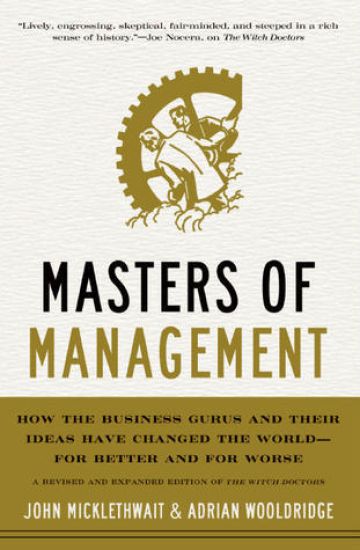
Masters of Management

Masters of Management

Adrian Wooldridge

HarperBusiness
2011
sidottu
Fifteen years ago, after, having completed a two-year research study, long-time Economist journalists and editors John Micklethwait and Adrian Wooldridge published an explosive critique of management theory and its legions of evangelists and followers. Their work became a bestseller, widely praised by reviewers and devoured by readers confused by the buzzwords and concepts created by the management industry. When the book was published, ideas about re-engineering, the search for excellence, quality, and chaos both energized and haunted the world of business, just as the long tail, black swans, the tipping point, the war for talent, and corporate responsibility do today. For decades, since the ascendance of MBA programs, the field of management has operated in a dubious space - as many of its framers clamor for respect within the academy while making millions pedalling ideas, some brilliant and some nonsensical, in speeches, consulting arrangements, and books. While the original book offered a damning critique, it also argued that much of management theory is valuable - making companies more efficient and productive, improving organizational life for workers, and providing sound ways for innovation while defending more entrenched plans. Updated to include the rise and fall of the Internet boom, the Great Recession of 2008, and the more recent developments in management theory, "Masters of Management" is a valuable crash course in the many ideas it dissects.