Kirjojen hintavertailu – 12 903 725 kirjaa ja 27 kauppaa

Kirjailija

Adrien Palladino

Kirjat ja teokset yhdessä paikassa: 4 kirjaa, julkaisuja vuosilta 2018–2022, suosituimpiin kuuluu Inventing Late Antique Reliquaries: Reception, Material History, and Dynamics of Interaction (4th-6th Centuries Ce). Vertaile teosten hintoja ja tarkista saatavuus suomalaisista kirjakaupoista.

4 kirjaa

Kirjojen julkaisuvuodet: 2018–2022.

Inventing Late Antique Reliquaries: Reception, Material History, and Dynamics of Interaction (4th-6th Centuries Ce)
The cult of saints, their relics, and devotion to their shrines is a phenomenon born in Late Antiquity that durably shaped medieval and modern practices across a broad geographical and cultural area spreading first throughout the Roman Empire and beyond. How was the creation of vessels for the holy remains of saints implemented during a culturally heterogenous period? Indeed, how could boxes of various shapes, sizes, and materials become containers to shelter sacred matter? What materials could be used in reliquaries' making, and what images should adorn them? And how did reliquaries, with their geographical and social portability, contribute to the translocation of site-bound sanctity and the spread of saints' and shrines' networks across the Late Antique world? Tracing the medieval reliquary's "pre-history", this volume examines boxes bearing Christian images and patterns made between the fourth to the sixth century ce. It investigates how vessels adorned with images acquired meaning and power, exploring the dynamics of transformation that accompany both the creation of these objects and their long history of reuse, marginalization, and rediscovery.

Byzantium or Democracy?: Kondakov's Legacy in Emigration: The Institutum Kondakovianum and Andre Grabar, 1925-1952
The notion of "Byzantium" has for centuries been associated with autocracy, totalitarianism, and suppression of freedom. It thus became the favored model for the Russian autocracy. In the nineteenth-century, Russian scholars working under Tsarist regimes were, either explicitly or tacitly, condoning and even supporting the ruling autocracy. After the Revolution of 1917, however, many of these effectively complicit intellectuals left Russia for Western democracies. This book shows how this experience affected the lives of intellectuals who fled and transformed their scholarship. Archival materials and writings from the time reveal how scholarship can move from aspiration to reality, as it did for the Russian emigres until the crash of 1929 and the rise of Nazism in Germany. But how is this relevant today? Because it shows how scholarship and science must be understood as part of history, and because it illustrates the power of hope. As studied and presented by emigres from Tsarist totalitarianism, "Byzantium" came to be a multinational screen onto which scholars projected not only frustrations but also dreams.
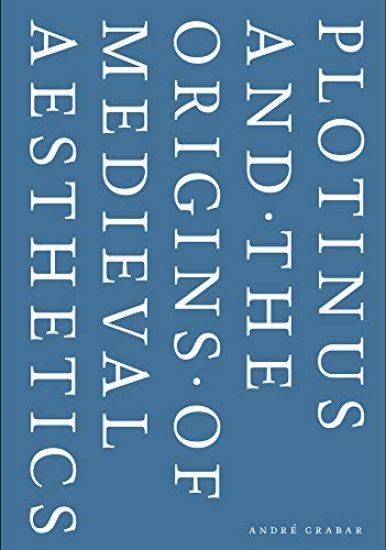
Plotinus and the Origins of Medieval Aesthetics

Plotinus and the Origins of Medieval Aesthetics

Andre Grabar; Adrien Palladino

Viella
2018
nidottu
Plotinus and the Origins of Medieval Aesthetics, an iconic essay of byzantinist Andre Grabar, first published in 1945 in French, is here presented to the reader for the first time translated in English. It is preceded by an historiographical introduction by Adrien Palladino, presenting the genesis of the text, replacing it within the opus of the scholar, and assessing its relevance within the new horizons of the field of art history.
Orient Oder Rom?: History and Reception of a Historiographical Myth (1901-1970)

Orient Oder Rom?: History and Reception of a Historiographical Myth (1901-1970)

Klara Benesovska; Francesco Lovino; Adrien Palladino

Viella Editrice
2018
nidottu
Today, the question of the origins of Christian aesthetics is no longer a topical issue in medieval art history, although a persuasive answer has never been formulated. One of the reasons for this oblivion deals with the looming figure of Josef Strzygowski, who published his pivotal volume Orient oder Rom in 1901, now discredited for its racial and proto-Nazi ideas. However, the debate does not concern Strzygowski alone: the prodromes of this critical concept go back to the nineteenth century, when the Russian, Austro-Hungarian and Ottoman empires fought to control contested territories, and studies of the humanities mirrored these conflicts. This volume, originating in the urgency to reflect on this pivotal conundrum in our field, attempts to reconstruct the (mis)fortune of a question that, according to Alois Riegl, "is the most important and most trenchant one in the entire history of mankind to date".