Kirjojen hintavertailu – 12 903 724 kirjaa ja 27 kauppaa

Kirjailija

Adrienne Brown

Kirjat ja teokset yhdessä paikassa: 5 kirjaa, julkaisuja vuosilta 2019–2024, suosituimpiin kuuluu Design Reviewed #2. Vertaile teosten hintoja ja tarkista saatavuus suomalaisista kirjakaupoista.

5 kirjaa

Kirjojen julkaisuvuodet: 2019–2024.

The Residential Is Racial

The Residential Is Racial

Adrienne Brown

STANFORD UNIVERSITY PRESS
2024
sidottu
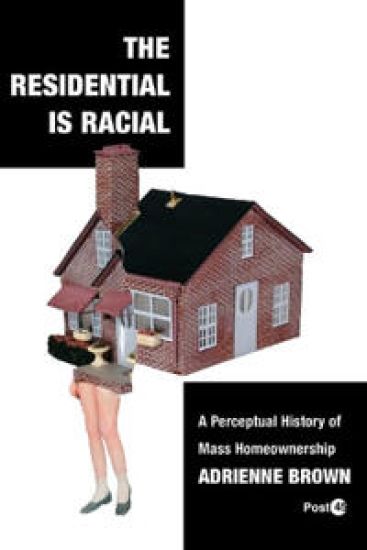
Housing experts and activists have long described the foundational role race has played in the creation of mass homeownership. This book insistently tracks the inverse: the role of mass homeownership in changing the definition, perception, and value of race. In The Residential is Racial Adrienne Brown reveals how mass homeownership remade the rubrics of race, from the early cases realtors made for homeownership's necessity to white survival through to the 1968 Fair Housing Act. Reading real estate archives and appraisal textbooks alongside literary works by F. Scott Fitzgerald, John Steinbeck, Lorraine Hansberry, Richard Wright, Gwendolyn Brooks, James Baldwin, Ralph Ellison, John Cheever, and Thomas Pynchon, Brown goes beyond merely identifying the discriminatory mechanisms that the real estate industry used to forestall black homeownership. Rather, she reveals that redlining and other forms of racial discrimination are perceptual modes, changing what it means to sense race and assign it value. Resituating residential discrimination as a key moment within the history of perception and aesthetics as well as of policy, demography, and democracy, we get an even more expansive picture of both its origins and its impacts. This book discovers that the racial honing of perception on the block—seeing race like a bureaucrat, an appraiser, and a homeowner—has become central to the functioning of the residential itself.
The Residential Is Racial

The Residential Is Racial

Adrienne Brown

STANFORD UNIVERSITY PRESS
2024
pokkari
Housing experts and activists have long described the foundational role race has played in the creation of mass homeownership. This book insistently tracks the inverse: the role of mass homeownership in changing the definition, perception, and value of race. In The Residential is Racial Adrienne Brown reveals how mass homeownership remade the rubrics of race, from the early cases realtors made for homeownership's necessity to white survival through to the 1968 Fair Housing Act. Reading real estate archives and appraisal textbooks alongside literary works by F. Scott Fitzgerald, John Steinbeck, Lorraine Hansberry, Richard Wright, Gwendolyn Brooks, James Baldwin, Ralph Ellison, John Cheever, and Thomas Pynchon, Brown goes beyond merely identifying the discriminatory mechanisms that the real estate industry used to forestall black homeownership. Rather, she reveals that redlining and other forms of racial discrimination are perceptual modes, changing what it means to sense race and assign it value. Resituating residential discrimination as a key moment within the history of perception and aesthetics as well as of policy, demography, and democracy, we get an even more expansive picture of both its origins and its impacts. This book discovers that the racial honing of perception on the block—seeing race like a bureaucrat, an appraiser, and a homeowner—has become central to the functioning of the residential itself.

Design Reviewed #2

Design Reviewed #2

Nathan Ma; Piti Koshimura; Michael David Mitchell; Simón Ballen Botero; Adrienne Brown; Natalie Kane; Ann Morgan; India Block; Lara Chapman; Oli Stratford

Arvinius+Orfeus Publishing
2023
lehtivihko, moniste
The summer 2023 edition of Design Reviewed! Travelling from the Amazon rainforest to Tokyo s public toilets, from a Munich-based manufactory to Chicago s streets and suburbs, and from 1980s' USA to contemporary London s grassroots football pitches, this issue contains ten essays in which writers get hands-on with design and its various manifestations in the world. The texts offer personal reflections on design and the contexts in which it operates, but are not intended as qualitative assessments of their subjects. We hope they make you chuckle, ponder and perhaps even tug at your sun-warmed heartstrings. Our second issue includes essays by Nathan Ma, Piti Koshimura, Michael David Mitchell, Simón Ballen Botero, Adrienne Brown, Natalie Kane, Ann Morgan, as well as Disegno s India Block, Lara Chapman and Oli Stratford. It has been designed by Jonas Hirschmann, with creative direction from Studio AKFB.
Normal Nina and the Magic Box

Normal Nina and the Magic Box

Ian Sadler; Adrienne Brown

Gelos Publications
2020
nidottu
Mom's Choice Gold Award-Winner. Have you ever wanted to be someone else? Or wished for something that you didn't have? Normal Nina knows all about it. She is just a regular person that people don't notice or appreciate for the regular things that she does. There's certainly nothing fun about that. So, when Nina discovers a strange magic box outside her house and meets the blue-masked genie who lives there, she knows exactly what her three wishes will be. And there's nothing normal about them at all This delightful story for children ages 4-8 shows that exciting adventures can be fun but being normal has its good points too. Written entirely in verse with delicate, detailed illustrations, Gelos Publishing delivers creative books for preschool and early elementary school students, with a valuable life lesson for children and their families. Strong endorsements from educators, elementary school teachers and school librarians. All books in the series include activity pages following the story to extend the learning for the home or classroom.
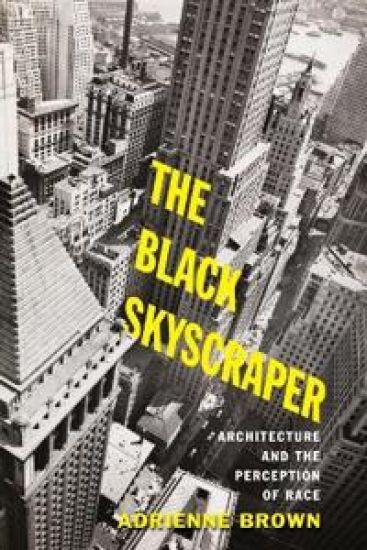
The Black Skyscraper

The Black Skyscraper

Adrienne Brown

Johns Hopkins University Press
2019
pokkari
How did writers and artists view the intersection of architecture and race in the modernist era? Winner of the MSA First Book Prize of the Modernist Studies AssociationWith the development of the first skyscrapers in the 1880s, urban built environments could expand vertically as well as horizontally. Tall buildings emerged in growing cities to house and manage the large and racially diverse populations of migrants and immigrants flocking to their centers following Reconstruction. Beginning with Chicago's early 10-story towers and concluding with the 1931 erection of the 102-story Empire State Building, Adrienne Brown's The Black Skyscraper provides a detailed account of how scale and proximity shape our understanding of race. Over the next half-century, as city skylines grew, American writers imagined the new urban backdrop as an obstacle to racial differentiation. Examining works produced by writers, painters, architects, and laborers who grappled with the early skyscraper's outsized and disorienting dimensions, Brown explores this architecture's effects on how race was seen, read, and sensed at the turn of the twentieth century. In lesser-known works of apocalyptic science fiction, light romance, and Jazz Age melodrama, as well as in more canonical works by W. E. B. Du Bois, F. Scott Fitzgerald, Aaron Douglas, and Nella Larsen, the skyscraper mediates the process of seeing and being seen as a racialized subject. From its distancing apex—reducing bodies to specks—to the shadowy mega-blocks it formed at street level, the skyscraper called attention, Brown argues, to the malleable nature of perception. A highly interdisciplinary work, The Black Skyscraper reclaims the influence of race on modern architectural design as well as the less-well-understood effects these designs had on the experience and perception of race.