Kirjojen hintavertailu – 12 903 725 kirjaa ja 27 kauppaa
Kirjailija
Agency for Healthcare Resea And Quality
Kirjat ja teokset yhdessä paikassa: 413 kirjaa, julkaisuja vuosilta 2013–2015, suosituimpiin kuuluu Imaging Techniques for the Diagnosis and Staging of Hepatocellular Carcinoma: Comparative Effectiveness Review Number 143. Vertaile teosten hintoja ja tarkista saatavuus suomalaisista kirjakaupoista.
The U. S. health care system seeks to prevent, diagnose, and treat disease and to improve the physical and mental well-being of all Americans. Across the lifespan, health care helps people stay healthy, recover from illness, live with chronic disease or disability, and cope with death and dying. Quality health care delivers these services in ways that are safe, timely, patient centered, efficient, and equitable. Unfortunately, Americans too often do not receive care that they need, or they receive care that causes harm. Care can be delivered too late or without full consideration of a patient's preferences and values. Many times, our system of health care distributes services inefficiently and unevenly across populations. Some Americans receive worse care than other Americans. These disparities may be due to differences in access to care, provider biases, poor provider-patient communication, or poor health literacy. Since 2003, the Agency for Healthcare Research and Quality (AHRQ) has reported on progress and opportunities for improving health care quality and reducing health care disparities. As mandated by the U. S. Congress, the National Healthcare Quality Report (NHQR) focuses on "national trends in the quality of health care provided to the American people" while the National Healthcare Disparities Report (NHDR) focuses on "prevailing disparities in health care delivery as it relates to racial factors and socioeconomic factors in priority populations". The National Healthcare Reports Highlights seeks to address three questions critical to guiding Americans toward the optimal health care they need and deserve: What is the status of health care quality and disparities in the United States? How have health care quality and disparities changed over time? Where is the need to improve health care quality and reduce disparities greatest? New this year, the Highlights focus on national priorities identified in the HHS National Strategy for Quality Improvement in Health Care (National Quality Strategy or NQS) and HHS Action Plan To Reduce Racial and Ethnic Health Disparities (Disparities Action Plan). Published in March 2011, the NQS identified six national priorities for quality improvement. The 2011 reports emphasize one of AHRQ's priority populations as a theme and present expanded analyses of care received by older Americans. Finally, this document presents novel strategies from AHRQ's Health Care Innovations Exchange (HCIE), as well as examples of Federal and State initiatives for improving quality and reducing disparities. Four themes from the 2011 NHQR and NHDR emphasize the need to accelerate progress if the Nation is to achieve higher quality and more equitable health care in the near future: Health care quality and access are suboptimal, especially for minority and low-income groups; Quality is improving; access and disparities are not improving; Urgent attention is warranted to ensure continued improvements in quality and progress on reducing disparities with respect to certain services, geographic areas, and populations, including: Diabetes care and adverse events; Disparities in cancer screening and access to care; States in the South. Progress is uneven with respect to national priorities identified in the HHS National Quality Strategy and the Disparities Action Plan: Improving in quality: Ensuring Person- and Family-Centered Care and Promoting Effective Prevention and Treatment of Cardiovascular Disease; Lagging: Making Care Safer, Promoting Healthy Living, and Increasing Data on Racial and Ethnic Minority Populations; Lacking sufficient data to assess: Promoting More Effective Care Coordination and Making Care More Affordable; Disparities related to race, ethnicity, and socioeconomic status present in all priority areas.
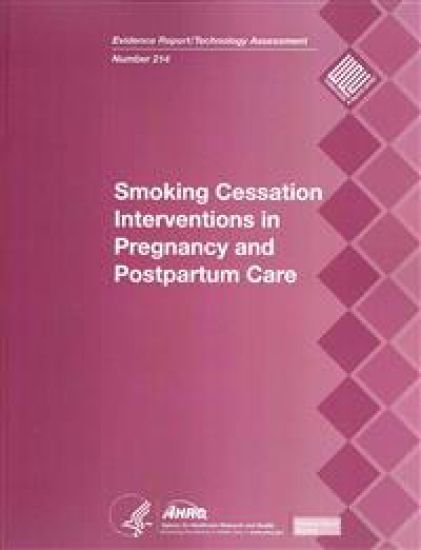
Nearly 443,000 U. S. deaths are attributable annually to cigarette smoking, which makes tobacco, including secondhand smoke, the most preventable cause of disease, disability, and death in the U. S. An estimated 19.8 million women in the U. S. smoke. Smoking during pregnancy can result in significant complications for the pregnant woman, her fetus, and members of the woman's household who are exposed to secondhand smoke. Smoking is associated with increased risk of placental abruption, anemia, preterm birth, chronic hypertension, and placenta previa. Health risks to the fetus include low birth weight, restricted growth, and fetal death. Multiple interventions to promote smoking cessation exist. They include advice and counseling, self-help materials, nicotine replacement therapy (NRT), antidepressants including bupropion (Zyban(R)), and pharmacologic cessation aids such as varenicline (Chantix(R)). The American College of Obstetricians and Gynecologists does not recommend pharmacologic interventions as first-line therapies in pregnant women due to lack of evidence on safety and efficacy. Overall, the findings from existing systematic reviews suggest that NRT, behavioral and educational cessation strategies, and multicomponent interventions may be beneficial to women who smoke in pregnancy or the postpartum period, but to date, evidence has been mixed. Despite these previous systematic review efforts, however, the efficacy of specific components and the impact of these various strategies on smoking and infant outcomes in pregnant and postpartum women remain unclear. This review is focused on the evidence available to inform the provision of smoking cessation strategies for health care providers. Interventions include any behavioral, psychosocial, pharmacologic, or educational intervention intended to promote individual changes in cigarette consumption among pregnant smokers and recent quitters in the prenatal and postpartum period. Interventions targeting the behavior of smokers' partners or health care providers exclusively were not included. Interventions of interest are those that were conducted in or originated from a health care setting. Smoking outcomes are limited to biochemically validated reports of smoking cessation during pregnancy or in the postpartum period. Biochemical validation of smoking status includes measures of cotinine from saliva, urine, or serum; expired carbon monoxide; or serum thiocyanate. Although these measures do not verify continuous abstinence, they are accepted standards for evaluating point prevalence of smoking status. Key Questions addressed: 1: What is the effectiveness of interventions intended to achieve or maintain smoking cessation in women who are pregnant or postpartum for promoting smoking cessation, relapse prevention, and continuous abstinence? 2: What is the effectiveness of interventions intended to achieve or maintain smoking cessation in women who are pregnant or postpartum for improving infant and child outcomes? 3: What are the harms of interventions intended to achieve or maintain smoking cessation in women who are pregnant or postpartum? 4: What is the effect of components of the smoking cessation intervention, including who delivered the intervention (physician, nurse, midwife, etc.), the intervention itself, and where the intervention was delivered (clinic, hospital setting, etc.), on cessation of smoking or durability of cessation in women who are pregnant or postpartum? 5: What is the effect of patient characteristics on outcomes of smoking cessation interventions (successful/unsuccessful cessation, relapse) in women who are pregnant or postpartum?