Kirjojen hintavertailu – 12 903 725 kirjaa ja 27 kauppaa
Kirjailija
Agnes Callard
Kirjat ja teokset yhdessä paikassa: 10 kirjaa, julkaisuja vuosilta 2018–2026, suosituimpiin kuuluu Liberties Journal of Culture and Politics. Vertaile teosten hintoja ja tarkista saatavuus suomalaisista kirjakaupoista.
Giles Kepel; Ingrid Rowland; Vladimir Kara-Murza; Enrique Krauze; Paul Muldoon; Mitchell Abidor; Agnes Callard; Henri Cole; William Deresiewicz; Benjamin Moser; David Nirenberg; Peter Phillips; Becca Rothfeld; Paul Starr; David Thomson; Chaim Nacham Bialik
“A Meteor of Intelligent Substance” “Something was Missing in our Culture, and Here It Is” “Liberties sure is needed in these times.” In a short time since its launch, Liberties - A Journal of Culture and Politics, a quarterly, has become essential reading for those engaged in the cultural and political issues and causes of our time. The writers in Liberties offer deep experience from across borders, national identities, political affiliations and artistic achievements. As the introductory essay in the inaugural edition noted, “At this journal we are betting on what used to be called the common reader, who would rather reflect than belong and asks of our intellectual life more than a choice between orthodoxies.” Each issue of Liberties features original in-depth essays and compelling new poetry from some of the world's most significant writers, artists, and scholars, as well as introducing new talent, to inspire and impact the intellectual and creative lifeblood of today’s culture and politics. This spring issue of Liberties includes: Giles Kepel on the Murder of Samuel Paty; Ingrid Rowland’s Long Live the Classics!; Vladimir Kara-Murza Surviving Putin’s Poisons; Paul Starr on Reckoning with National Failure from Covid; Becca Rothfeld on Today's Sanctimony Literature; Enrique Krauze explores What is Latin America?; William Deresiewicz on Why Great Visual Art Forces Us to Think; Benjamin Moser on Rediscovering Frans Hals; David Nirenberg on What We Can Learn from Earlier Plagues; Agnes Callard’s view of Romance without Love, Love without Romance; Mitchell Abidor looks back to “Social Media” in 1895 to Understand a Crowd’s “Wisdom”; The Tallis Scholars' Peter Phillips on the Secrets of Josquin; David Thomson on Movies’ Poetic Desire; Poetry from Henri Cole, Chaim Nachman Bialik, and Paul Muldoon; and, Leon Wieseltier (editor) asks "Where Are the Americans?” and Celeste Marcus (managing editor) writes for a Pluralistic Heart.

Casi 2500 a os despu s, S crates contin a desafi ndonos a vivir con autenticidad y a formular las preguntas que m s importan. La renombrada fil sofa Agnes Callard nos invita a redescubrir al S crates rebelde y revolucionario, aquel que incomodaba al conformismo de su tiempo. S crates al descubierto nos muestra que no solo debemos preguntarnos c mo vivir y cambiar, sino tambi n buscar la ayuda de otros para encarar esas preguntas y las respuestas que de ellas surjan. Callard explica c mo el famoso m todo socr tico, lejos de ser un ejercicio intelectual o acad mico, es un camino hacia una vida plena, desde el amor, la pol tica o la confrontaci n con la muerte. A trav s de estas reflexiones, Callard brinda una nueva tica para enfrentar las incertidumbres modernas. Nearly 2,500 years later, Socrates continues to challenge us to live authentically and ask the questions that matter most. Renowned philosopher Agnes Callard invites us to rediscover the rebellious and revolutionary Socrates, the one who challenged the conformism of his time. Socrates Uncovered shows us that we must not only ask ourselves how to live and change, but also seek the help of others to confront those questions and the answers that emerge from them. Callard explains how the famous Socratic method, far from being an intellectual or academic exercise, is a path to a full life, from love, politics, and the confrontation with death. Through these reflections, Callard offers a new ethic for facing modern uncertainties.
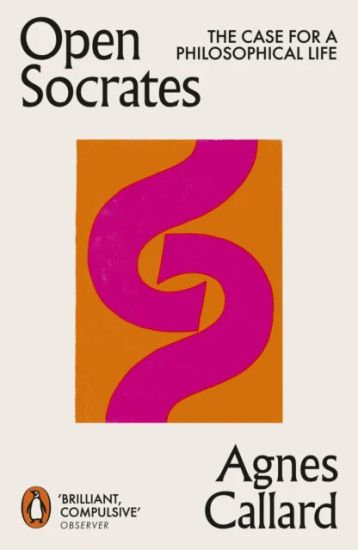
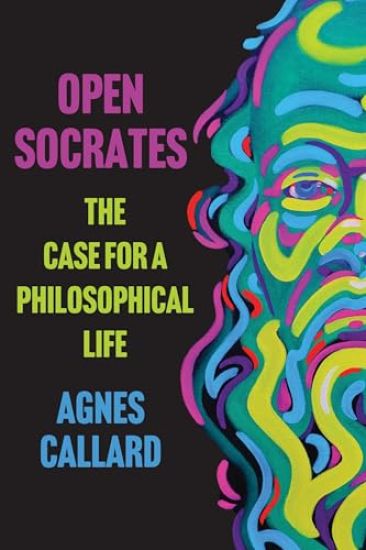
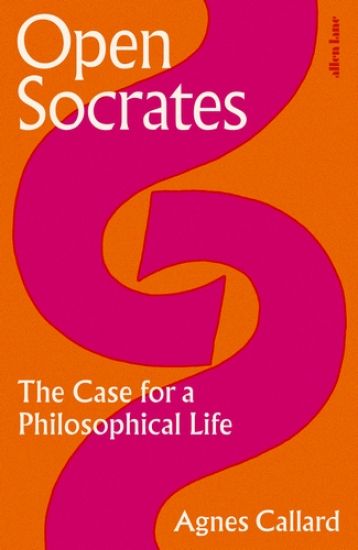
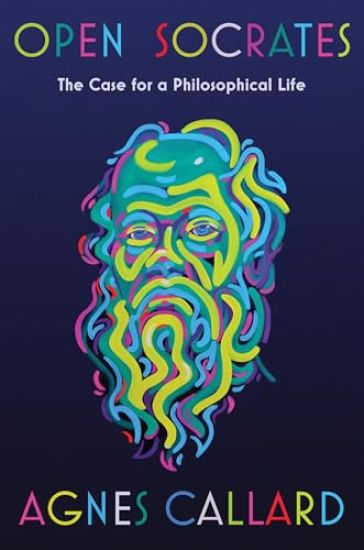
The ancient Greek philosopher Socrates, perhaps the single most important figure in Western culture, is hidden in plain view. If his claim that 'the unexamined life is not worth living' has ceased to shock us, that is not because we know how to live examined ones; we speak of 'the Socratic method' in ignorance of just how much that method demands of us. In Open Socrates, acclaimed philosopher Agnes Callard takes us deeper into Socrates’ thought than any modern writer has. As she shows, Socrates noticed that the most important questions start off closed: before a person even has a chance to ponder how she should live, her bodily desires or the forces of social conformity have already answered on her behalf. Is it even possible to ask a question that you think you have already answered? Callard answers yes — but we can’t do it alone. She argues that the true ambition of the Socratic method is to reveal what one human being can be to another. You can use another person in many ways — for survival, for pleasure, for comfort — but you are engaging them to the fullest when you call on them to help answer your own questions, and challenge your own answers. How should we manage romantic love? What is the right way to think about one’s own death? What form should our politics take? These were the most intractable questions back in Socrates’ time, and that continues to be true, 2,500 years later. Callard shows us how Socrates' method allows us to make progress in answering them — and, in the process, gives us nothing less than a new ethics to live by.
Socrates has been hiding in plain sight. We call him the father of Western philosophy, but what exactly are his philosophical views? He is famous for his humility, but readers often find him arrogant and condescending. We parrot his claim that "the unexamined life is not worth living," yet take no steps to live examined ones. We know that he was tried, convicted, and executed for "corrupting the youth," but freely assign Socratic dialogues to today's youths, to introduce them to philosophy. We've lost sight of what made him so dangerous. In Open Socrates, acclaimed philosopher Agnes Callard recovers the radical move at the center of Socrates' thought, and shows why it is still the way to a good life. Callard draws our attention to Socrates' startling discovery that we don't know how to ask ourselves the most important questions--about how we should live, and how we might change. Before a person even has a chance to reflect, their bodily desires or the forces of social conformity have already answered on their behalf. To ask the most important questions, we need help. Callard argues that the true ambition of the famous "Socratic method" is to reveal what one human being can be to another. You can use another person in many ways--for survival, for pleasure, for comfort--but you are engaging them to the fullest when you call on them to help answer your questions and challenge your answers. Callard shows that Socrates' method allows us to make progress in thinking about how to manage romantic love, how to confront one's own death, and how to approach politics. In the process, she gives us nothing less than a new ethics to live by.
'Professor of philosophy and a public intellectual for the internet age, Callard shows how Socrates can inform the way we live our lives – from romance to politics' Guardian, Books to Look Forward to in 2025A new and vibrant understanding of Socrates, his work, and his unique approach to learningSocrates has been hiding in plain sight. We call him the father of Western philosophy, but what exactly are his philosophical views? He is famous for his humility, but readers often find him arrogant and condescending. We parrot his claim that 'the unexamined life is not worth living,' yet take no steps to live examined ones. We know that he was tried, convicted, and executed for 'corrupting the youth,' but freely assign Socratic dialogues to today’s youths, to introduce them to philosophy. We’ve lost sight of what made him so dangerous. In Open Socrates, acclaimed philosopher Agnes Callard recovers the radical energy at the centre of Socrates’ thought and shows why it is still the way to a good life. Callard draws our attention to Socrates’ startling discovery that we don’t know how to ask ourselves the most important questions— about how we should live, and how we might change. Before a person even has a chance to reflect, their bodily desires or the forces of social conformity have already answered on their behalf. To ask the most important questions, we need help. Callard argues that the true ambition of the famous “Socratic method” is to reveal what one human being can be to another. You can use another person in many ways—for survival, for pleasure, for comfort— but you are engaging them to the fullest when you call on them to help answer your questions and challenge your answers. Here Callard shows that Socrates’ method allows us to make progress in thinking about how to manage romantic love, how to confront one’s own death, and how to approach politics. In the process, she gives us nothing less than a new ethics to live by.
Socrates has been hiding in plain sight. We call him the father of Western philosophy, but what exactly are his philosophical views? He is famous for his humility, but readers often find him arrogant and condescending. We parrot his claim that "the unexamined life is not worth living," yet take no steps to live examined ones. We know that he was tried, convicted, and executed for "corrupting the youth," but freely assign Socratic dialogues to today's youths, to introduce them to philosophy. We've lost sight of what made him so dangerous. In Open Socrates, acclaimed philosopher Agnes Callard recovers the radical move at the center of Socrates' thought, and shows why it is still the way to a good life. Callard draws our attention to Socrates' startling discovery that we don't know how to ask ourselves the most important questions--about how we should live, and how we might change. Before a person even has a chance to reflect, their bodily desires or the forces of social conformity have already answered on their behalf. To ask the most important questions, we need help. Callard argues that the true ambition of the famous "Socratic method" is to reveal what one human being can be to another. You can use another person in many ways--for survival, for pleasure, for comfort--but you are engaging them to the fullest when you call on them to help answer your questions and challenge your answers. Callard shows that Socrates' method allows us to make progress in thinking about how to manage romantic love, how to confront one's own death, and how to approach politics. In the process, she gives us nothing less than a new ethics to live by.
“Although people like to talk about their travels, few of us like to listen to them. Such talk resembles academic writing and reports of dreams: forms of communication driven more by the needs of the producer than the consumer.” In The Case Against Travel the philosopher Agnes Callard launches a vigorous assault on the idea that there is something transformative or ennobling about recreational travel. Going well beyond commonplace complaints about the irksomeness of tourists, Callard’s essay is a probing inquiry into what it really means to change one’s life, and into the ways in which we try to disguise the fact that life will come to an end.
Becoming someone is a learning process; and what we learn is the new values around which, if we succeed, our lives will come to turn. Agents transform themselves in the process of, for example, becoming parents, embarking on careers, or acquiring a passion for music or politics. How can such activity be rational, if the reason for engaging in the relevant pursuit is only available to the person one will become? How is it psychologically possible to feel the attraction of a form of concern that is not yet one's own? How can the work done to arrive at the finish line be ascribed to one who doesn't (really) know what one is doing, or why one is doing it? In Aspiration, Agnes Callard asserts that these questions belong to the theory of aspiration. Aspirants are motivated by proleptic reasons, acknowledged defective versions of the reasons they expect to eventually grasp. The psychology of such a transformation is marked by intrinsic conflict between their old point of view on value and the one they are trying to acquire. They cannot adjudicate this conflict by deliberating or choosing or deciding-rather, they resolve it by working to see the world in a new way. This work has a teleological structure: by modeling oneself on the person he or she is trying to be, the aspirant brings that person into being. Because it is open to us to engage in an activity of self-creation, we are responsible for having become the kinds of people we are.