Kirjojen hintavertailu – 12 859 819 kirjaa ja 27 kauppaa

Kirjailija

Agnolo Firenzuola

Kirjat ja teokset yhdessä paikassa: 10 kirjaa, julkaisuja vuosilta 1992–2023, suosituimpiin kuuluu Nouvelles. Vertaile teosten hintoja ja tarkista saatavuus suomalaisista kirjakaupoista.

10 kirjaa

Kirjojen julkaisuvuodet: 1992–2023.

Nouvelles

Nouvelles

Agnolo Firenzuola; Christophe Noël

BoD - Books on Demand
2023
pokkari
Un ouvrage si rare, en fran ais du moins, qu'il est introuvable en librairie, hormis chez quelques bouquinistes, o il atteint des prix assez cons quents, selon l' tat. Et pourtant, Firenzuola a b n fici de traductions d s le XVI si cle, une par Gabriel Chappuys, qui a int gr une de ses nouvelles dans ses "Fac tieuses Journ es" publi es en 1584, mais aussi par Pierre Larivey (1540-1619), dition non pr cis e, non dat e. Plus pr s de nous, une dition en 1881, traduite par Alcide Bonneau (et dont est tir e la pr sente), ainsi qu'en 1913 par B. de Villeneuve. L' dition de 1881 a d'ailleurs rencontr un tel succ s, qu'elle a t traduite en anglais, en 1886. On l'a qualifi de licencieux; je pr f re y voir une critique des moeurs rel ch es de la Renaissance.

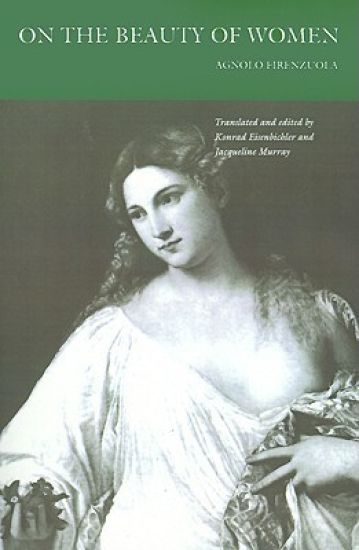
On the Beauty of Women

On the Beauty of Women

Agnolo Firenzuola

University of Pennsylvania Press
1992
pokkari
First published in 1548, On the Beauty of Women purports to record two conversations shared by a young gentleman, Celso, and four ladies of the upper bourgeoisie in the vicinity of Florence. One afternoon Celso and the ladies consider universal beauty. On a subsequent evening, they attempt to fashion a composite picture of perfect beauty by combining the beautiful features of women they know. The standards of beauty established in the garden give way to the artistic, creative imagination of the human spirit, and the group's movement from garden to hall seems to echo the dialogue's movement from Nature to Art, from divinely to humanly created beauty. Konrad Eisenbichler and Jacqueline Murray have provided the first translation into English of Firenzuola's dialogue since the nineteenth century. In their introduction, they argue that Firenzuola's work presents a useful point of entry into the society and values of the mid-sixteenth century. In its discussion of beauty, the dialogue reveals the intersection of Neoplantonic philosophy and mathematically based artistic theory, both inherited from classical antiquity. Indeed, Firenzuola's treatise has been assessed as one of the most significant expositions of Renaissance aesthetics.